Before
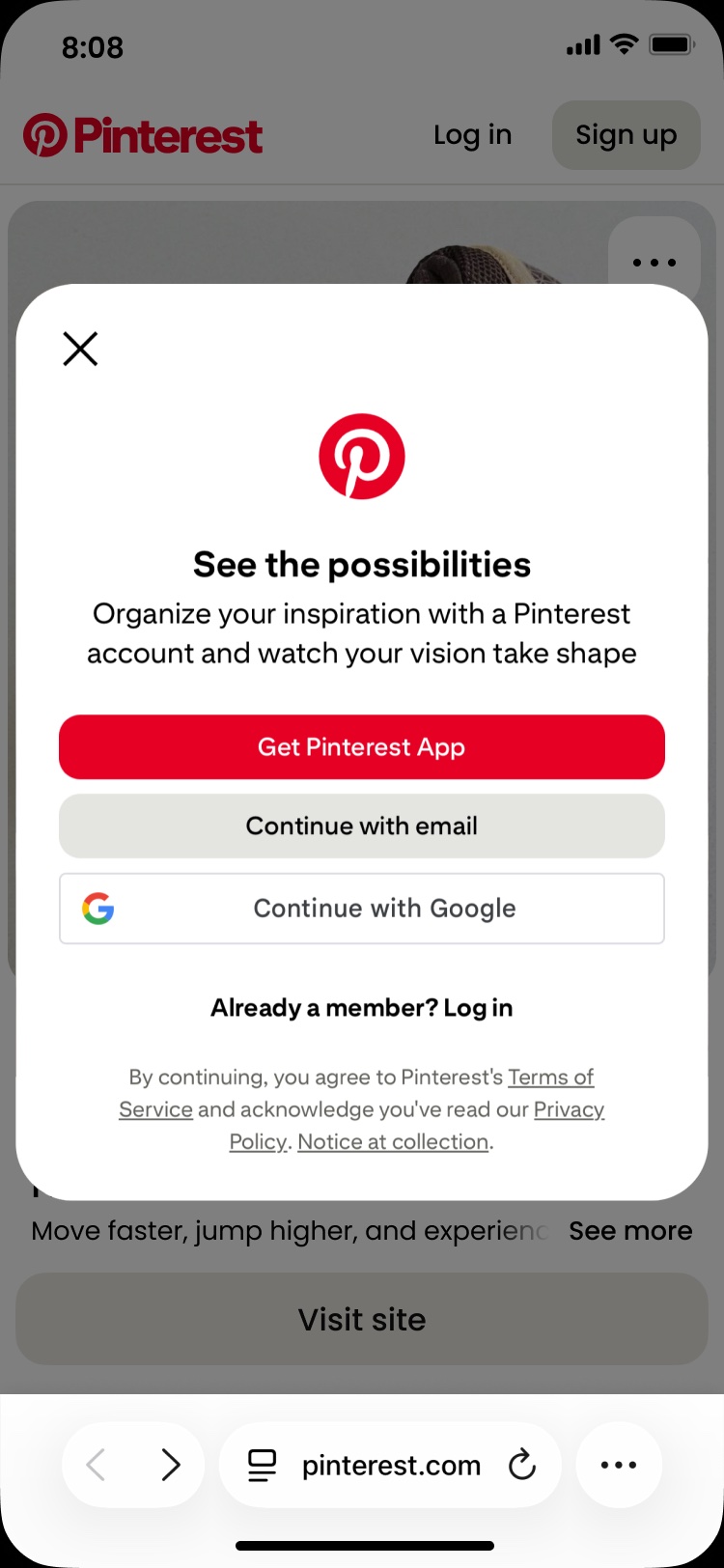
A generic modal opened a broken, 6+ step signup flow, and 93% of people dropped off by step 3. Nothing mentioned the friend who shared the link.
Case study
50M links were shared from Pinterest every day, but they generated only 8k signups. People opening a link met a generic, interruptive upsell that asked for commitment before showing any value.
I redesigned the path from opening a shared link to joining Pinterest around the friend who sent it: a social upsell, a one-step signup, and a first feed built from the idea they shared.
+15% successful signups from shared links
+320k monthly active users
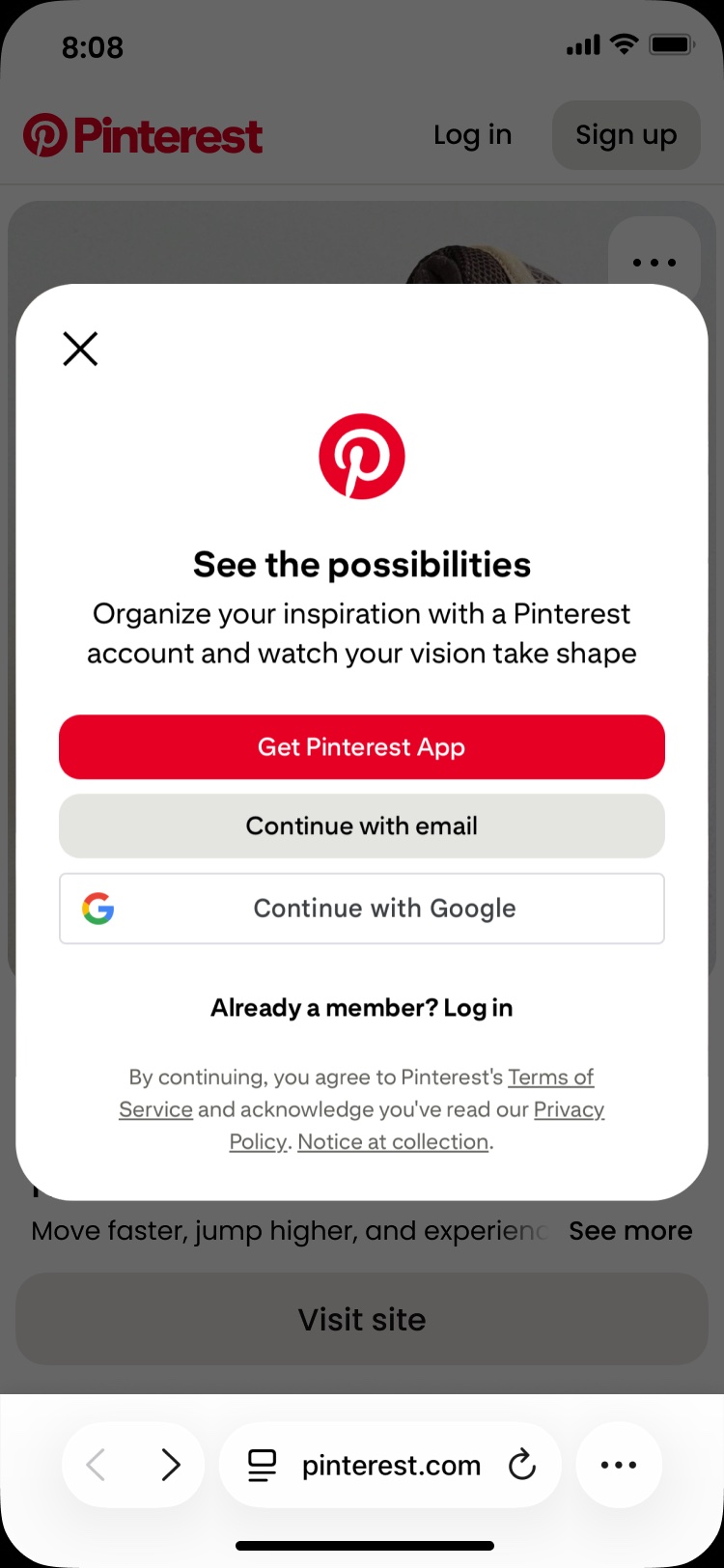
A generic modal opened a broken, 6+ step signup flow, and 93% of people dropped off by step 3. Nothing mentioned the friend who shared the link.
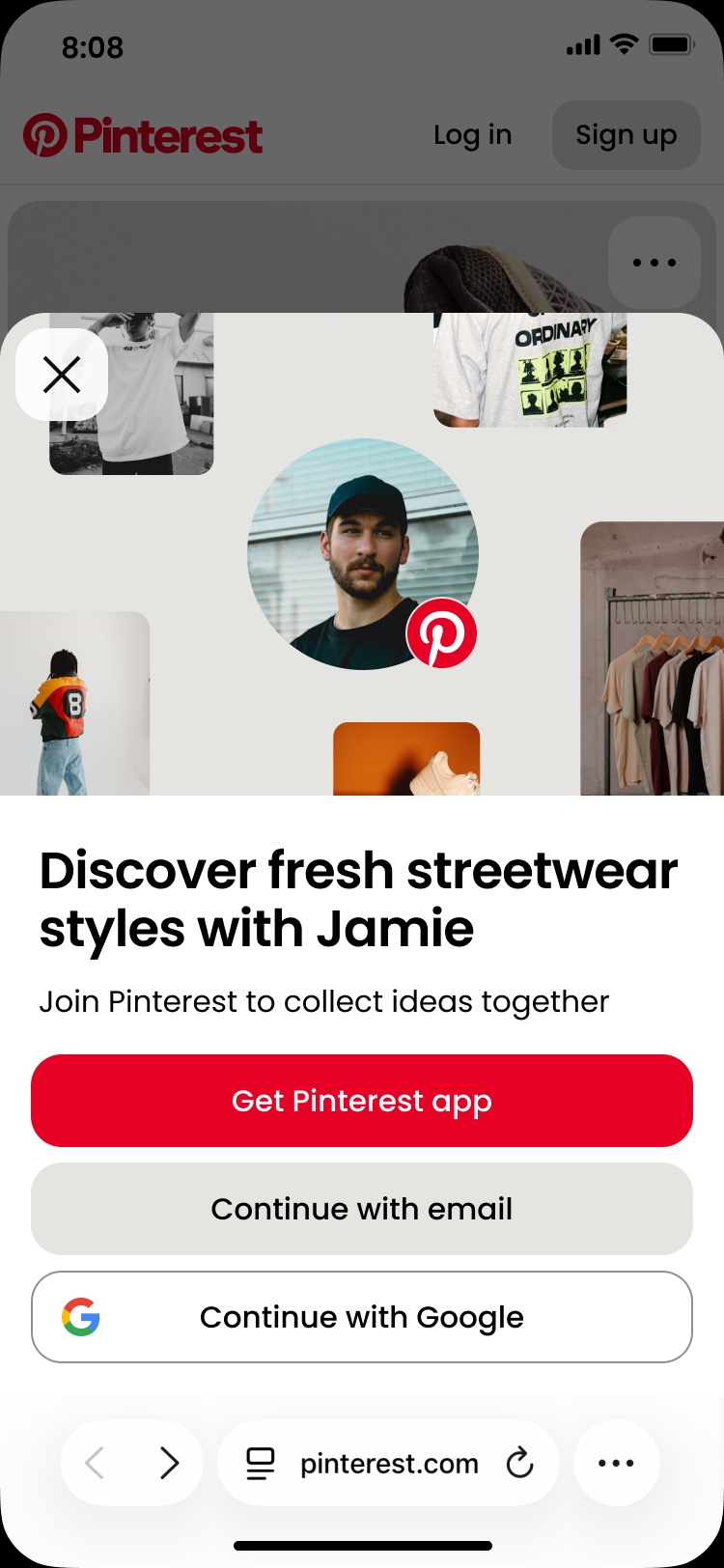
An invitation from the friend now leads into a consolidated, one-step signup, raising successful signups from shared links by 15%.
01
The opportunity
Pinners share to swap ideas, get feedback, make decisions, and plan together. Every link they send lands in front of someone who may not use Pinterest yet, which makes the moment a link is opened one of our biggest organic growth surfaces.
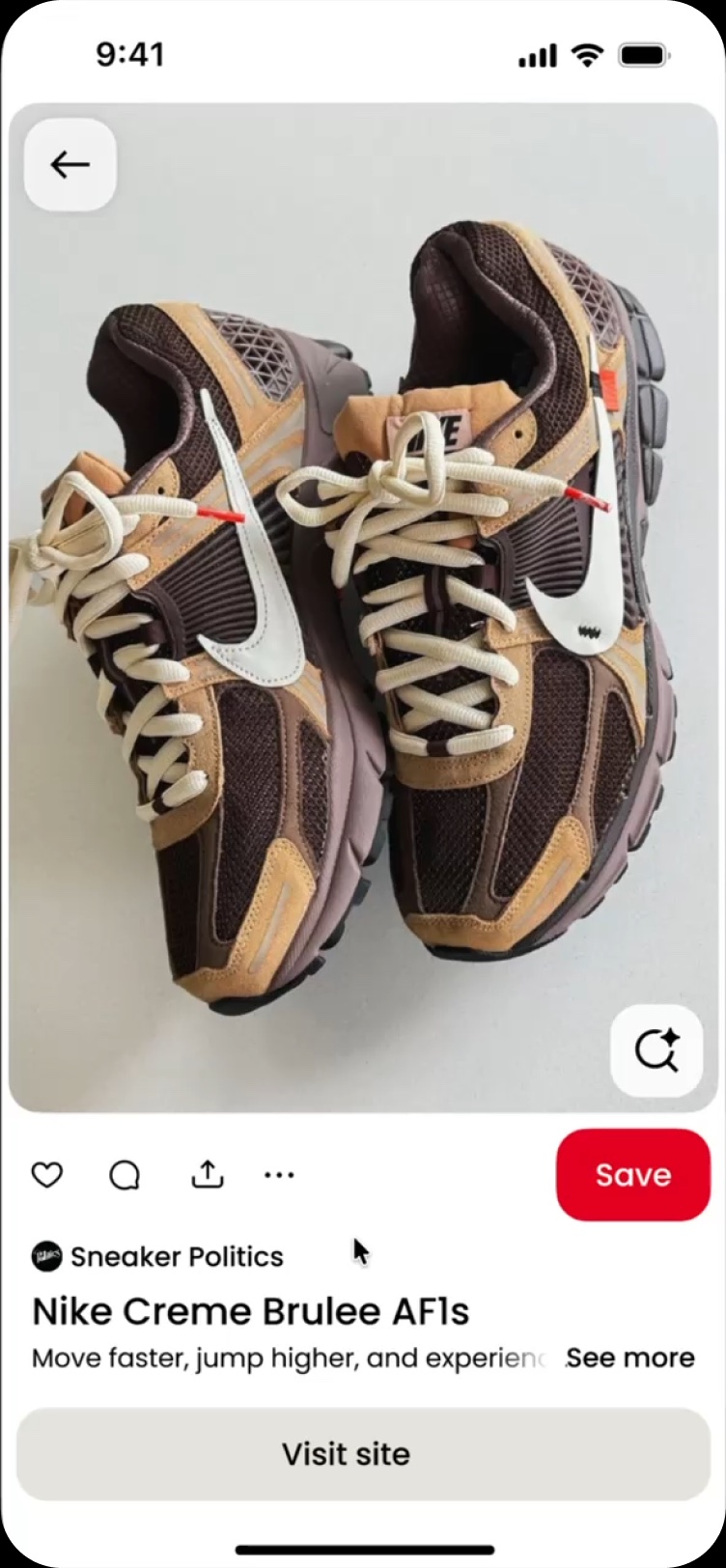
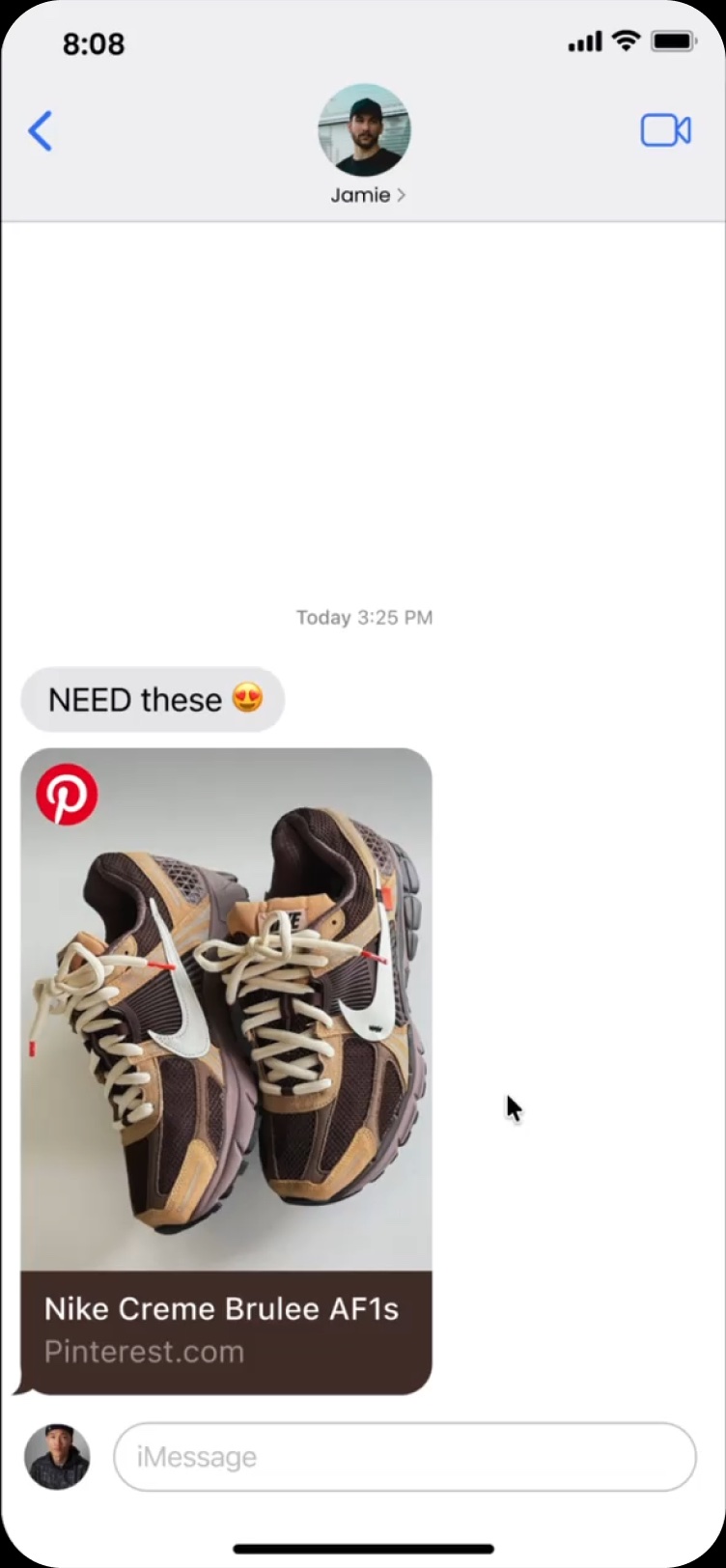
50M links were sent from Pinterest each day, yet they generated only 8k signups. Closing that gap mattered: people who signed up from a shared link were 2.5x more likely to retain week over week.
Broken signup flow
Pinterest’s value wasn’t clear to people opening a link with intent to collaborate, and 93% of those who started signing up dropped off by the third step. One research participant asked: “I just wanted to save wedding ideas with my fiancé. Google images is free, why is Pinterest better?”
Hypothesis
Goal
02
I audited every step between opening a link and joining. Each one added friction, and none of them connected back to the friend or the idea that brought the person there.
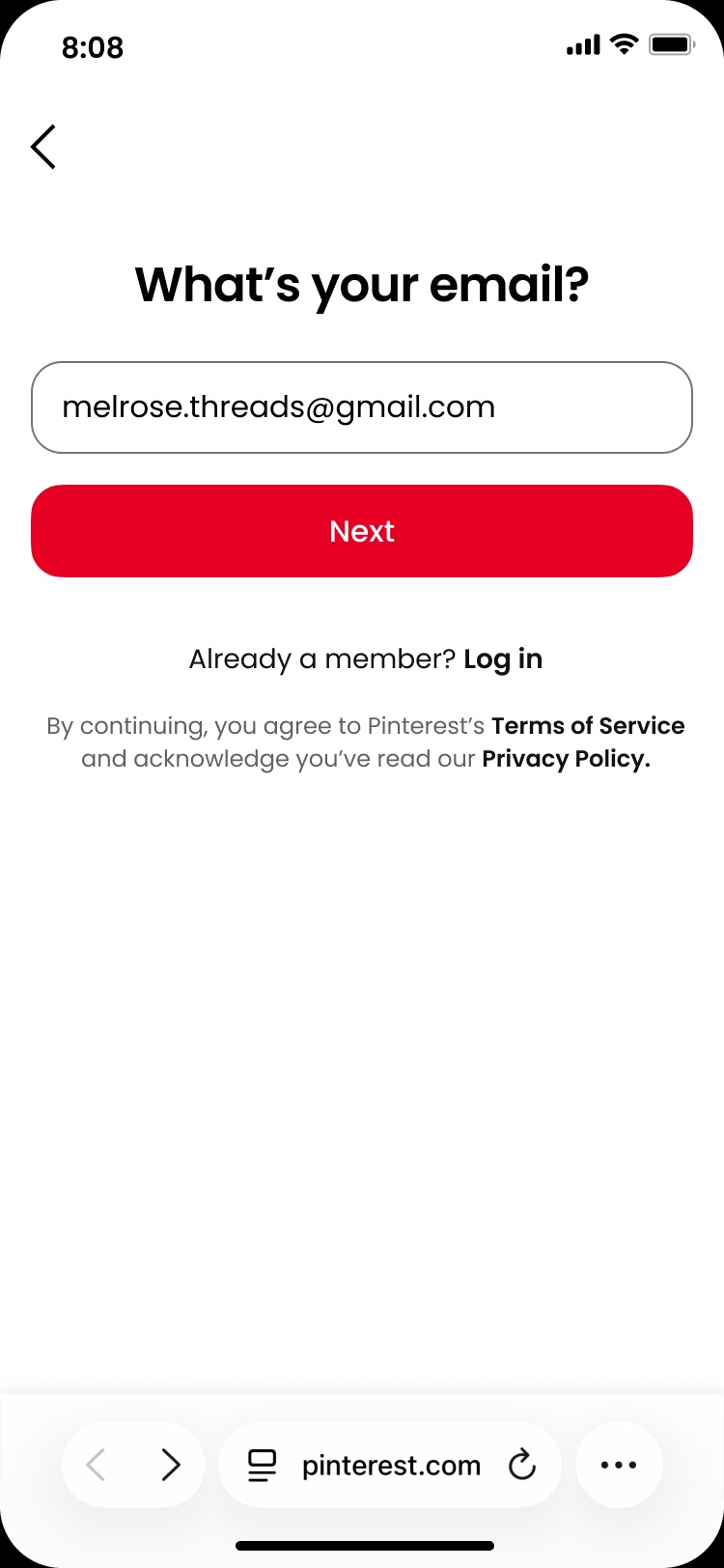
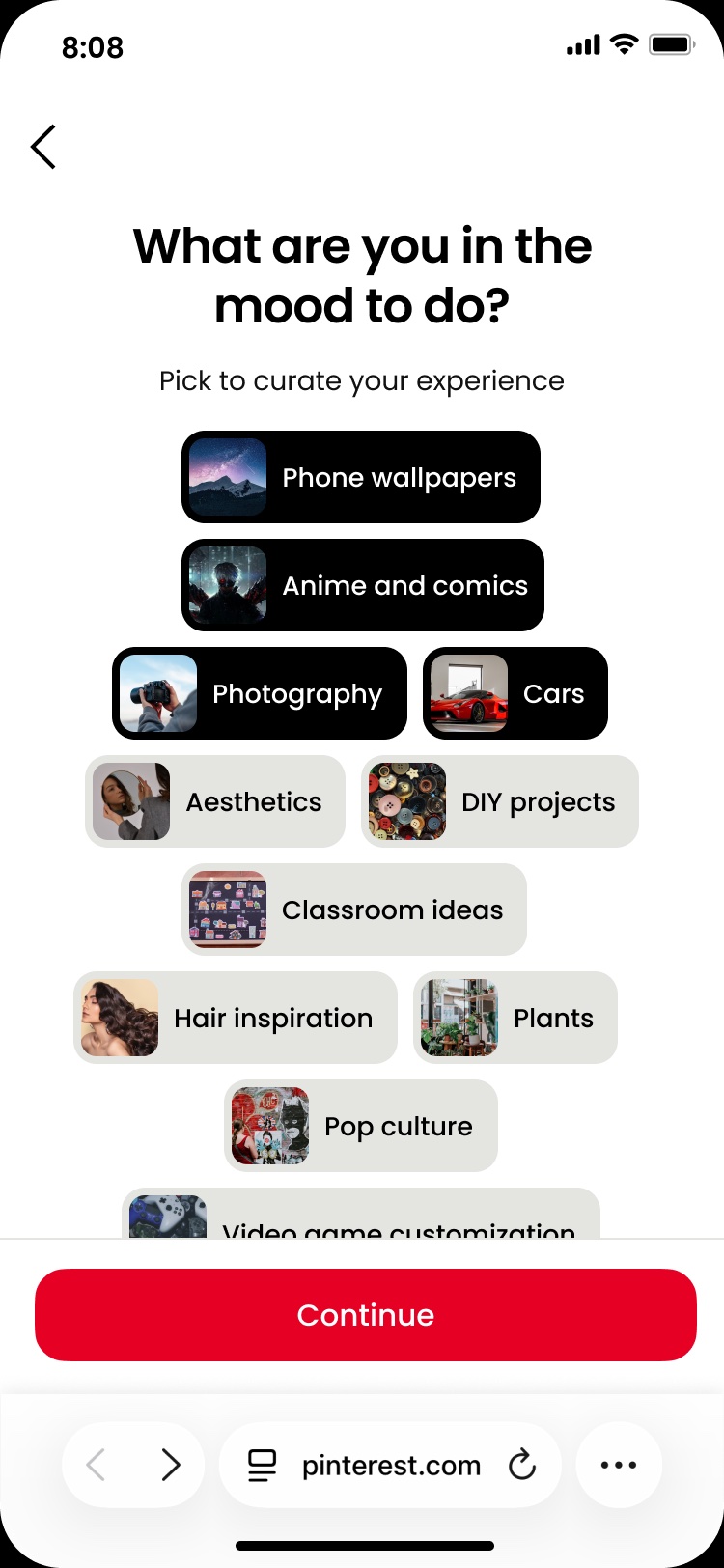
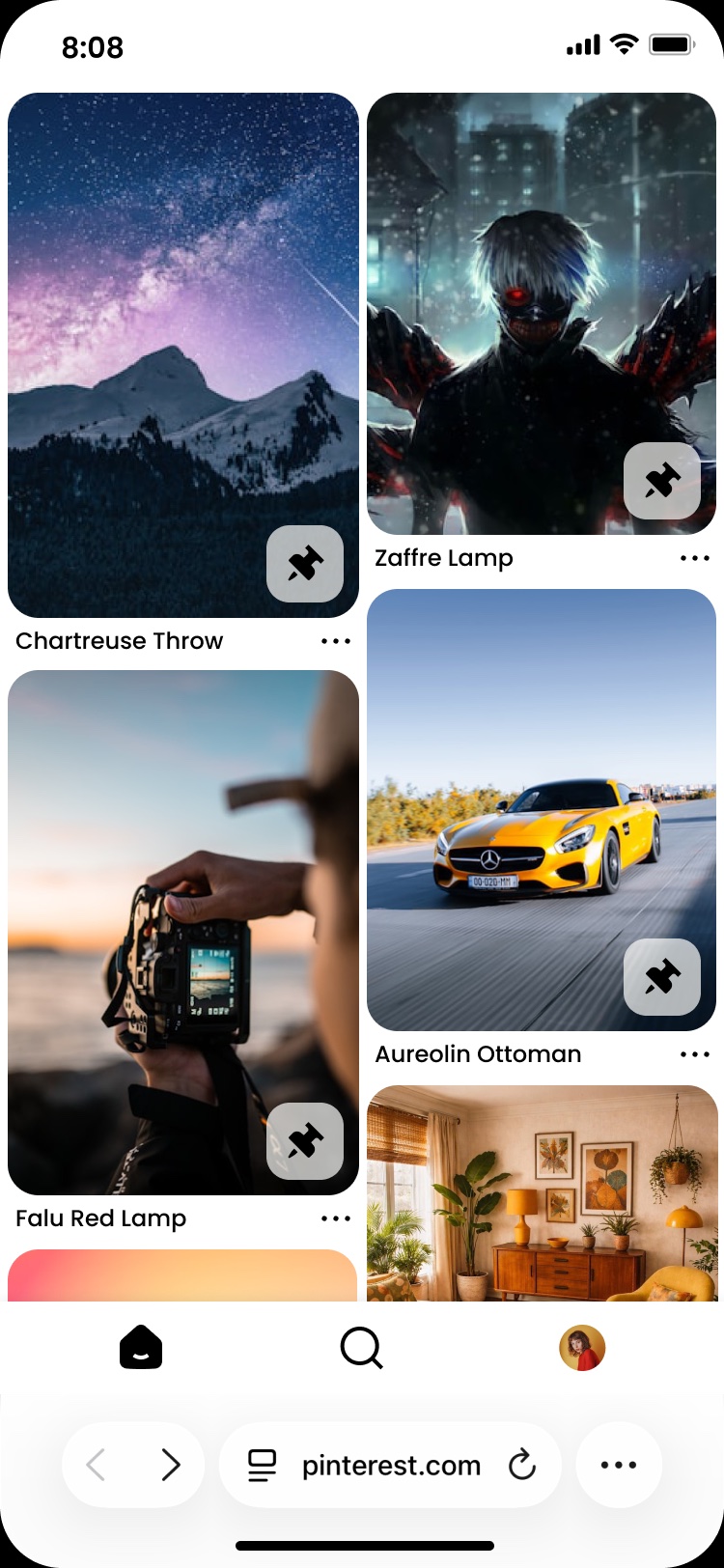
Rather than polish a single screen, I mapped the four moments that decide whether a link opener becomes a member, and redesigned them to work together.
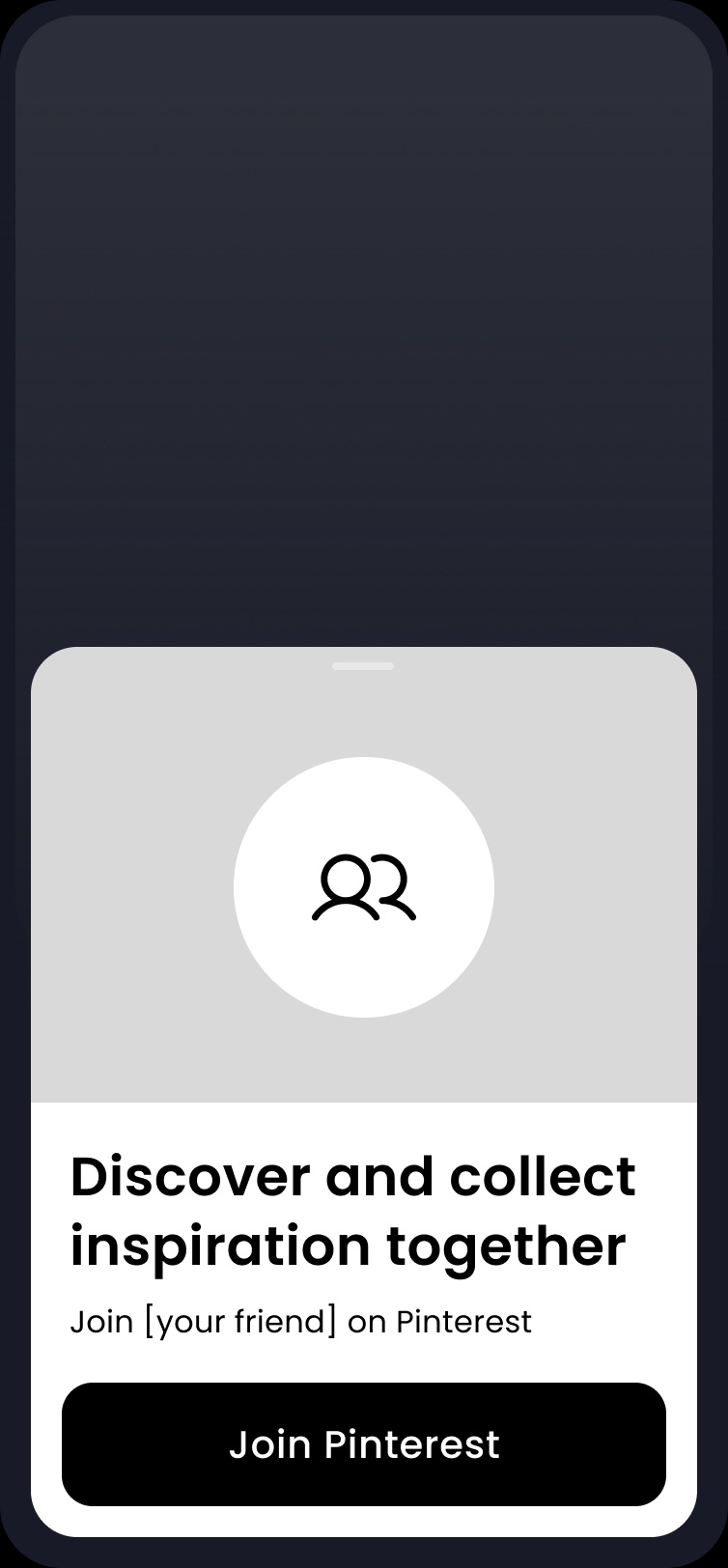
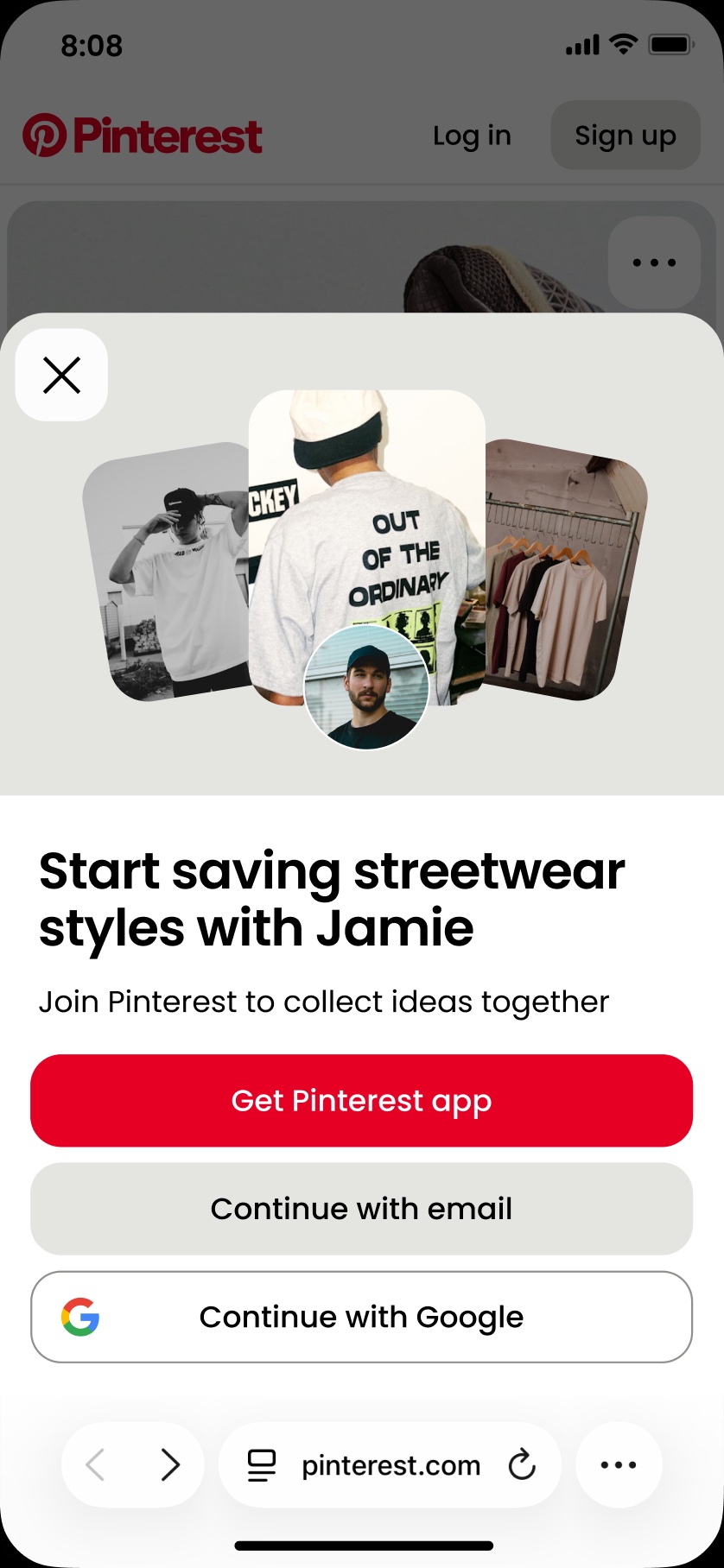
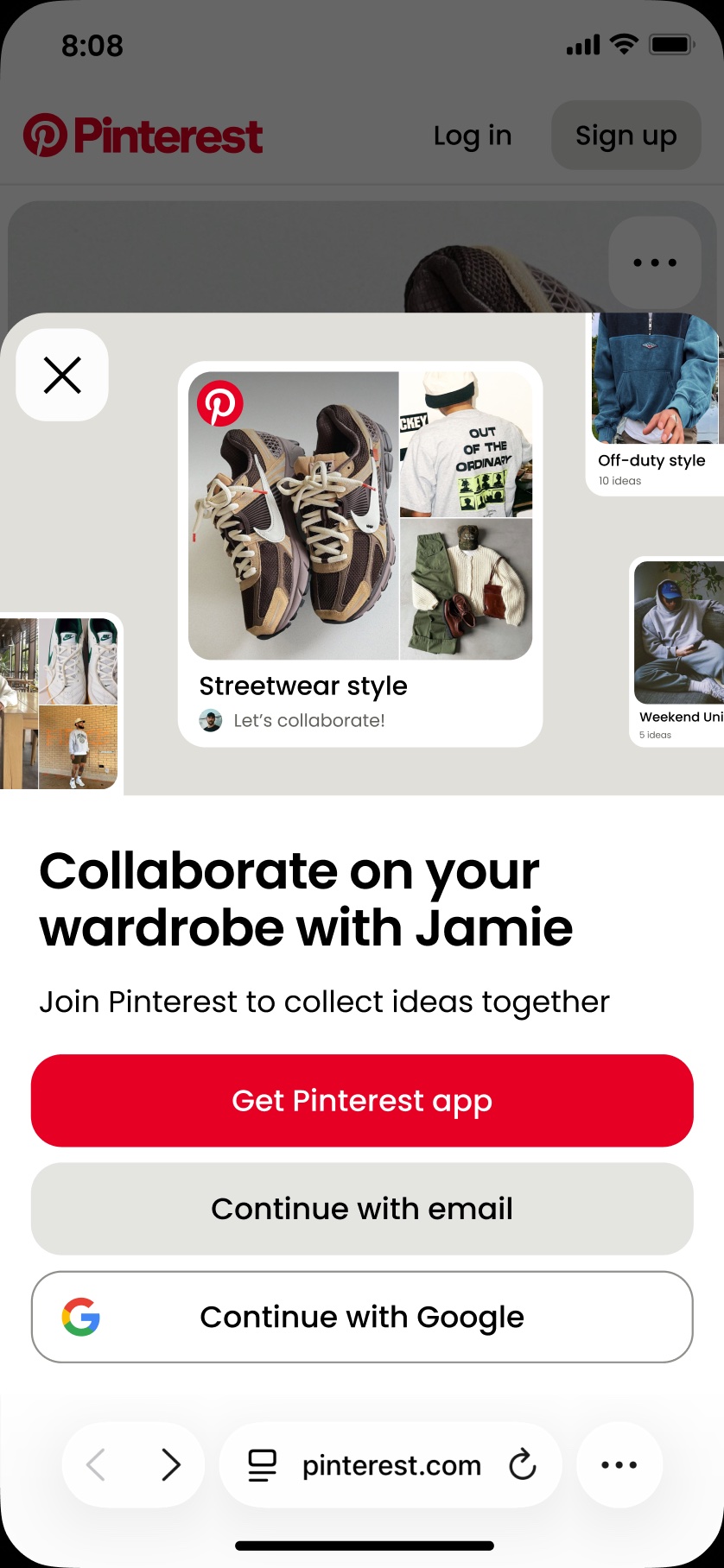
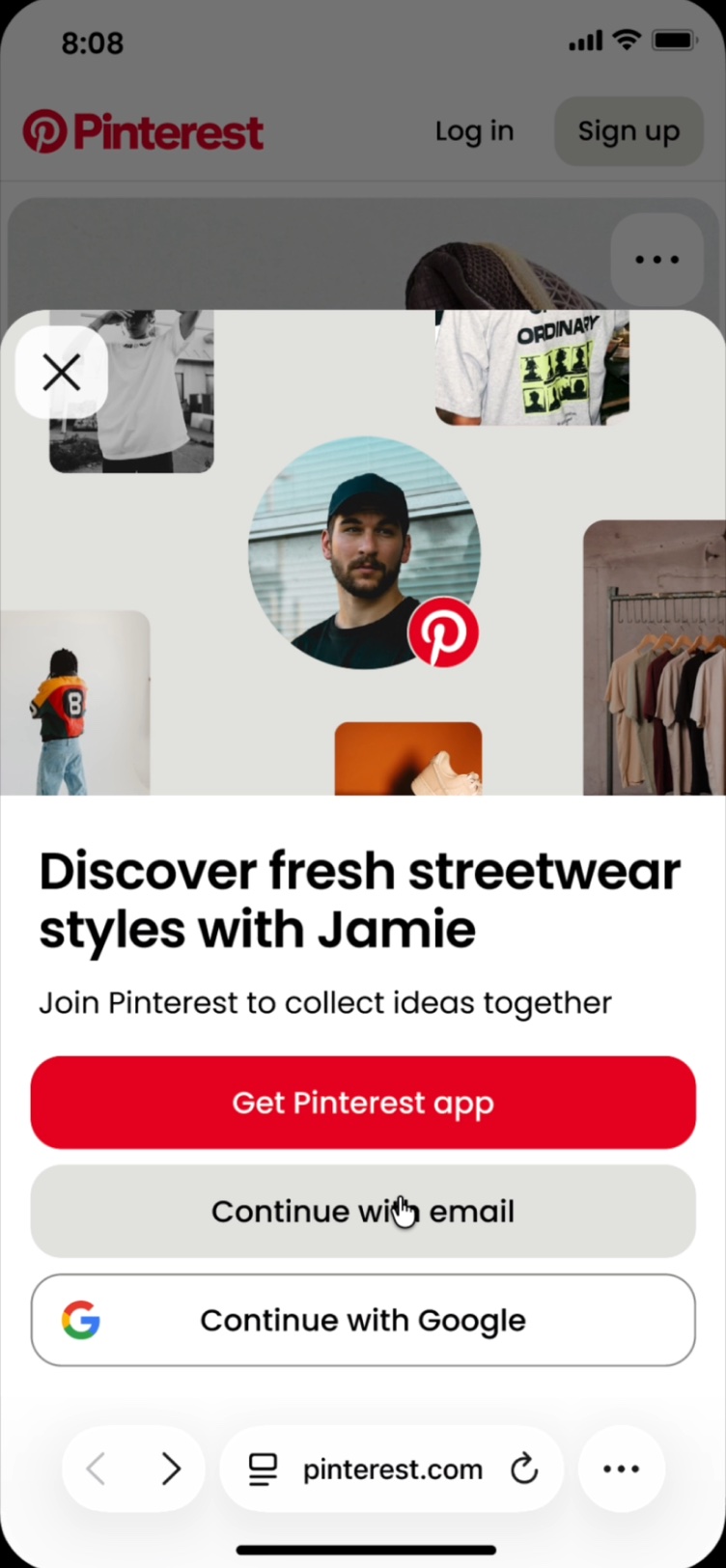
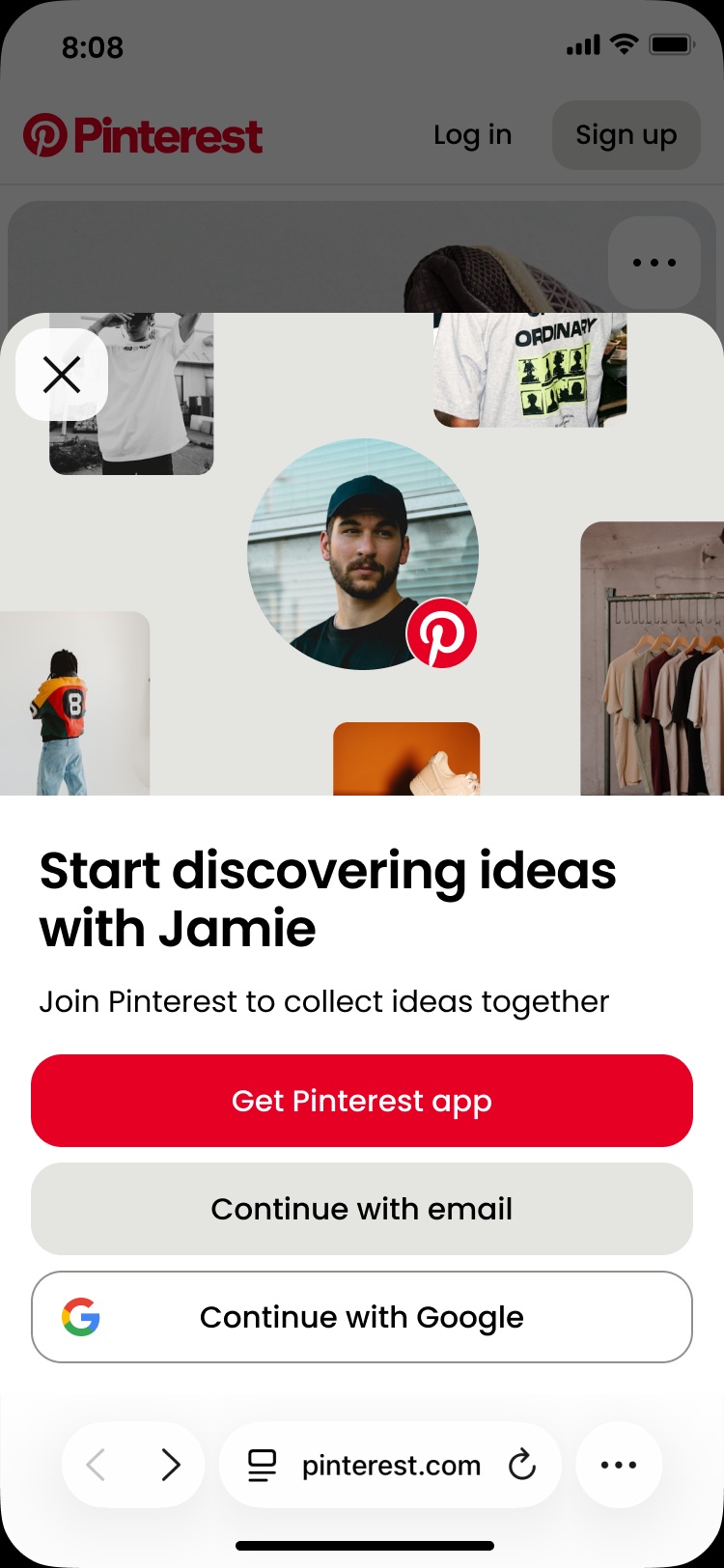
The new upsell turns a generic interruption into an invitation from a friend. Every element reinforces who invited you and what you could do together.
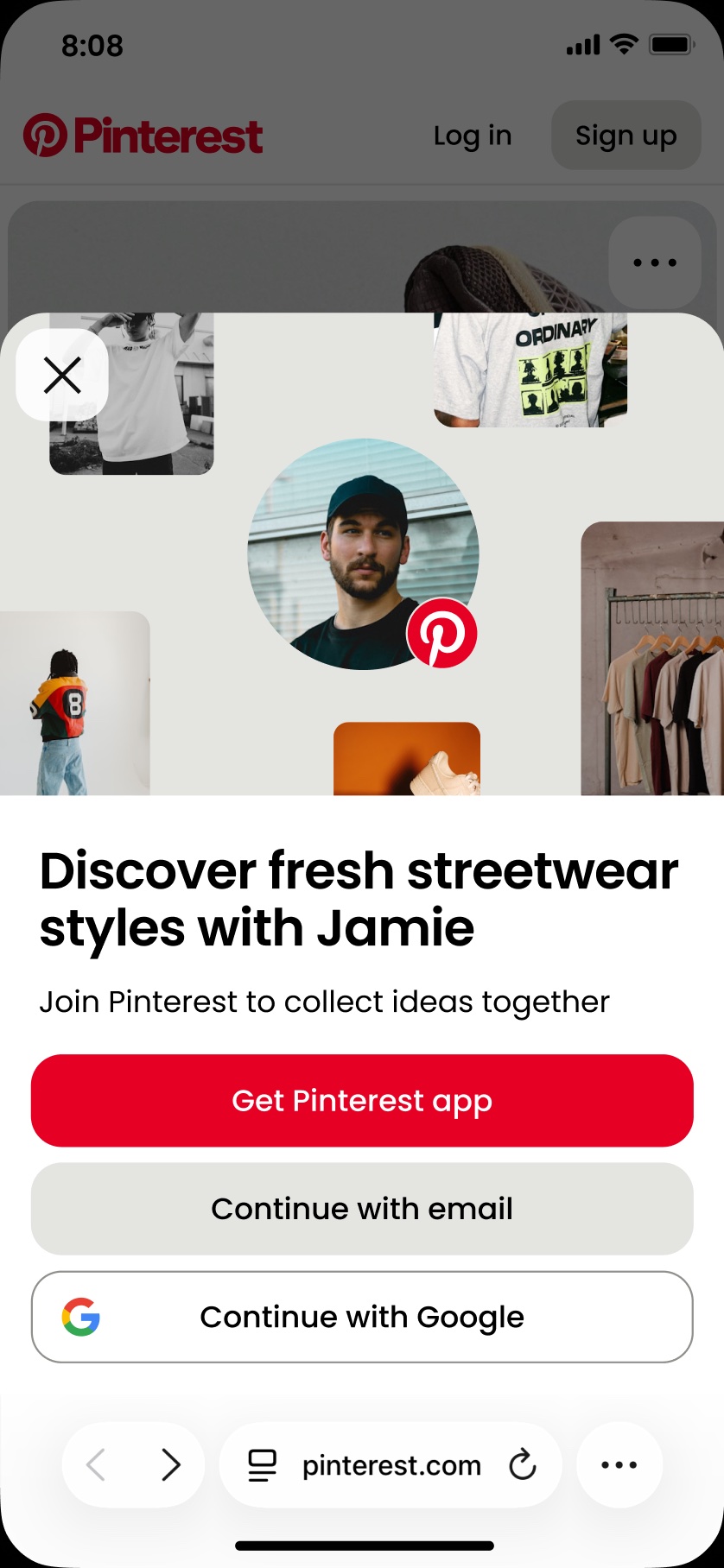
I tested different ways to balance the friend and the content, to learn which made the invitation feel most personal.
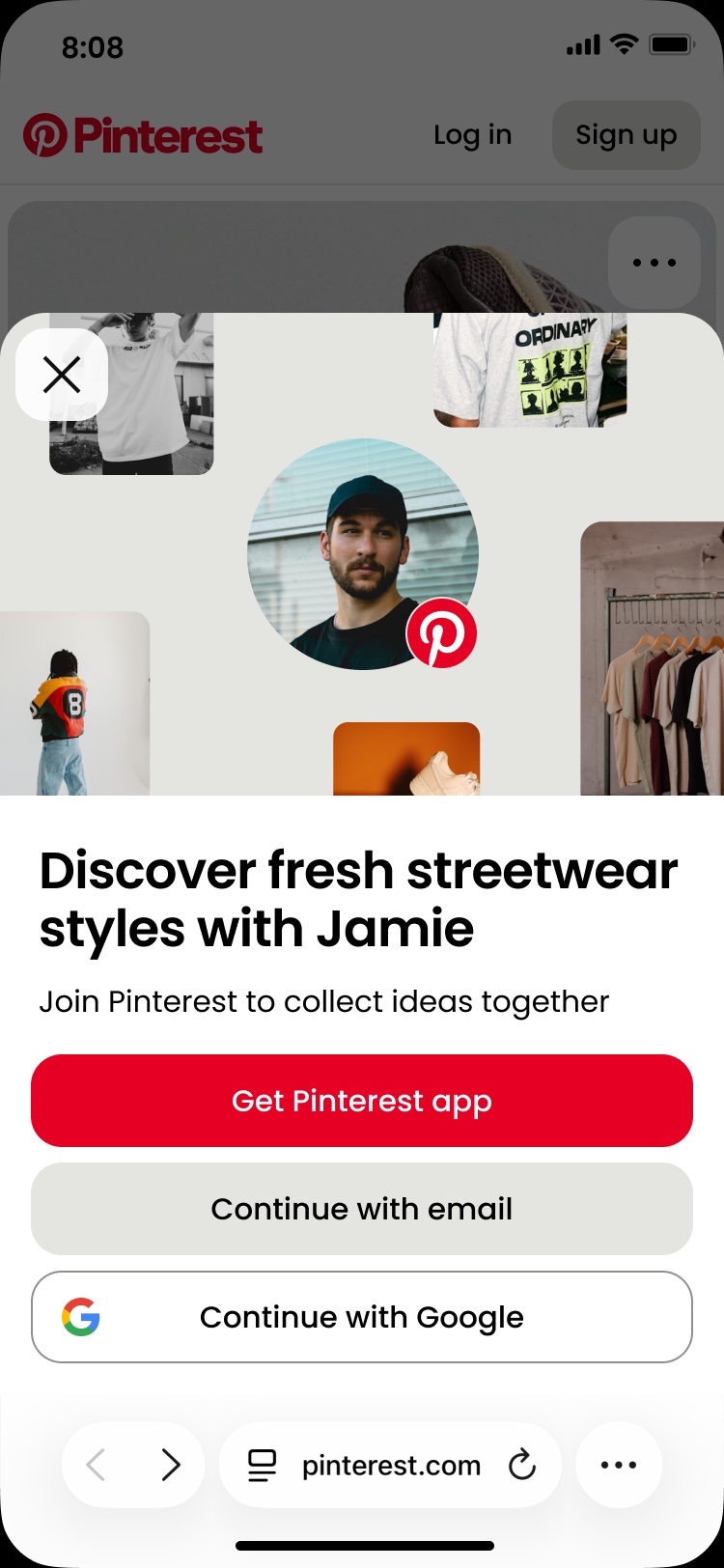
A profile photo surrounded by the shared ideas makes it immediately clear that a real person is inviting you.
A collage of the shared style puts the content first, with the friend as a supporting detail.
A preview of a shared board shows exactly what you would be building together once you join.
People opened shared links to explore together (37%), save ideas for later (28%) and exchange feedback (28%). Designing an upsell around each of these top reasons could turn that existing intent into signups.
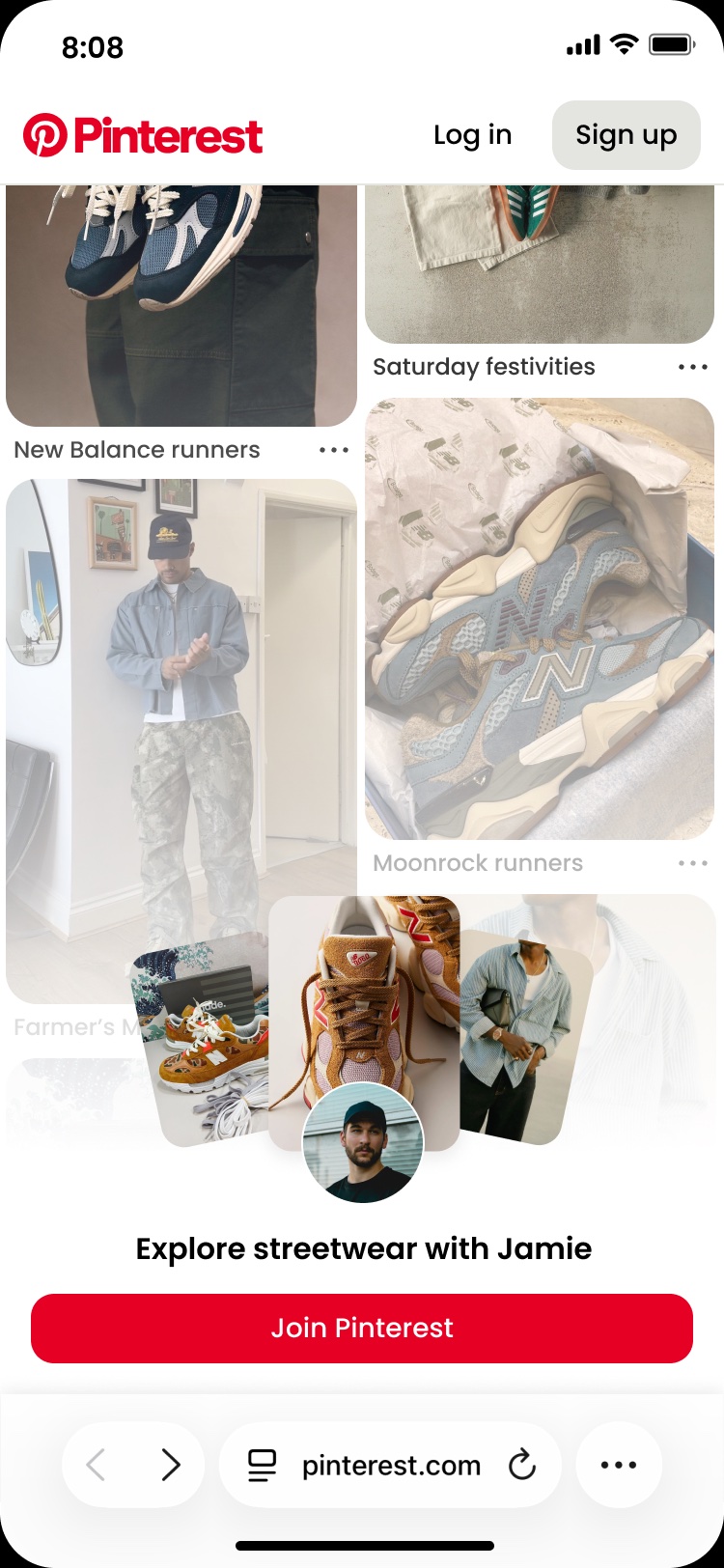
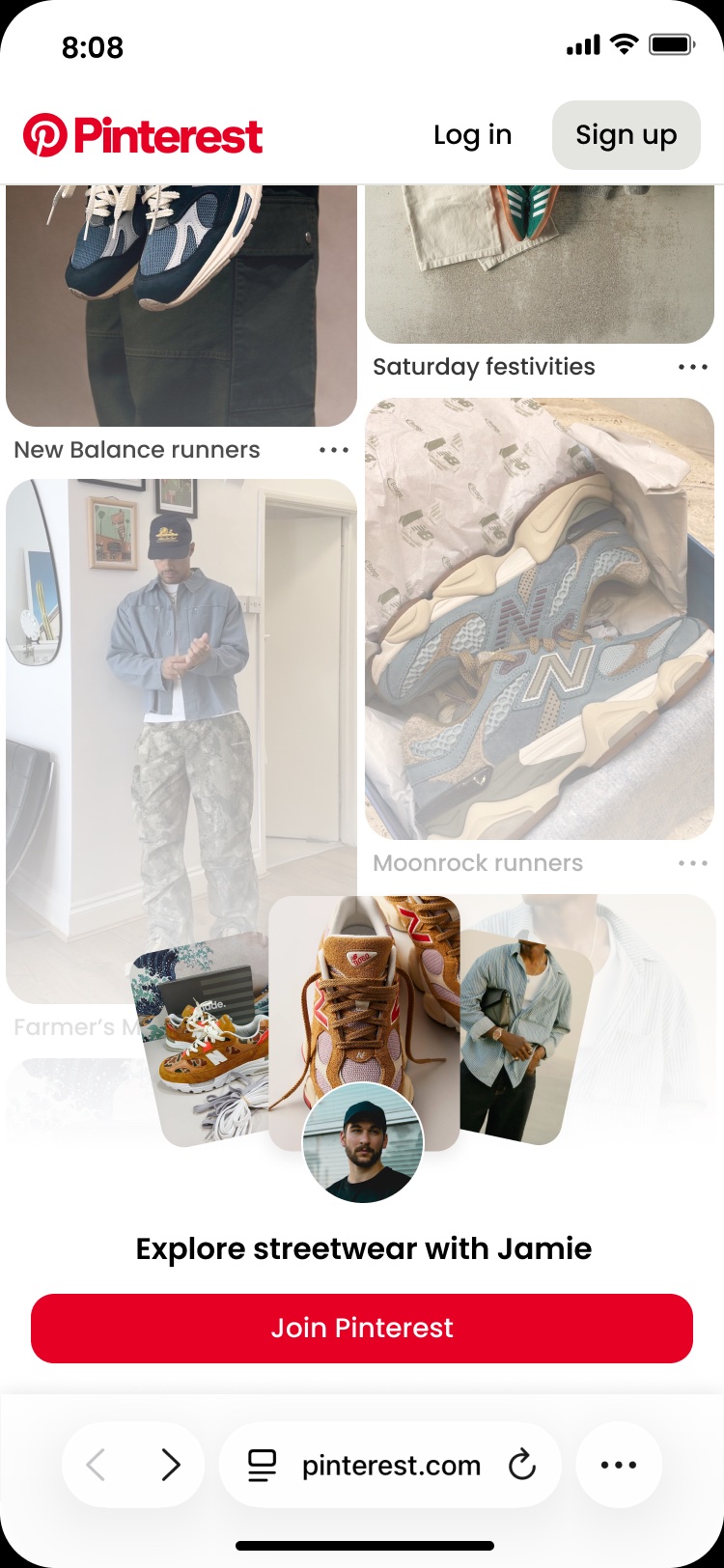
As people scroll past the shared idea, a prompt invites them to keep exploring with their friend instead of hitting a wall.
Saving the shared idea to a board together becomes the reason to make an account, so signing up unlocks something people already want.
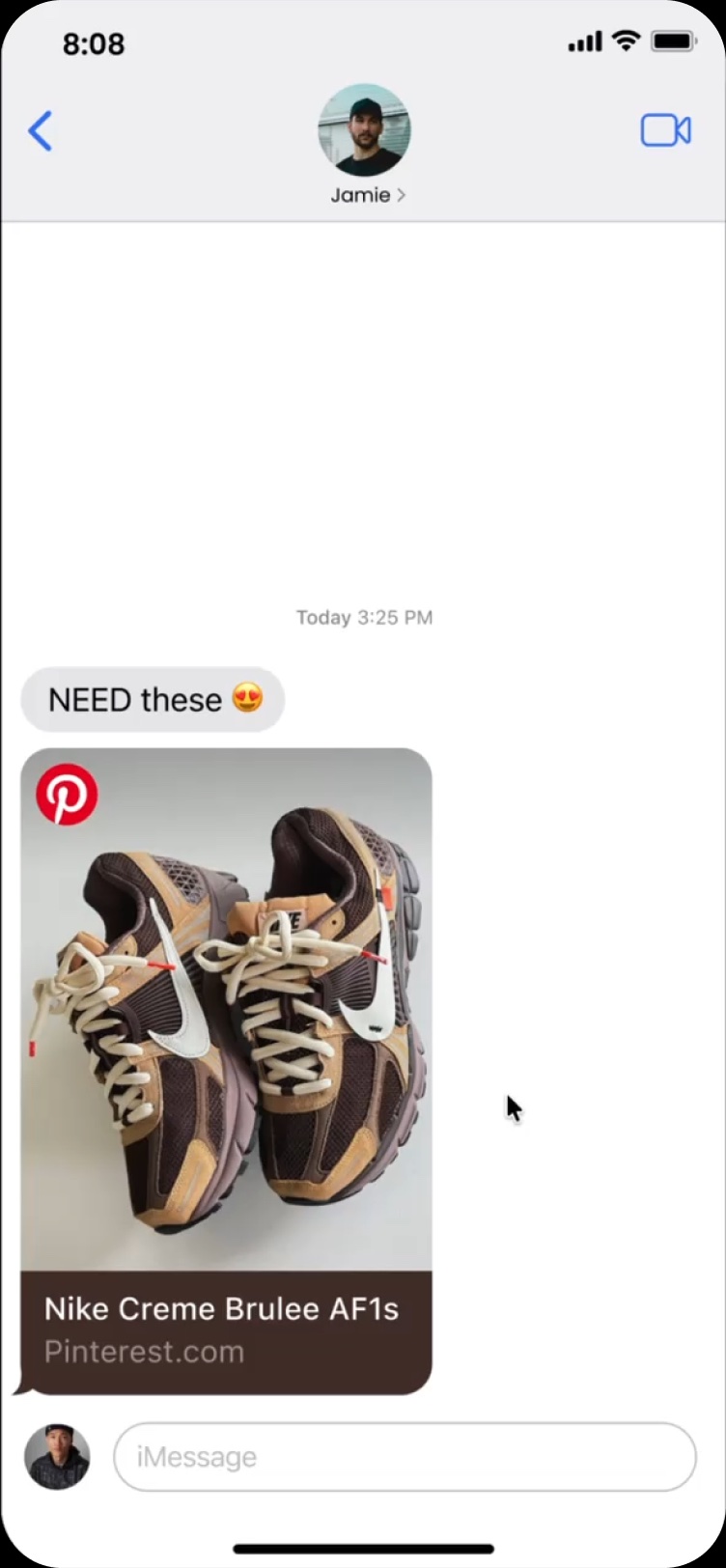
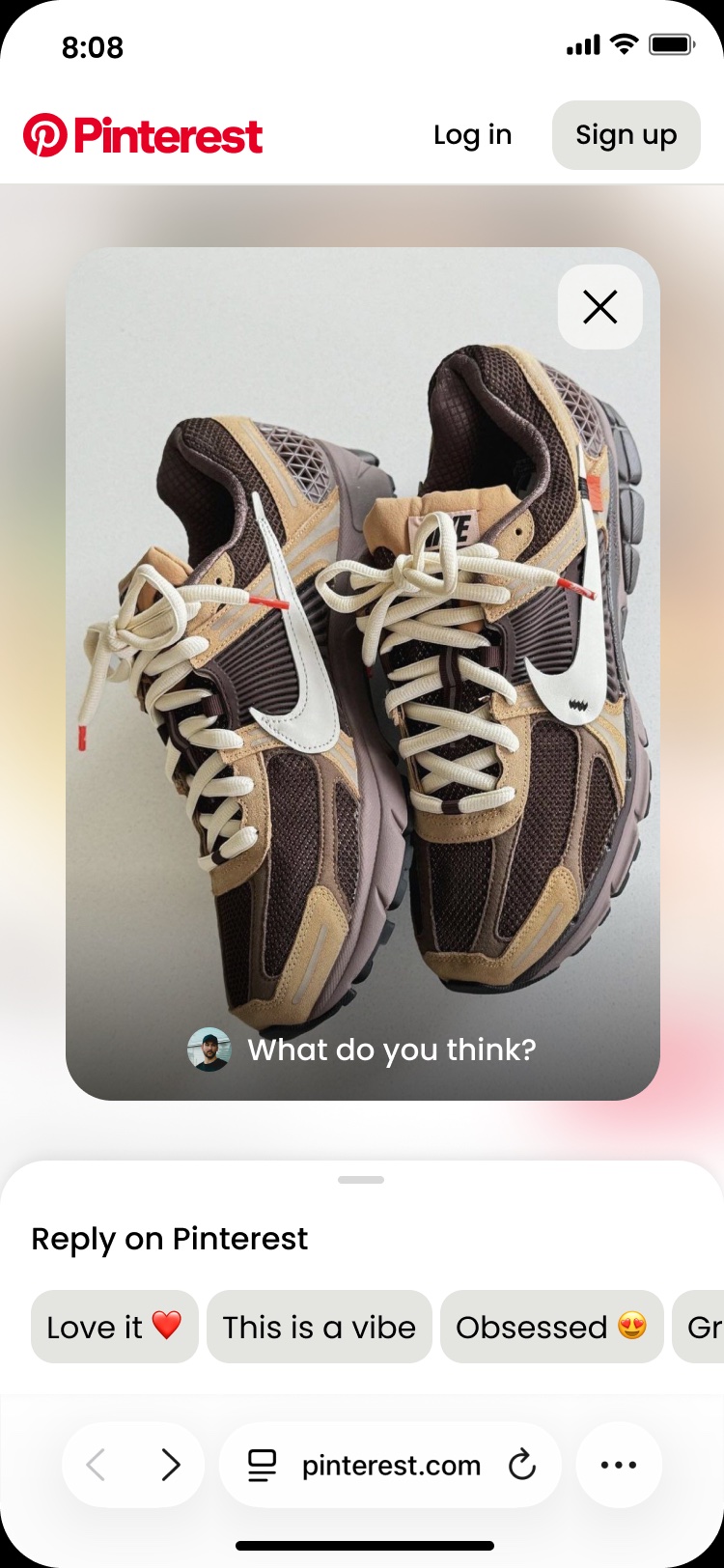
Quick reactions let people answer their friend on Pinterest, turning a one-way link into a conversation.
03
Consolidated signup
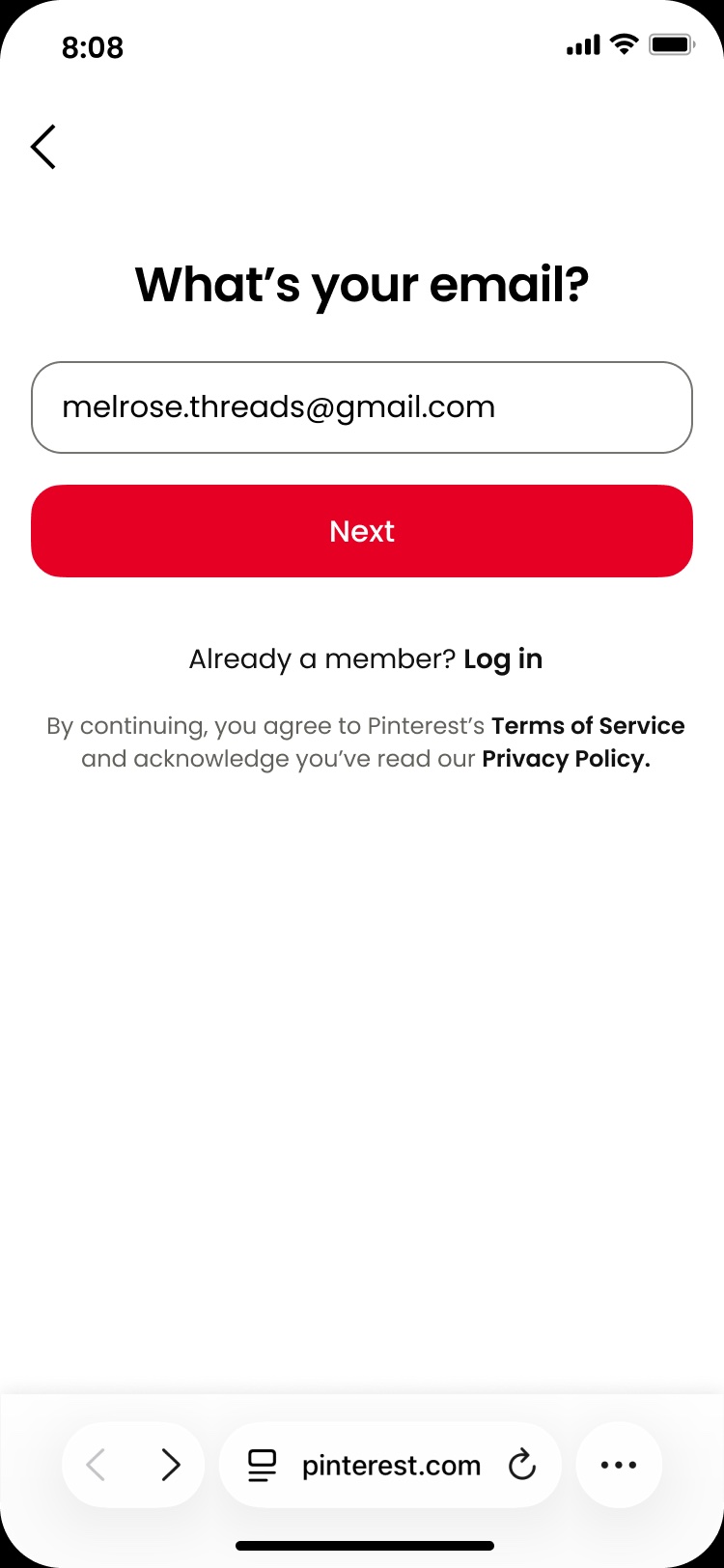
Since 93% of link openers dropped off by the third step, I collapsed signup into a much shorter flow so people could reach the value of Pinterest faster.
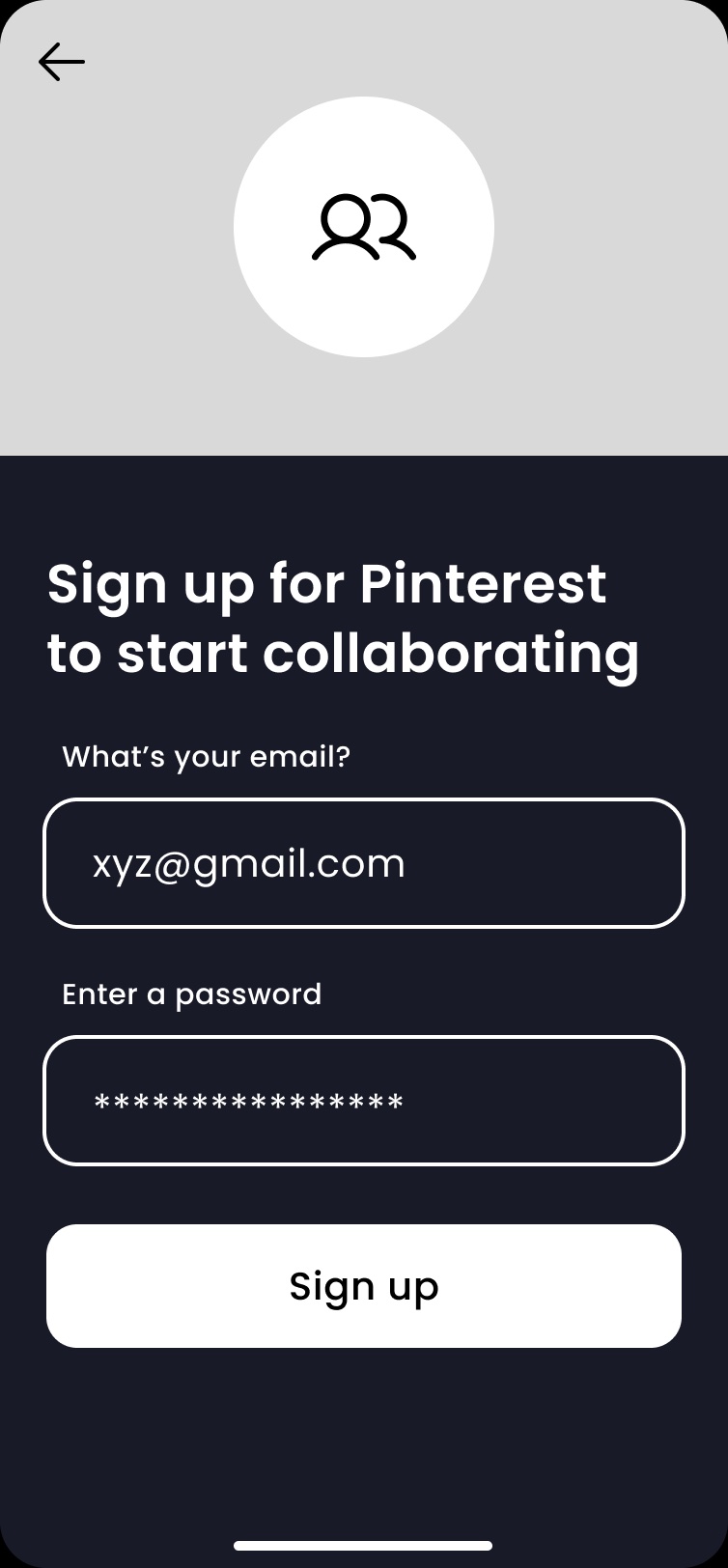
A generic modal led into a multi-step flow of email, password and interest pickers before anyone saw a single idea.
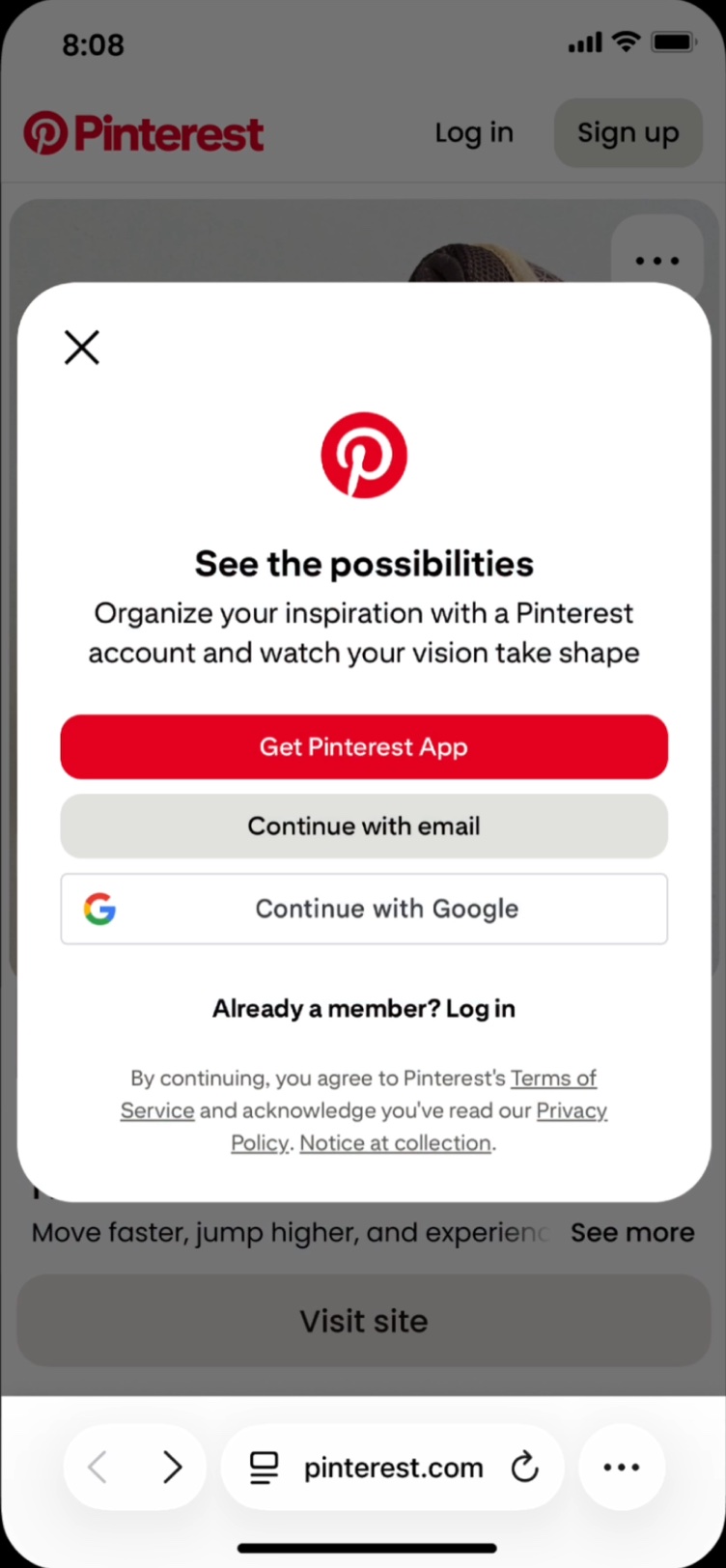
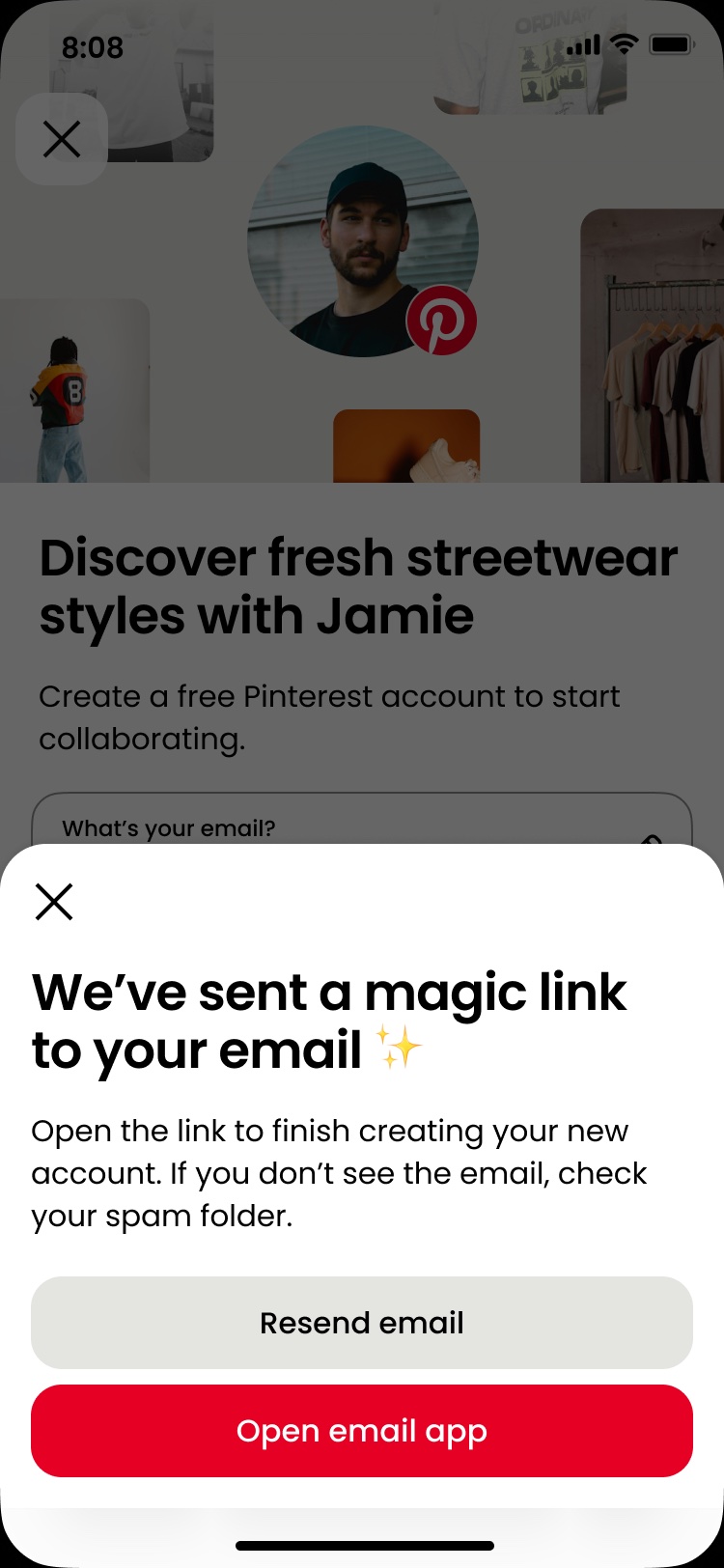
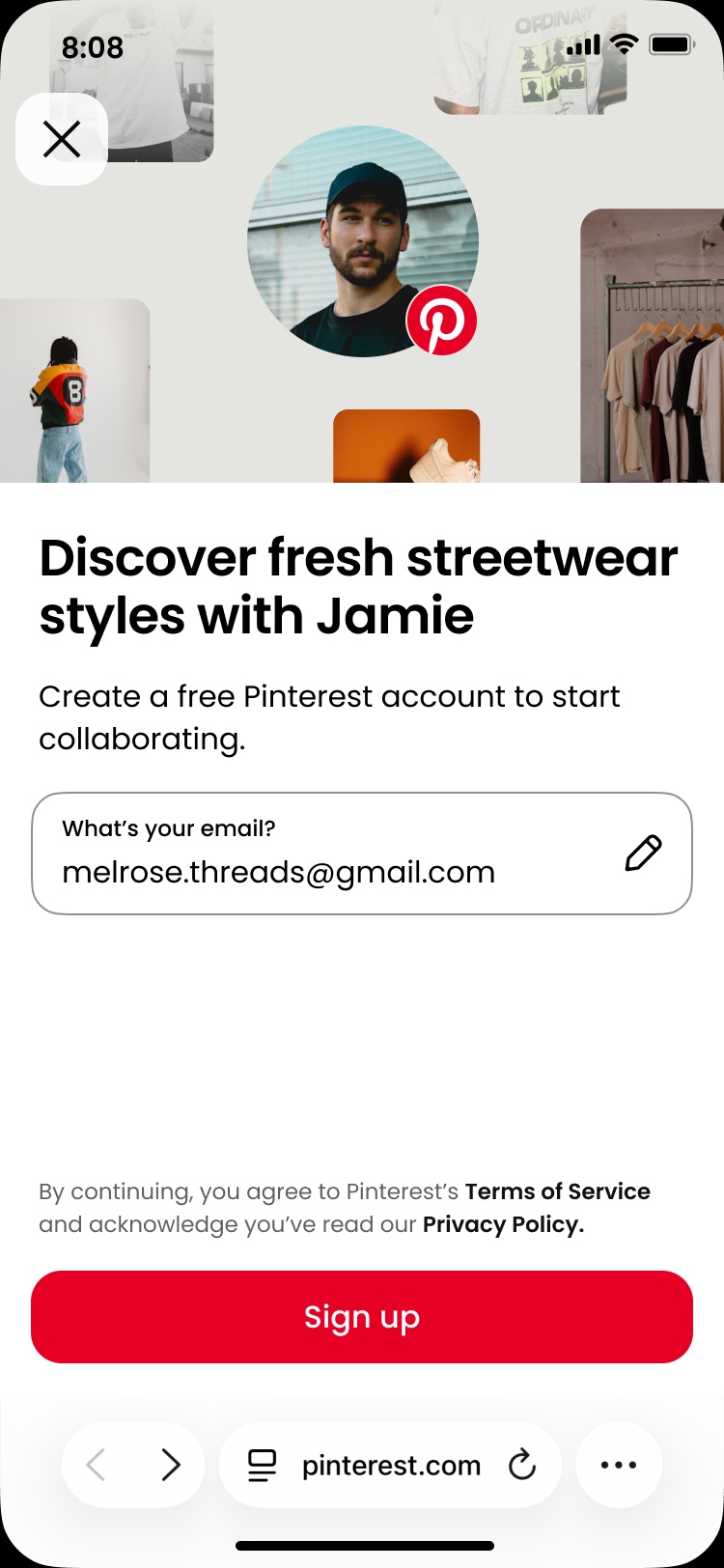
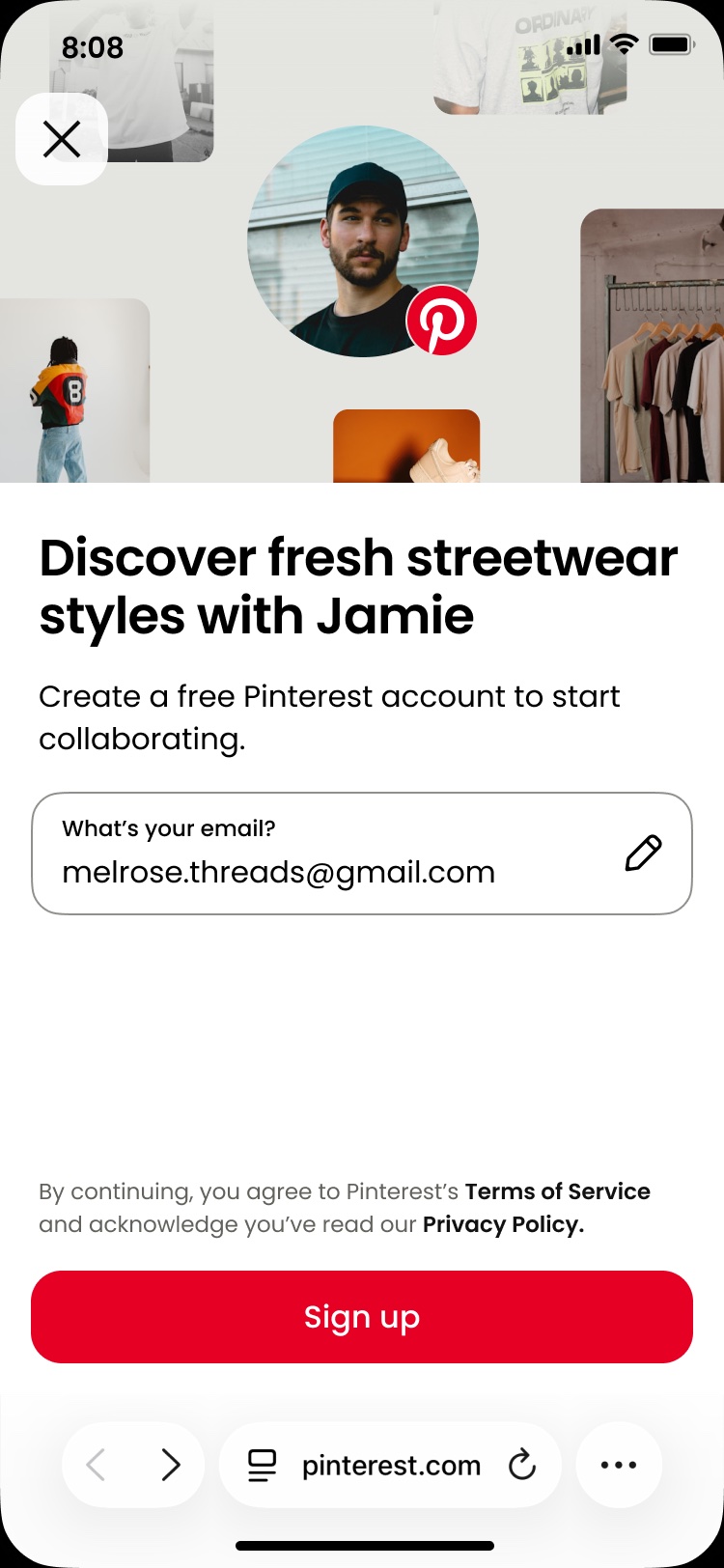
Signup now starts inside the invitation itself, so the friend and the idea stay on screen while people create their account.
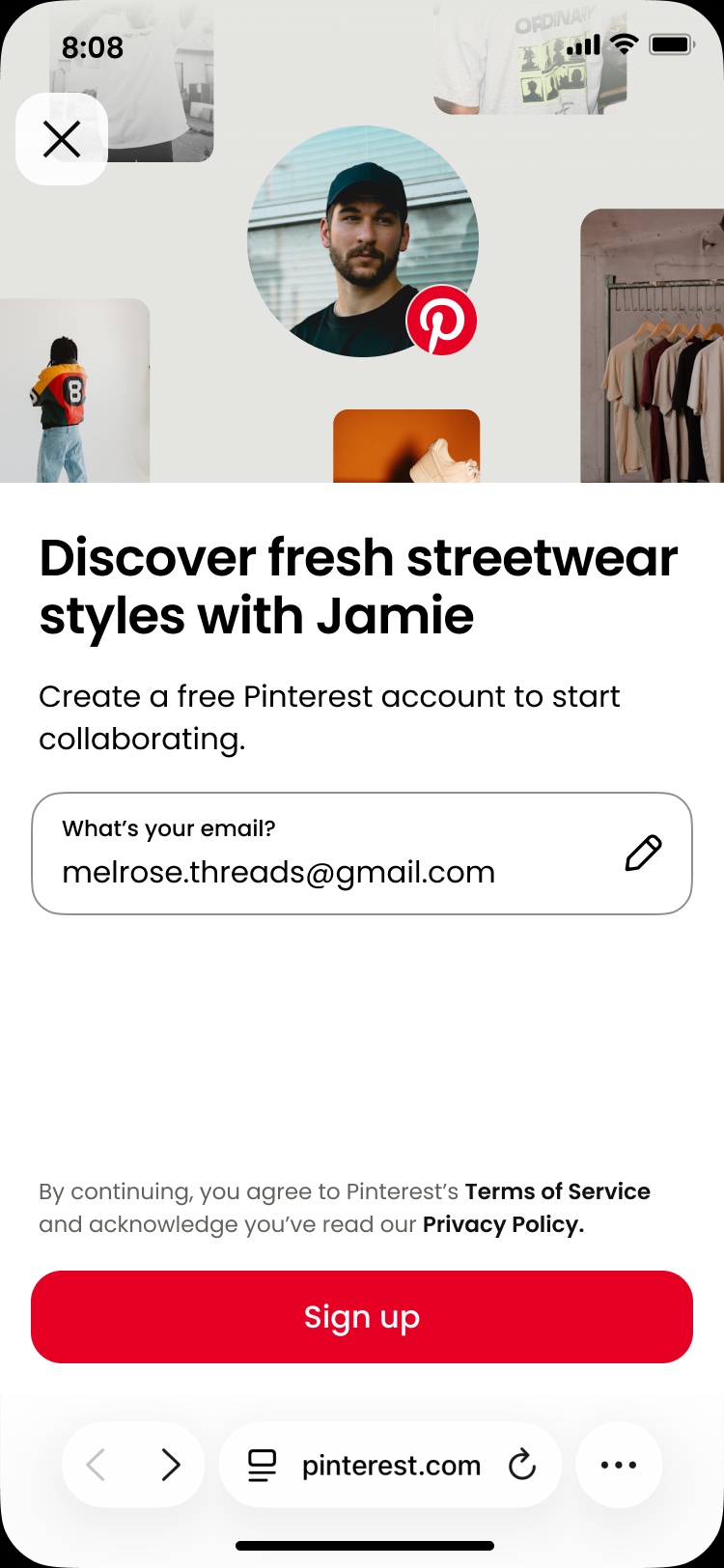
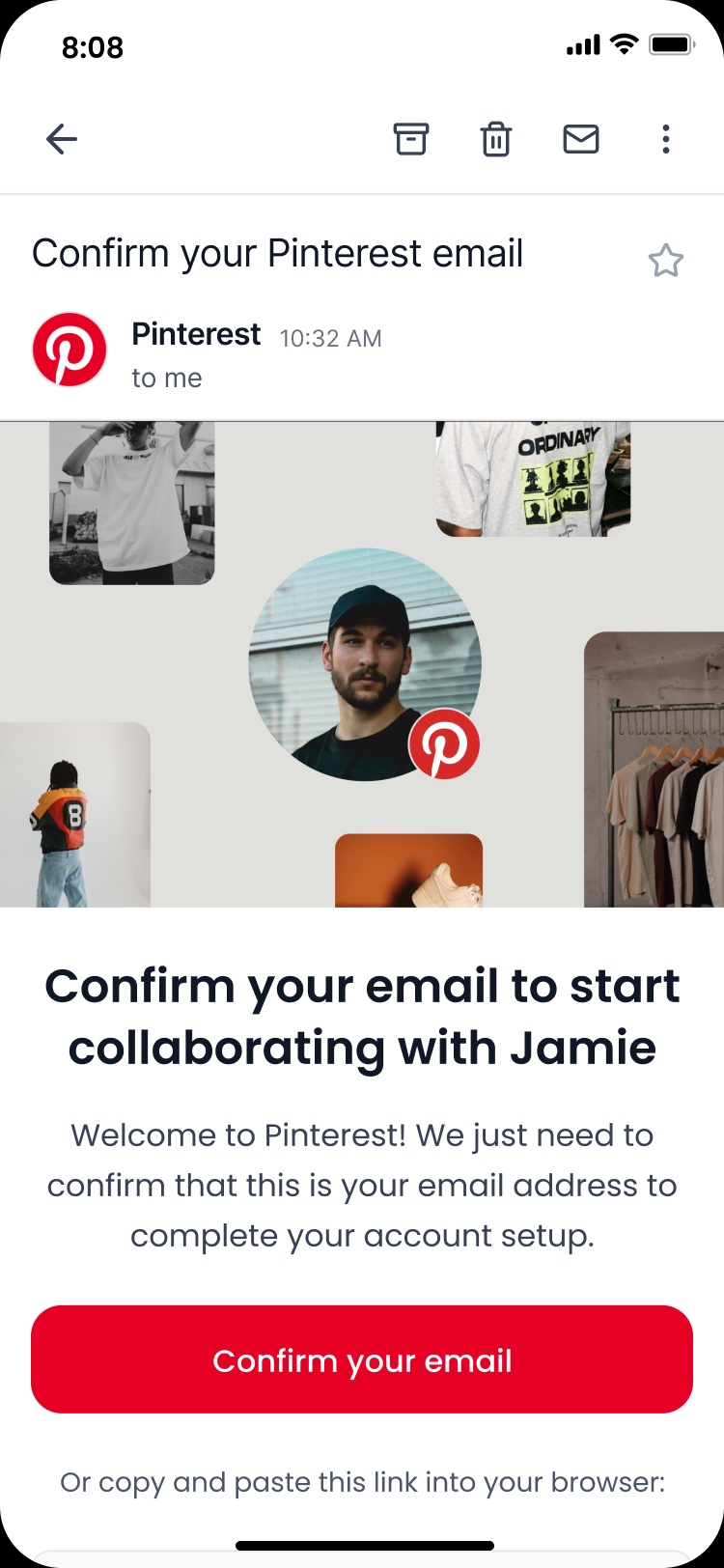
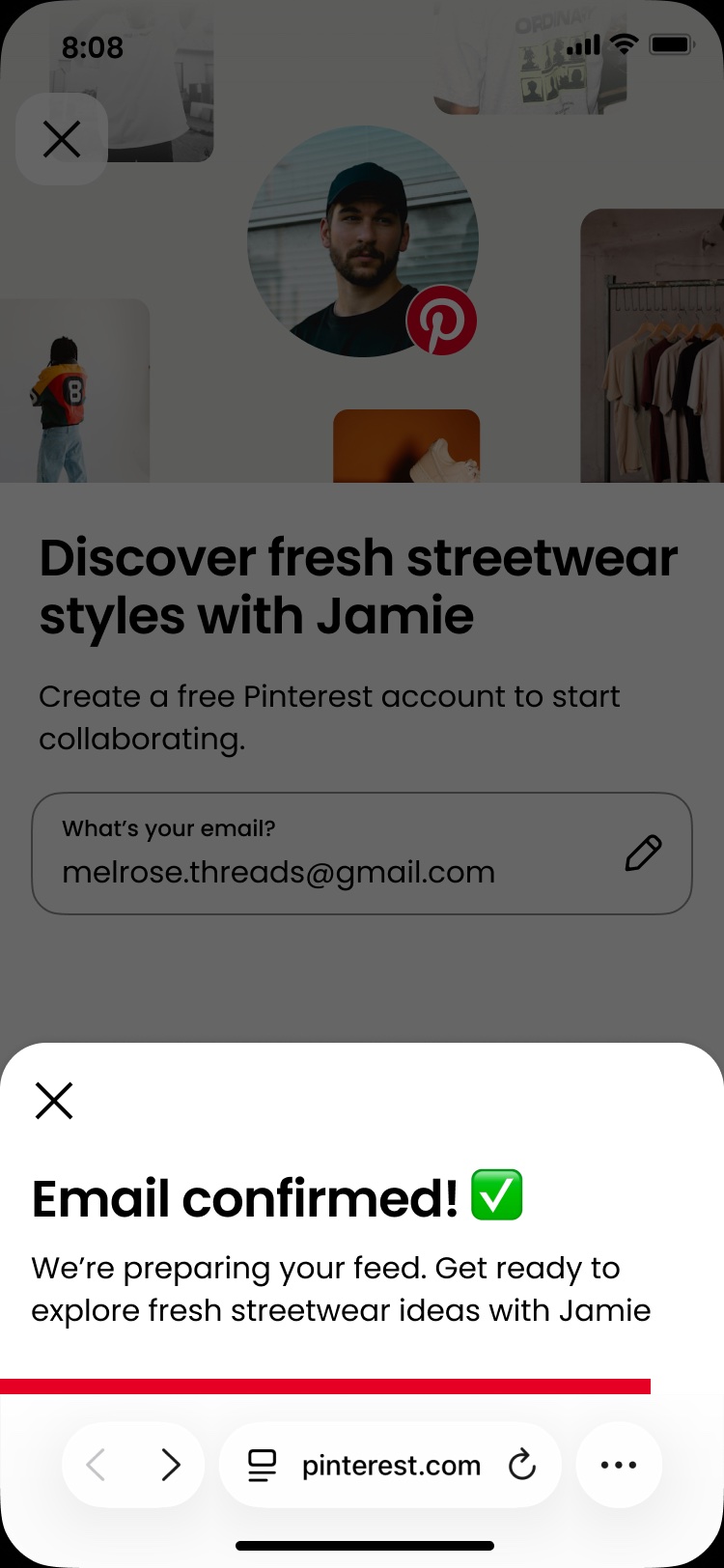
People enter only their email, confirm it from their inbox, and return to Pinterest already signed in, with no password or interest picker in the way.
Value-focused landing
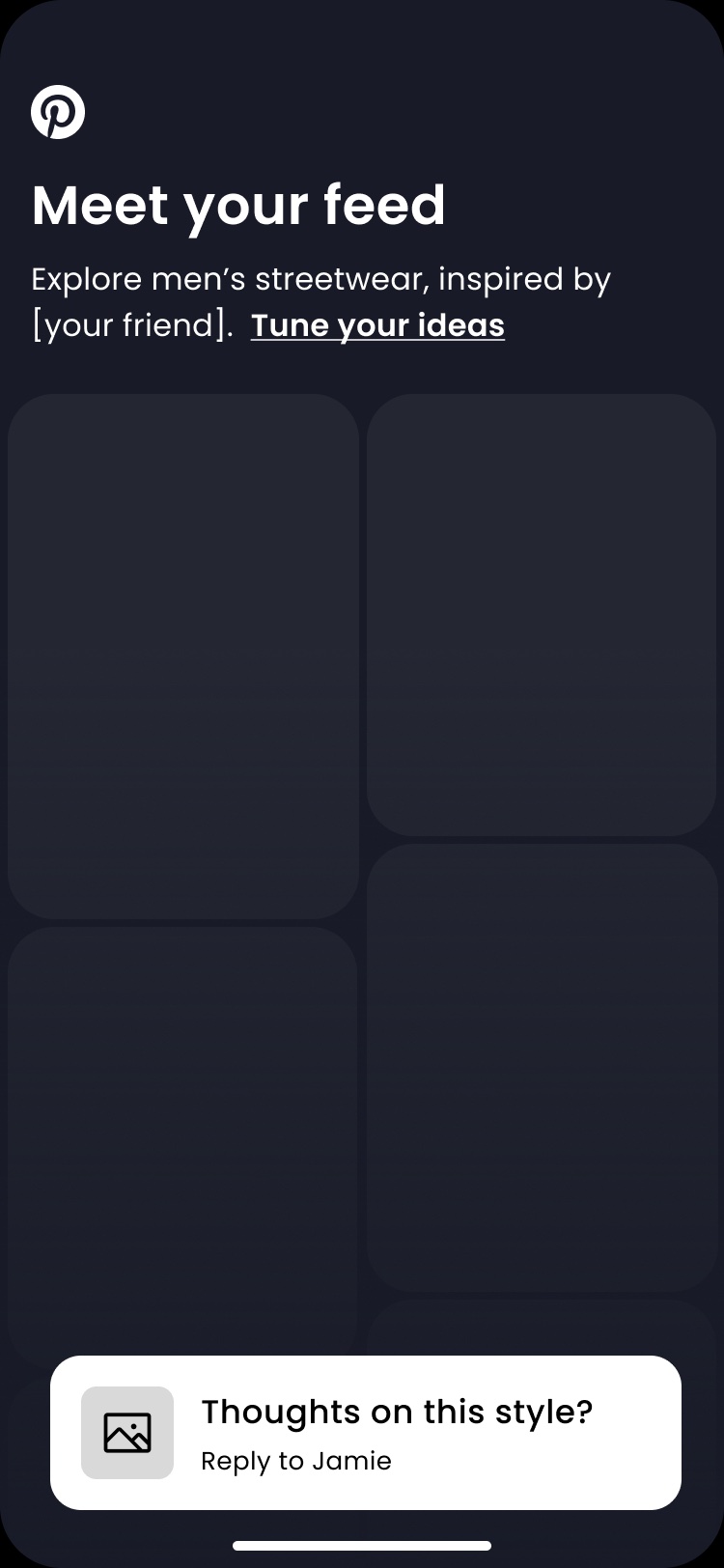
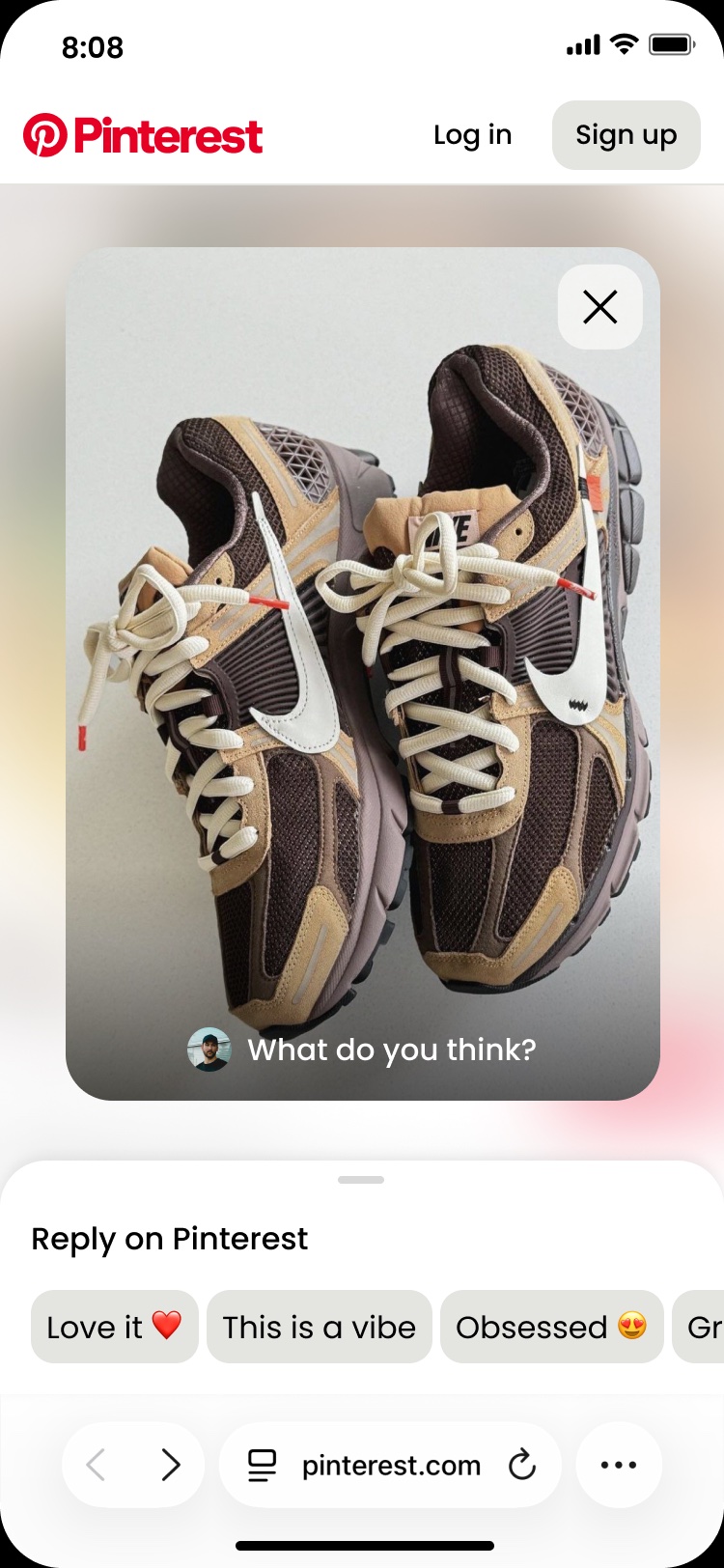
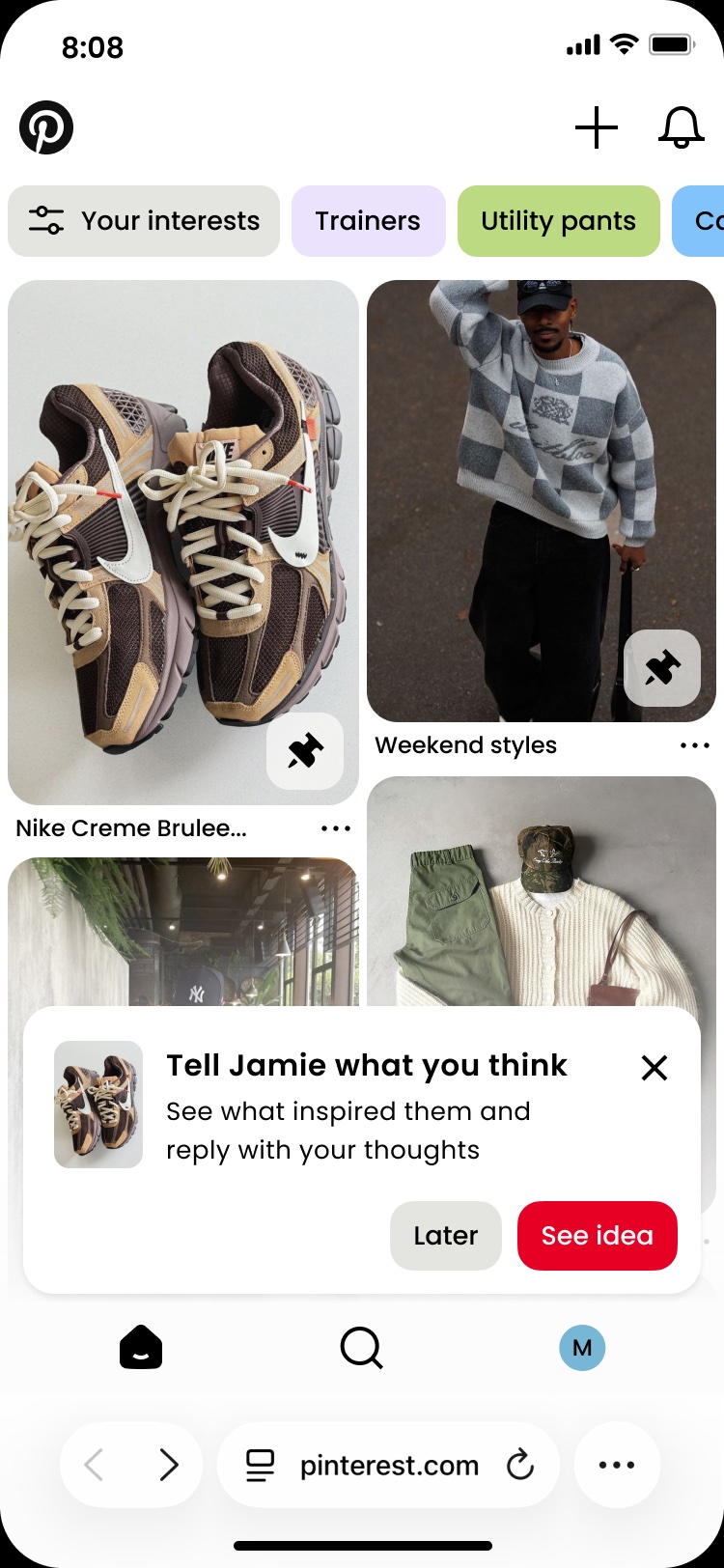
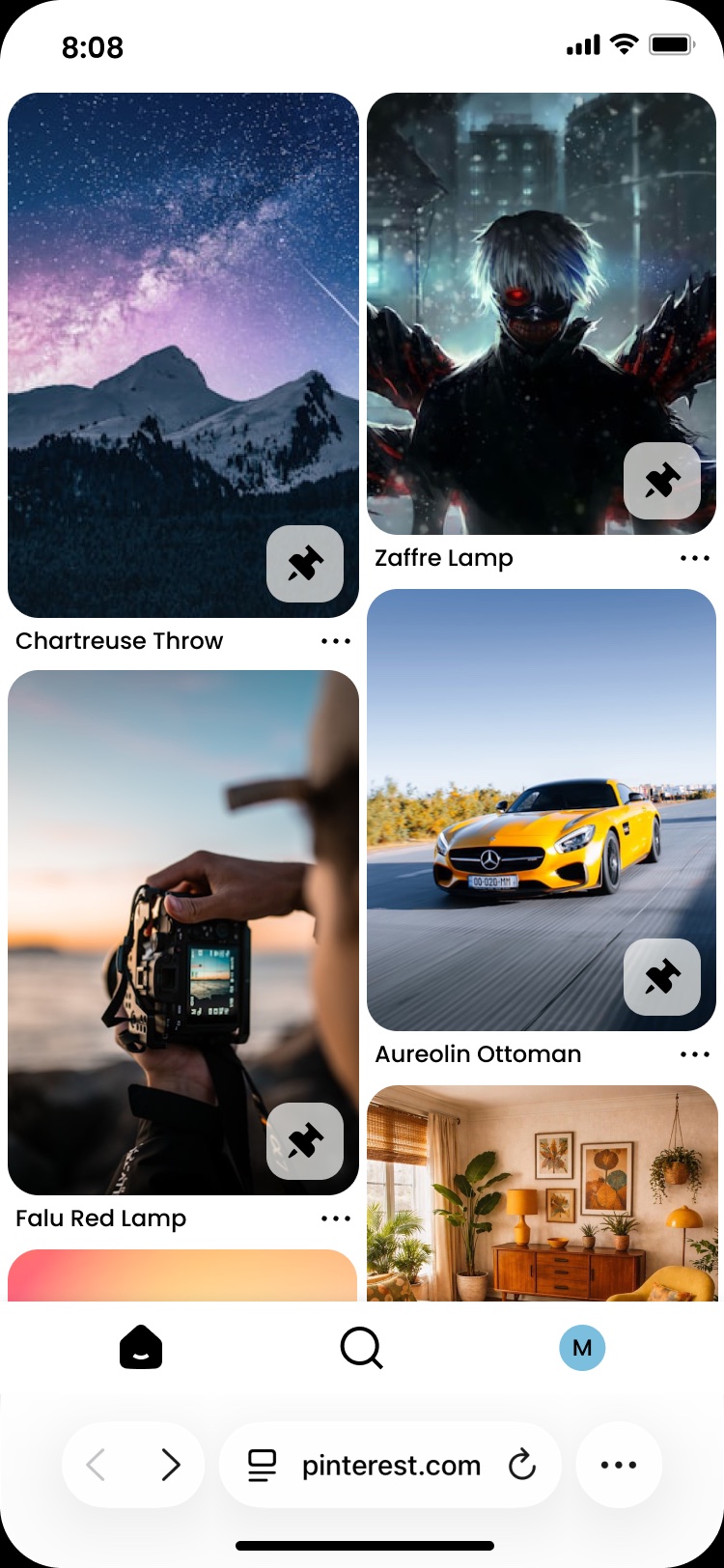
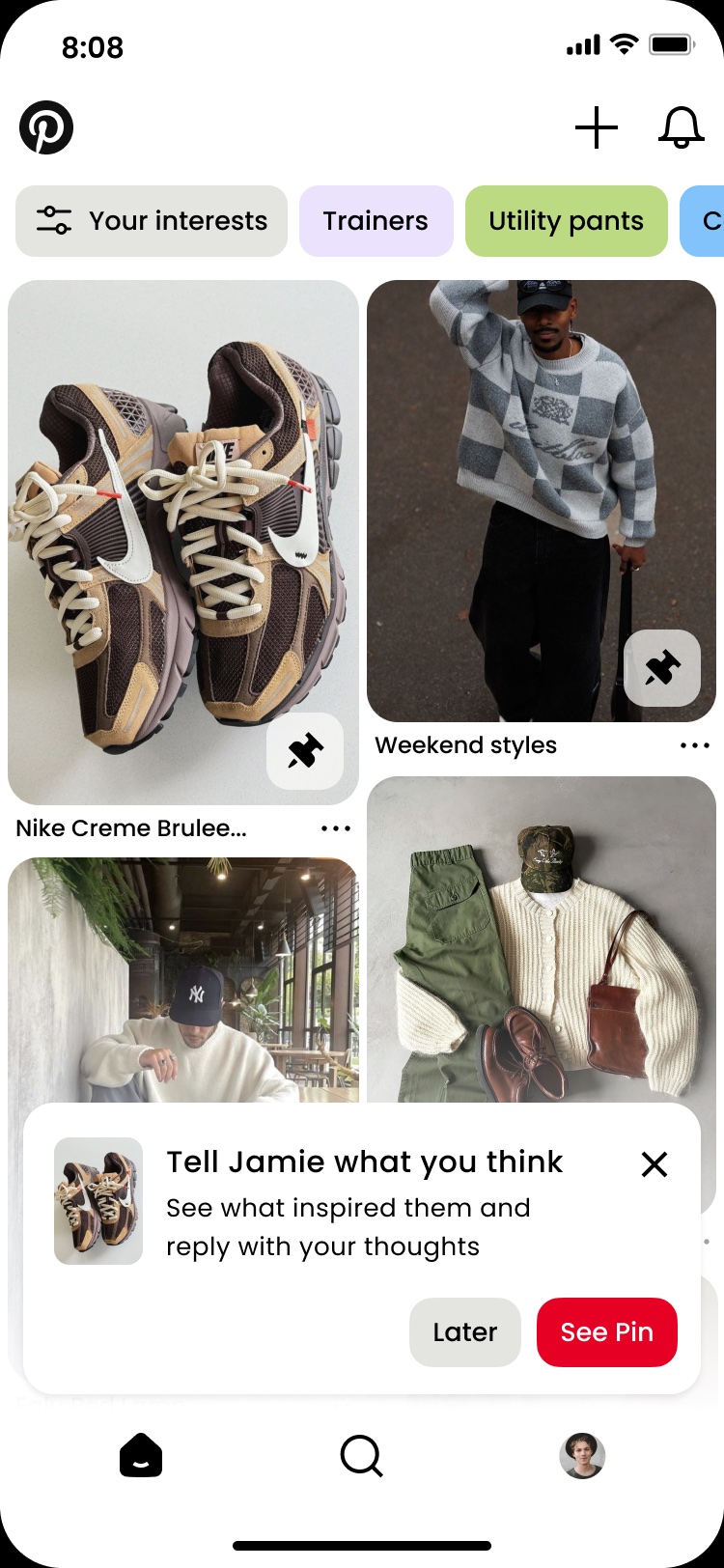
To skip the interest picker without leaving people with an empty feed, I pre-populated their home feed with content related to the idea their friend sent.
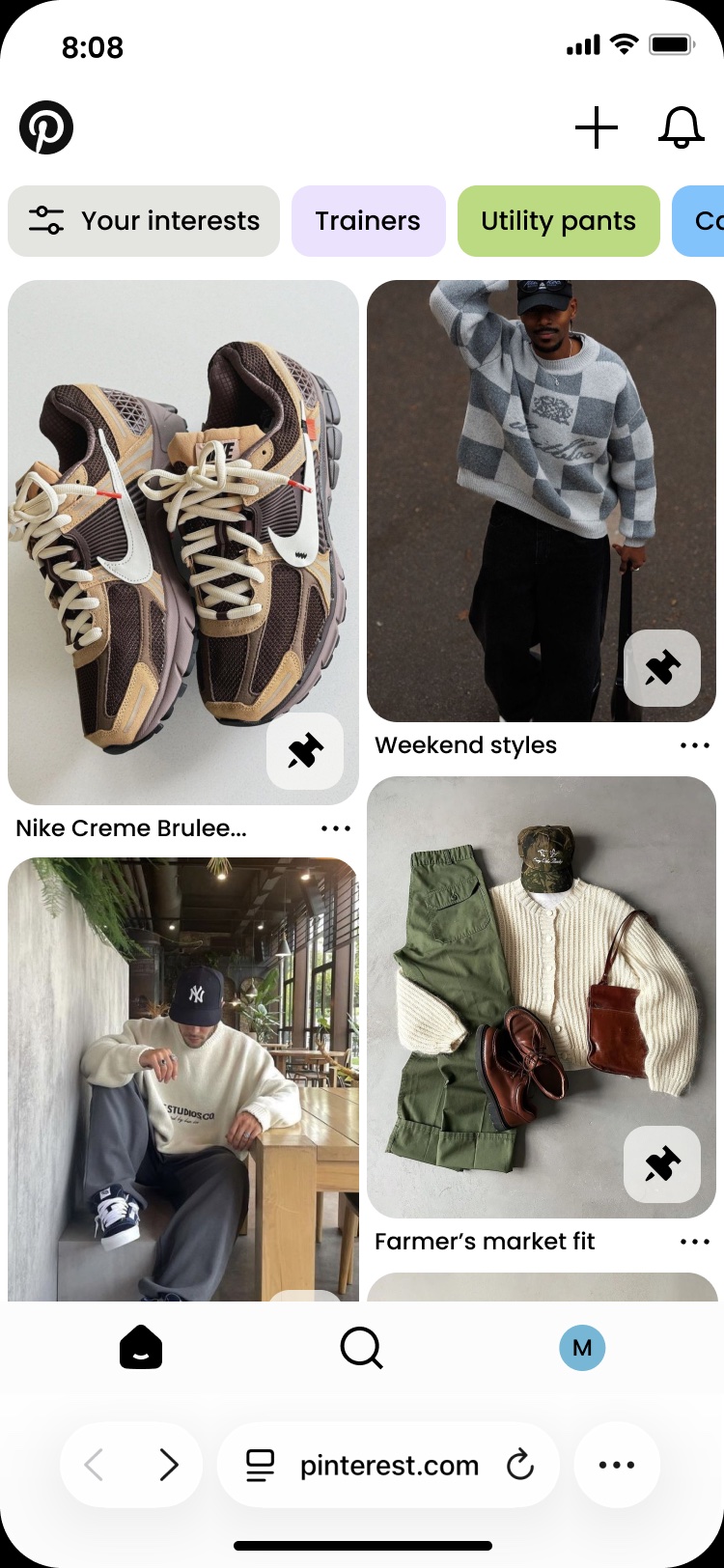
Once people land in their feed, a prompt invites them to reply to the person who shared, closing the loop that brought them to Pinterest.
A light card above the feed suggests telling Jamie what they think, without interrupting browsing.
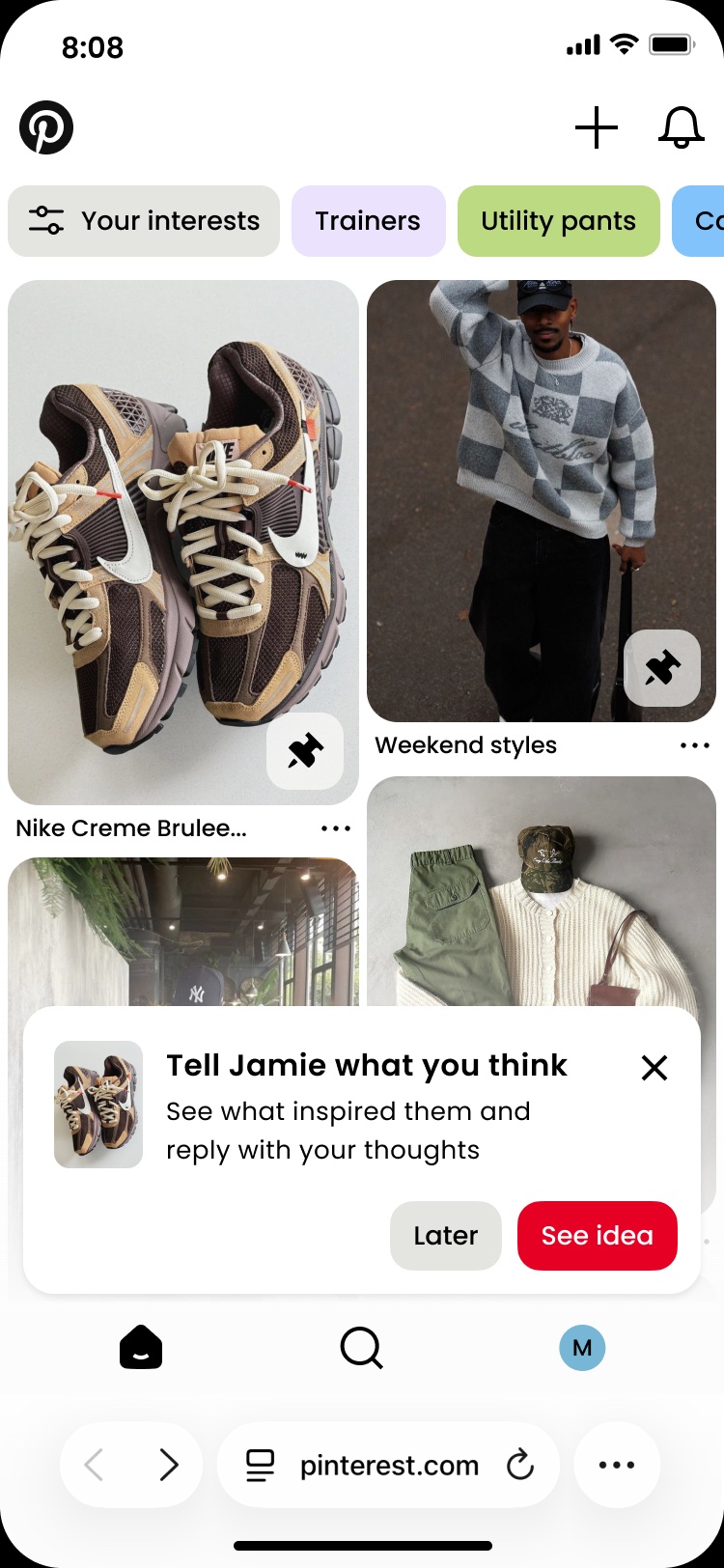
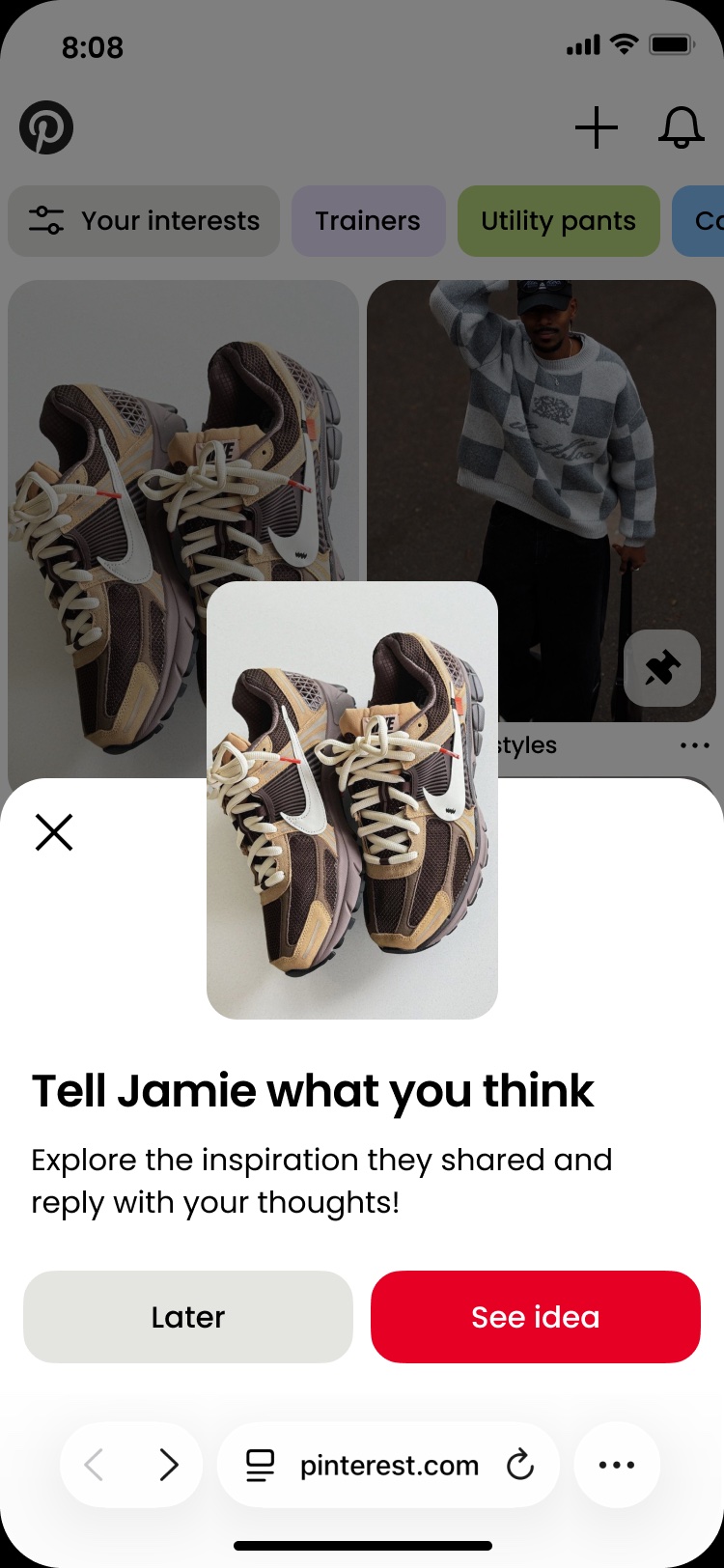
A bottom sheet puts the shared idea and the reply action front and center, at the cost of pausing the feed.
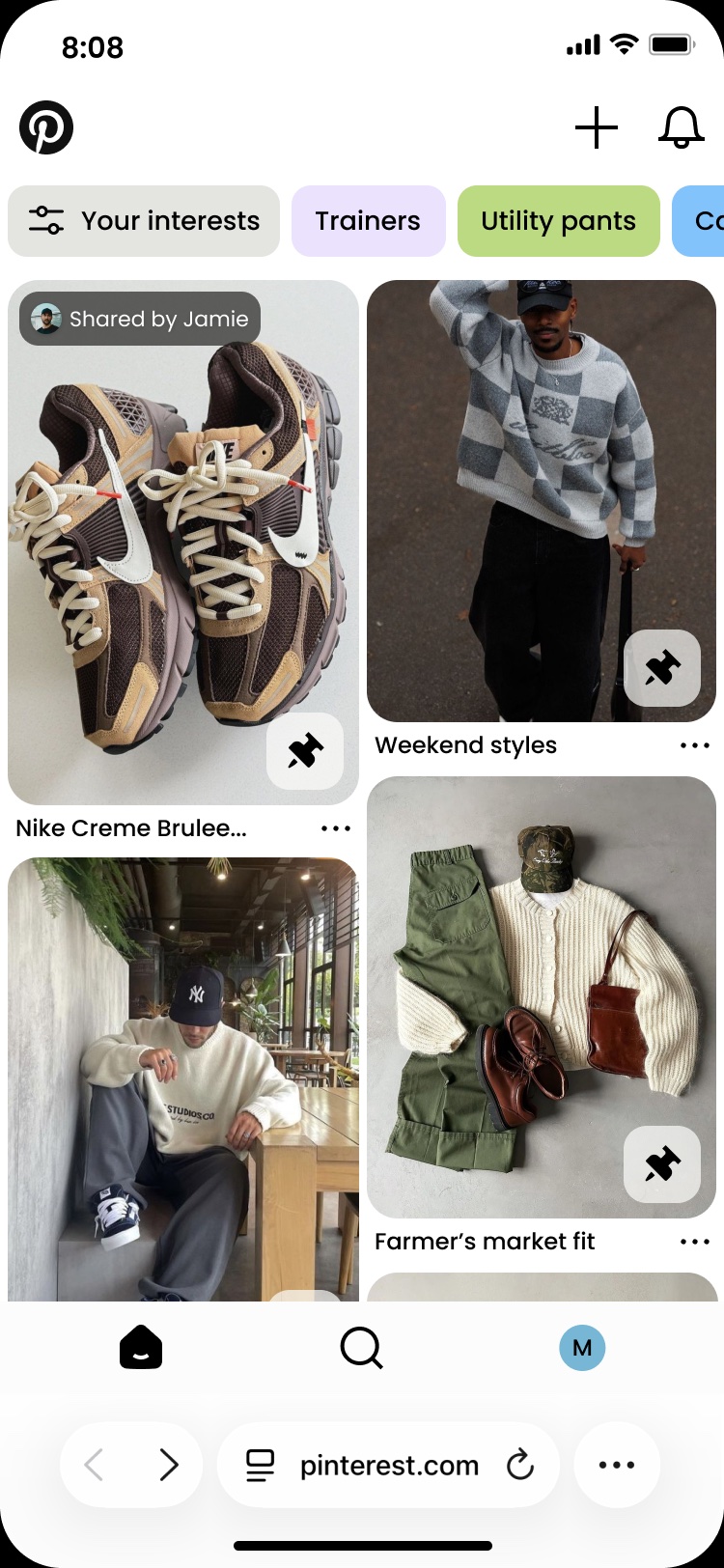
A small “Shared by Jamie” label on the Pin keeps the connection visible while staying out of the way.
Off-loaded setup
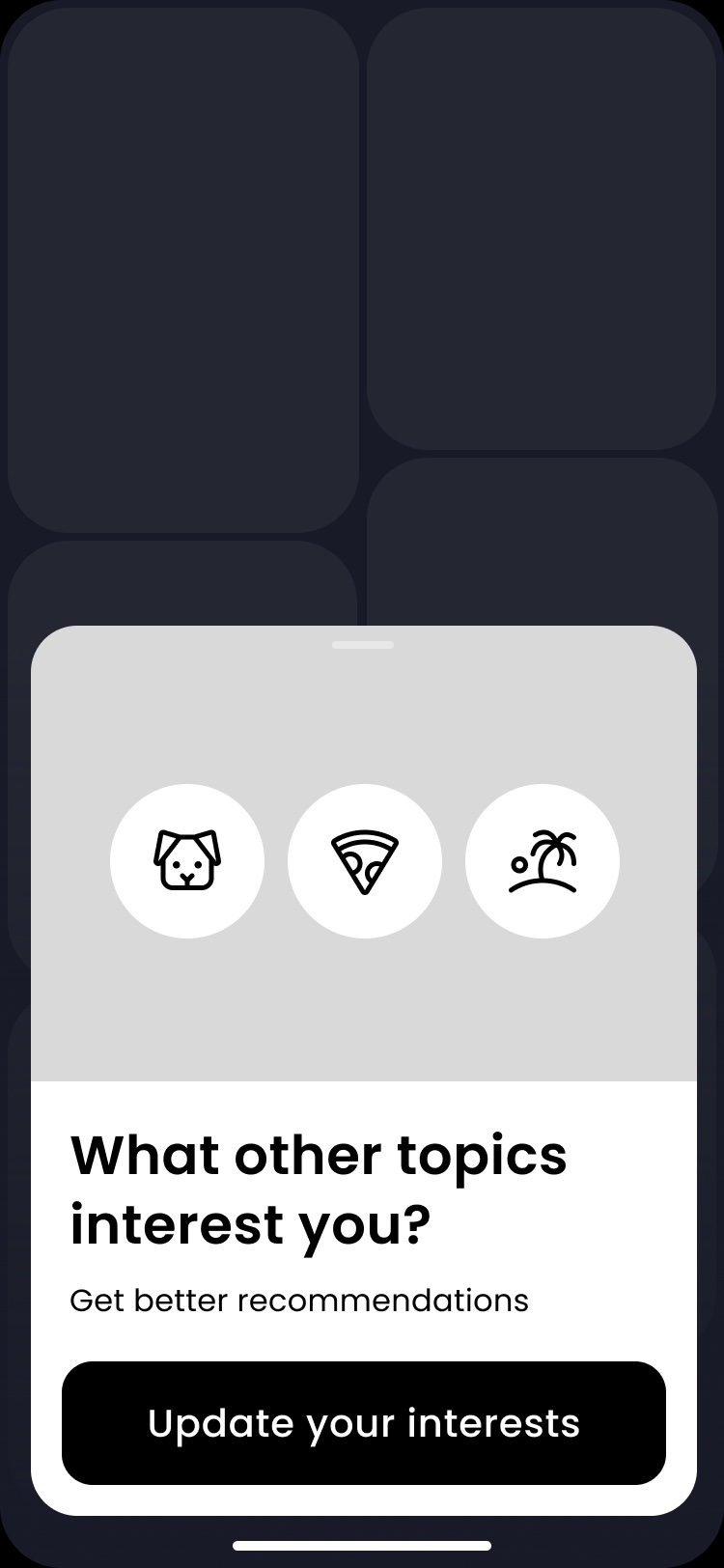
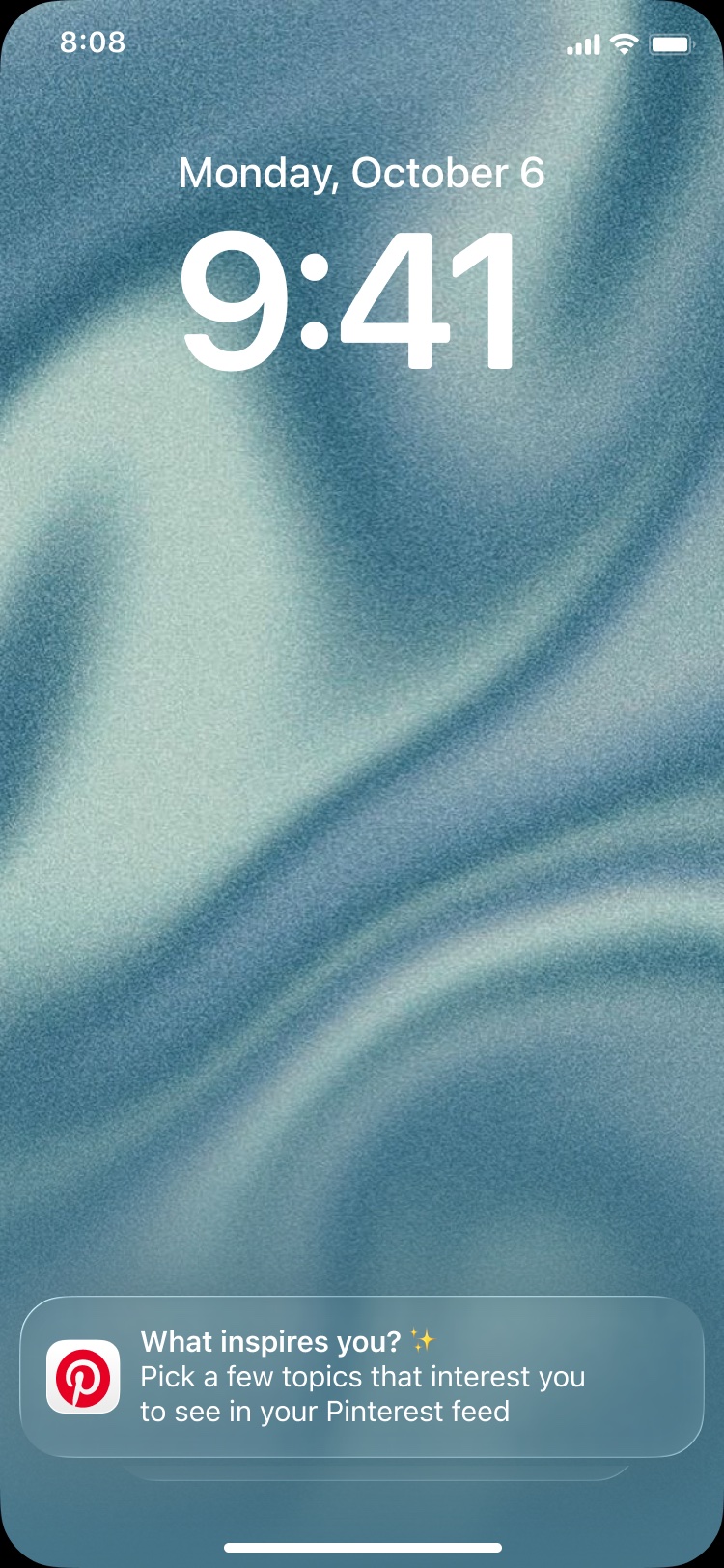
Shortening signup removed steps like picking interests, adding a birthday and setting up a profile. Rather than lose them, I moved each one into a push notification sent after people had already found value on Pinterest.
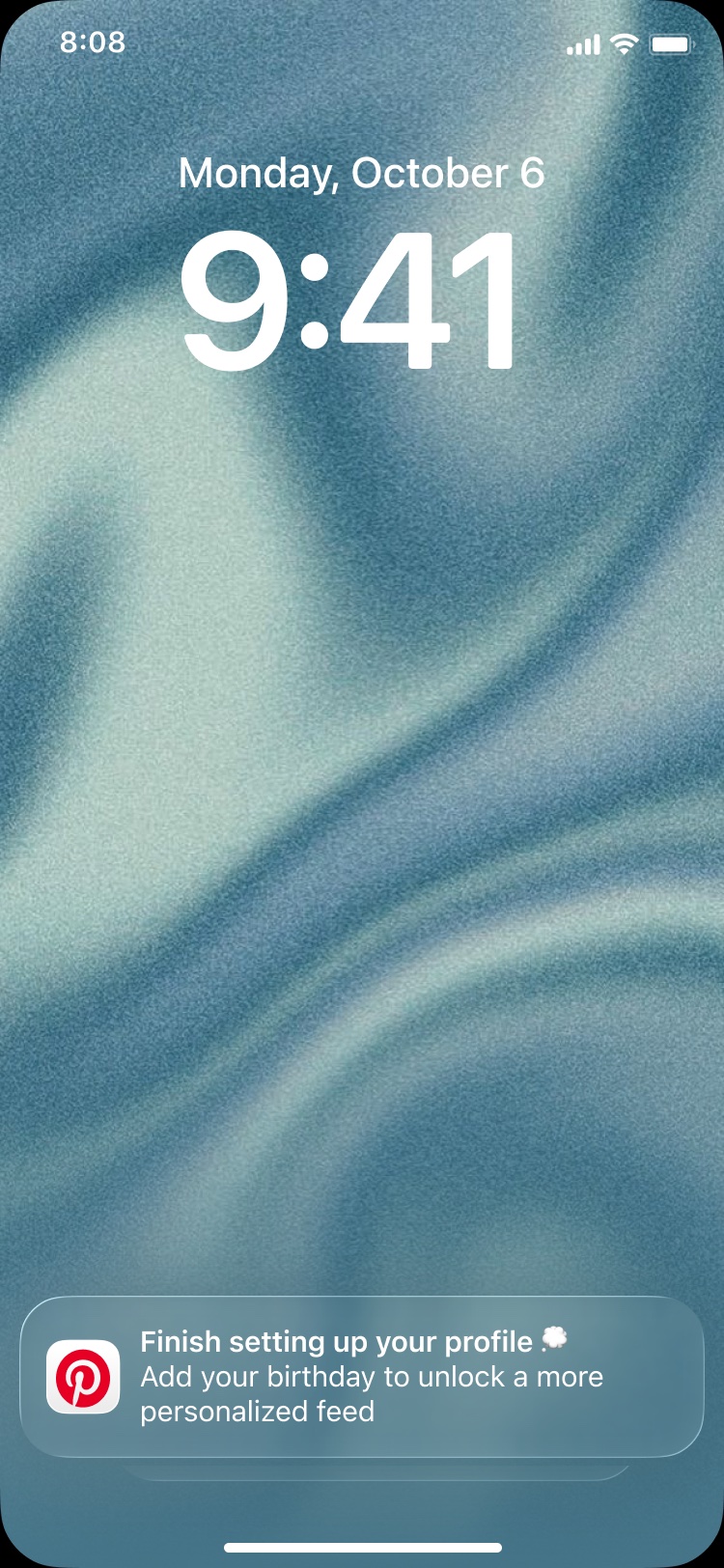
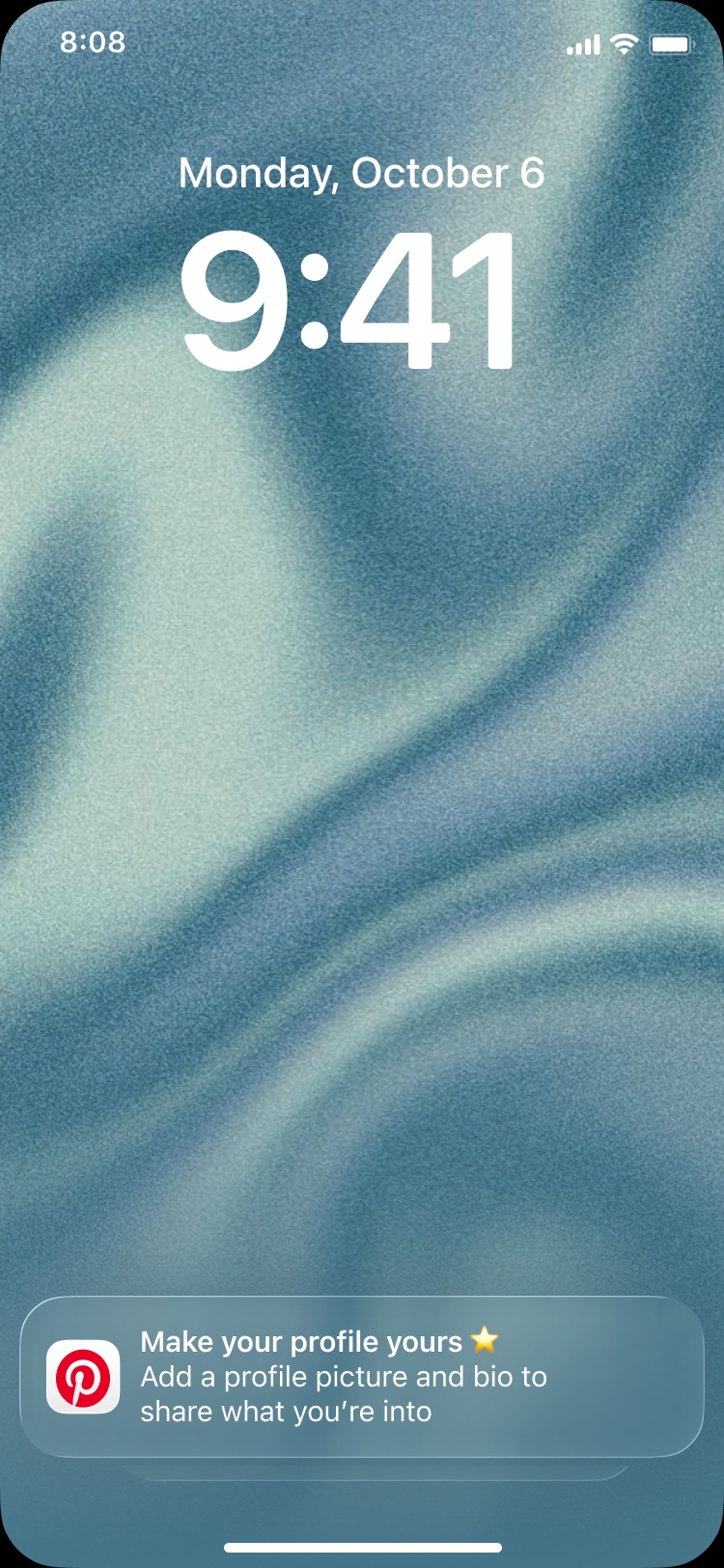
04
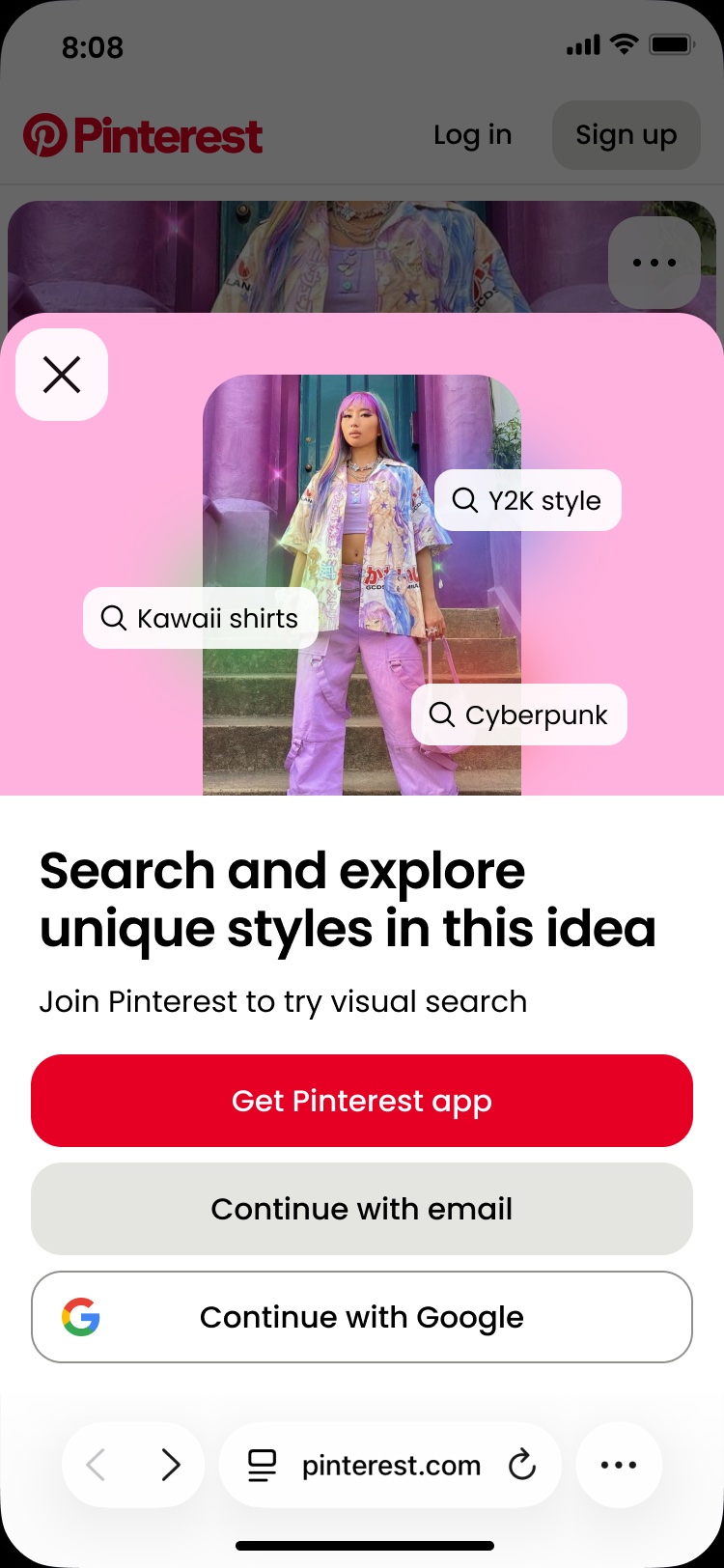
The same structure adapts to why a person landed on Pinterest, whether a friend sent them a link, they found an idea through search, or they wanted to try a feature like visual search.
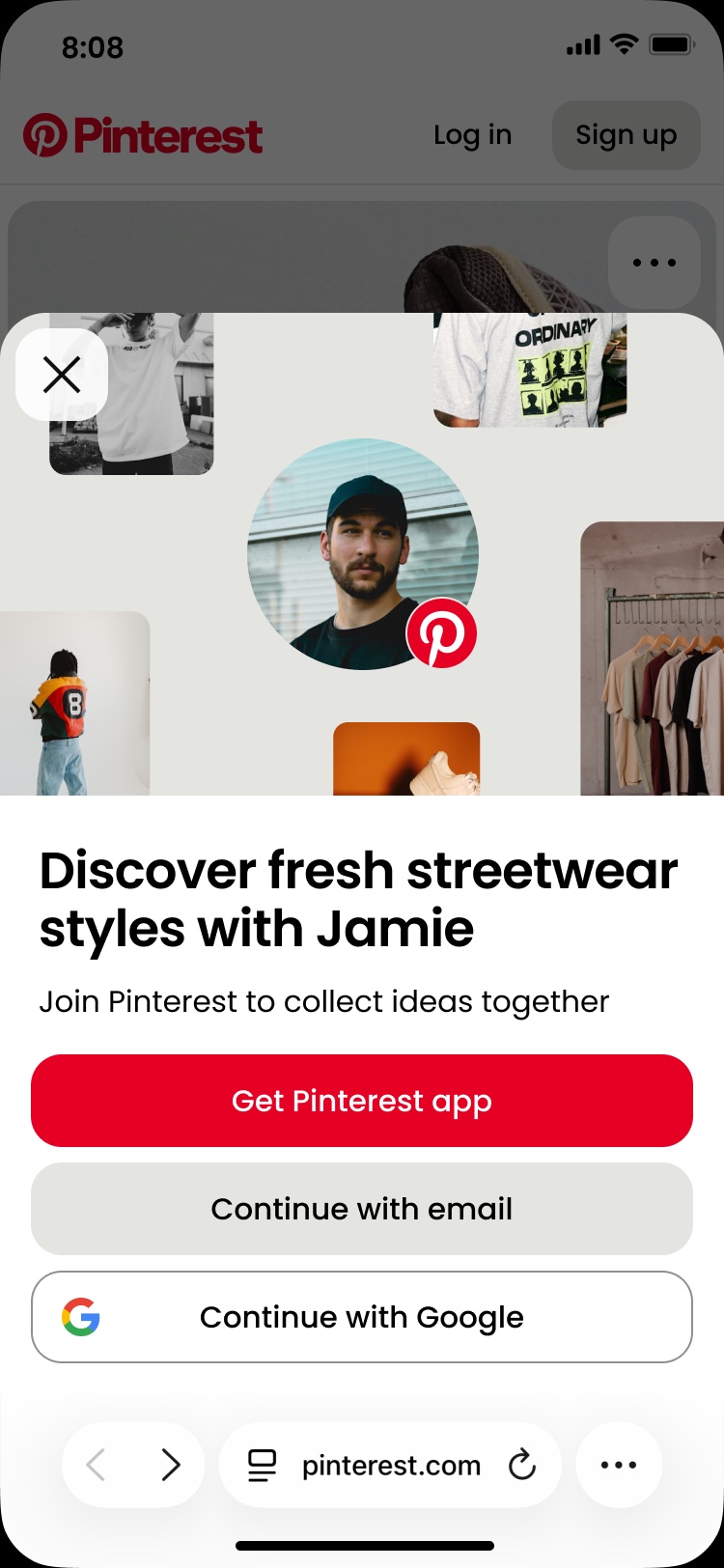
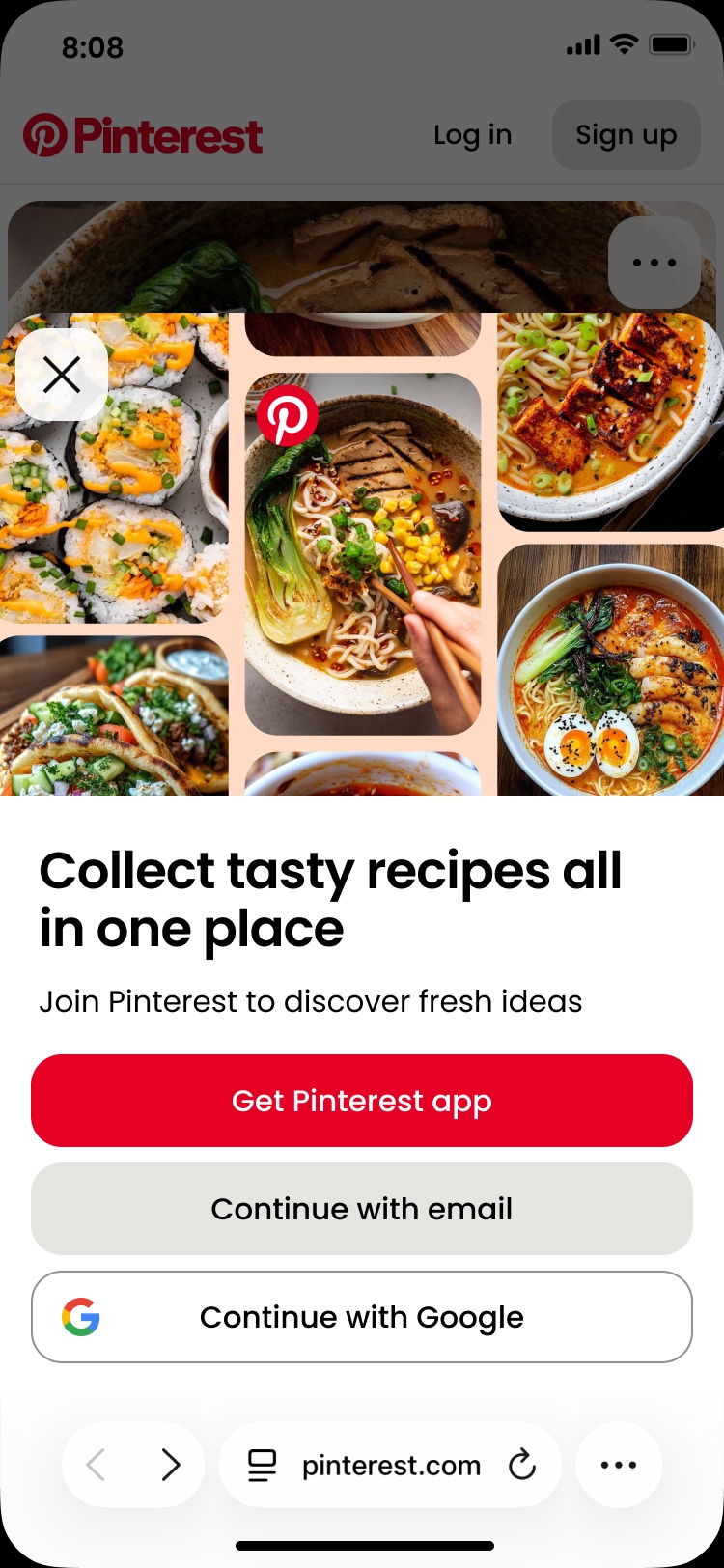
05
Experiment strategy
I sequenced experiments from the first touchpoint inward, so each phase could prove its impact before we invested in the next one.
01
+180k MAU
Leading with the friend and the idea they shared made the invitation feel personal, and delivered the biggest single lift.
02
+70k MAU
Of the action-based prompts, the scroll upsell won by a wide margin (+70k MAU vs. +3k for replies): people wanted to keep browsing before committing.
03
+32k MAU
Keeping the friend and idea on screen through a shorter signup flow meant fewer people lost the thread halfway through.
04
+38k MAU
Landing new members in a feed built from the shared idea, with a prompt to reply, gave them an immediate reason to stay.
06
I redesigned the path from opening a shared link to joining Pinterest around the friend who sent it: a social upsell, a one-step signup, and a first feed built from the idea they shared.
+15% successful signups (vs. 4% goal)
+320k monthly active users (vs. +100k goal)
Questioning the basics drove big impact. Collapsing a traditionally heavy onboarding flow proved to be a powerful growth lever.