A new reason to return
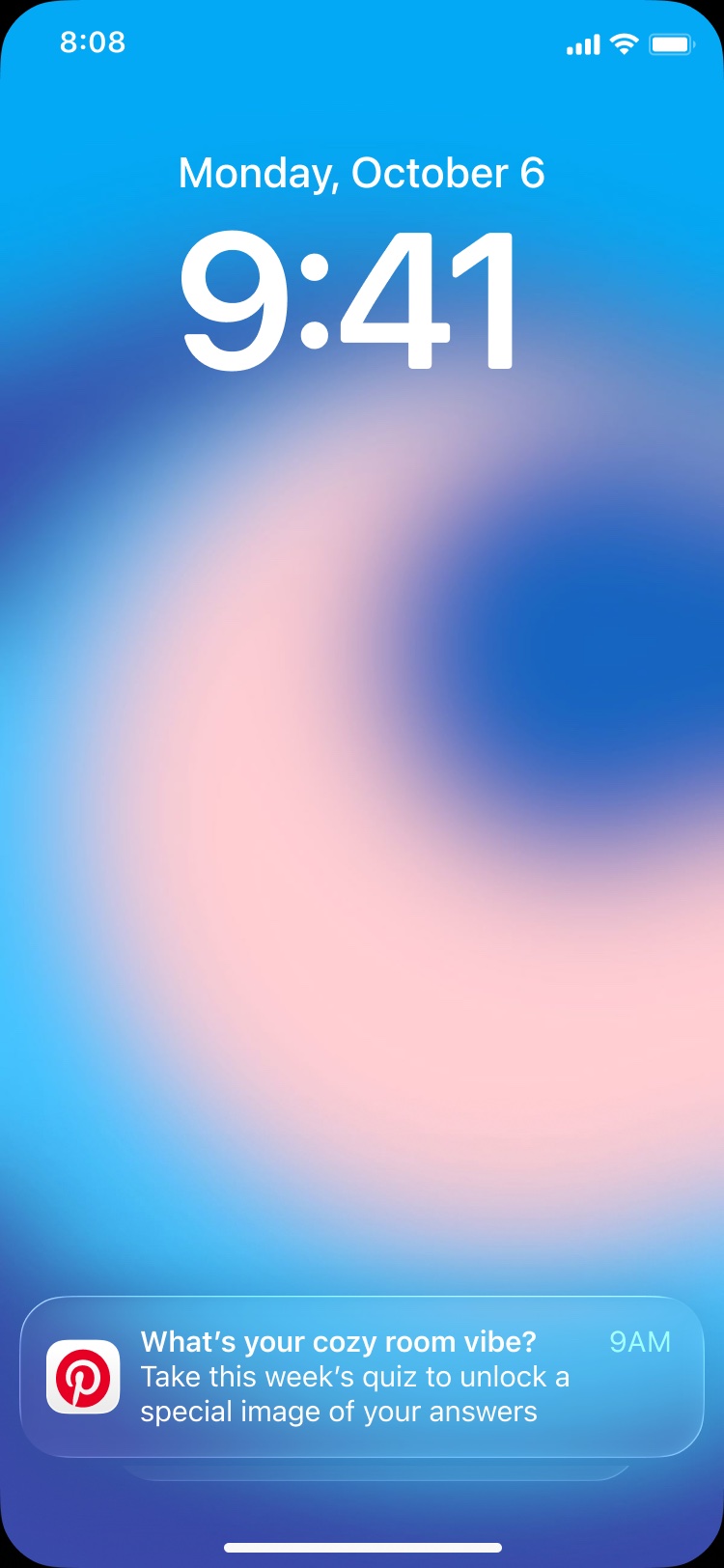
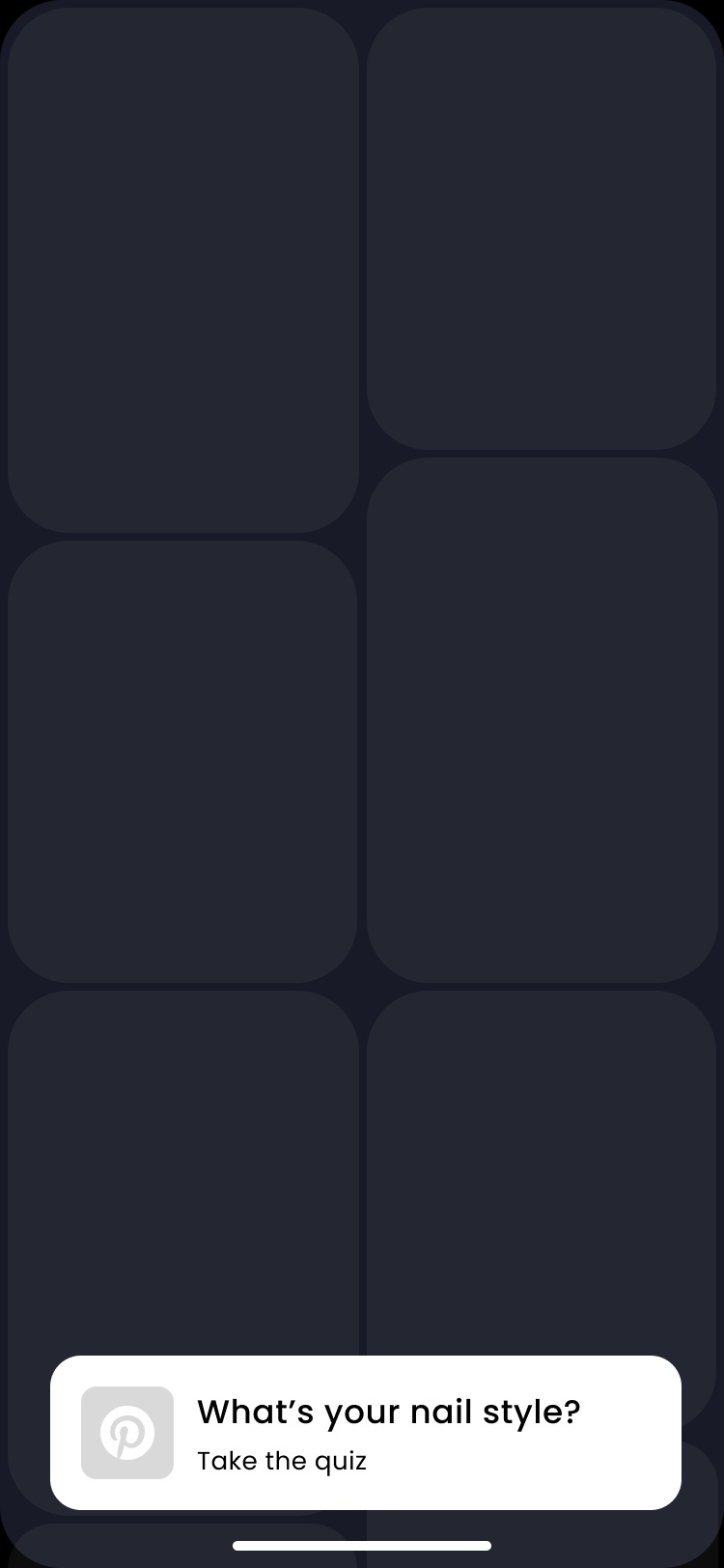
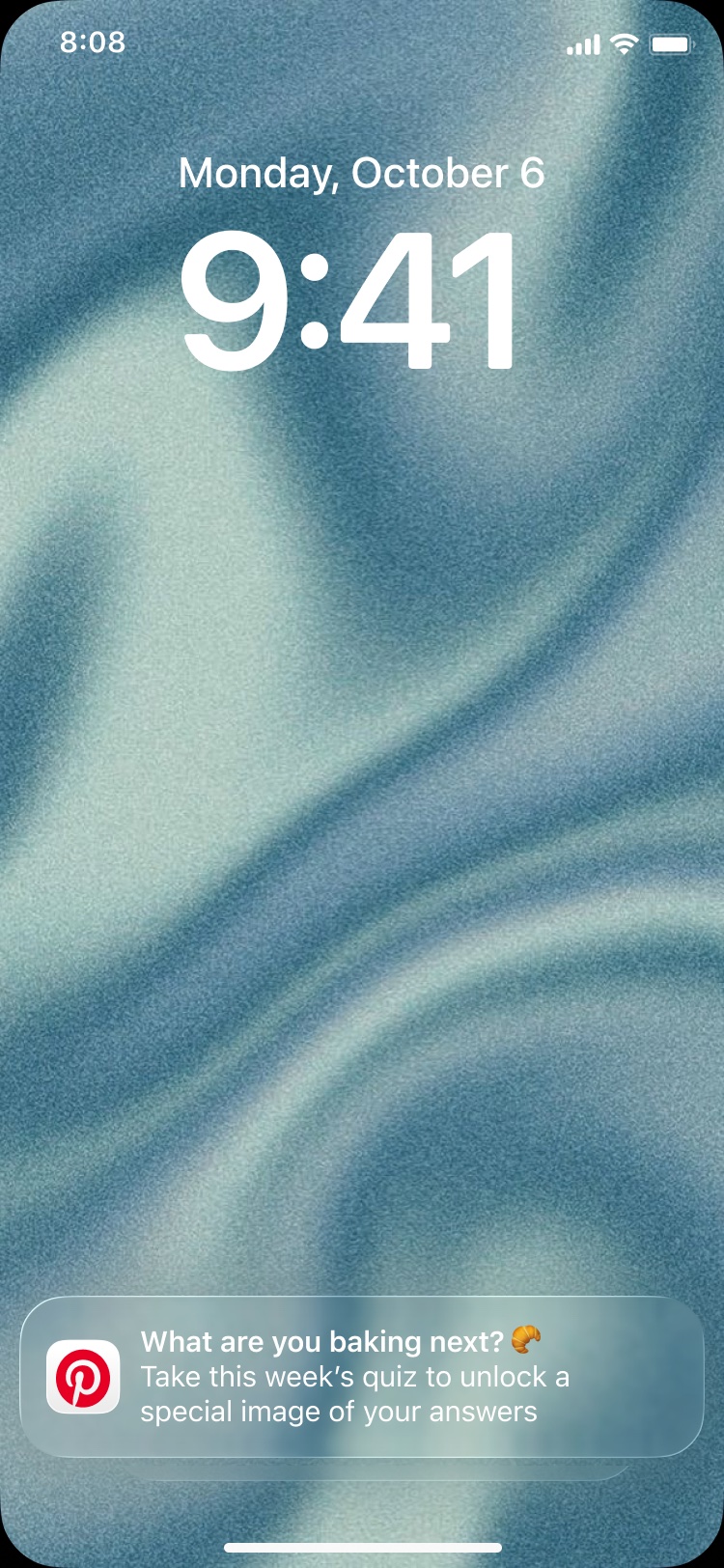
A weekly notification invites people to take a quiz on a topic correlated with high-retention use cases.
Case study
Half of Pinterest users went dormant each month. Use was episodic: people came with a specific need, got what they wanted, and left with no reason to return.
I led the design of weekly interactive quizzes: people pick favorites between Pins on topics they already love, and unlock a personalized, shareable result and fresher recommendations. The pilot directly informed Pinterest’s 2026 retention strategy.
+4.5% weekly active users
+250% shares to Instagram Stories
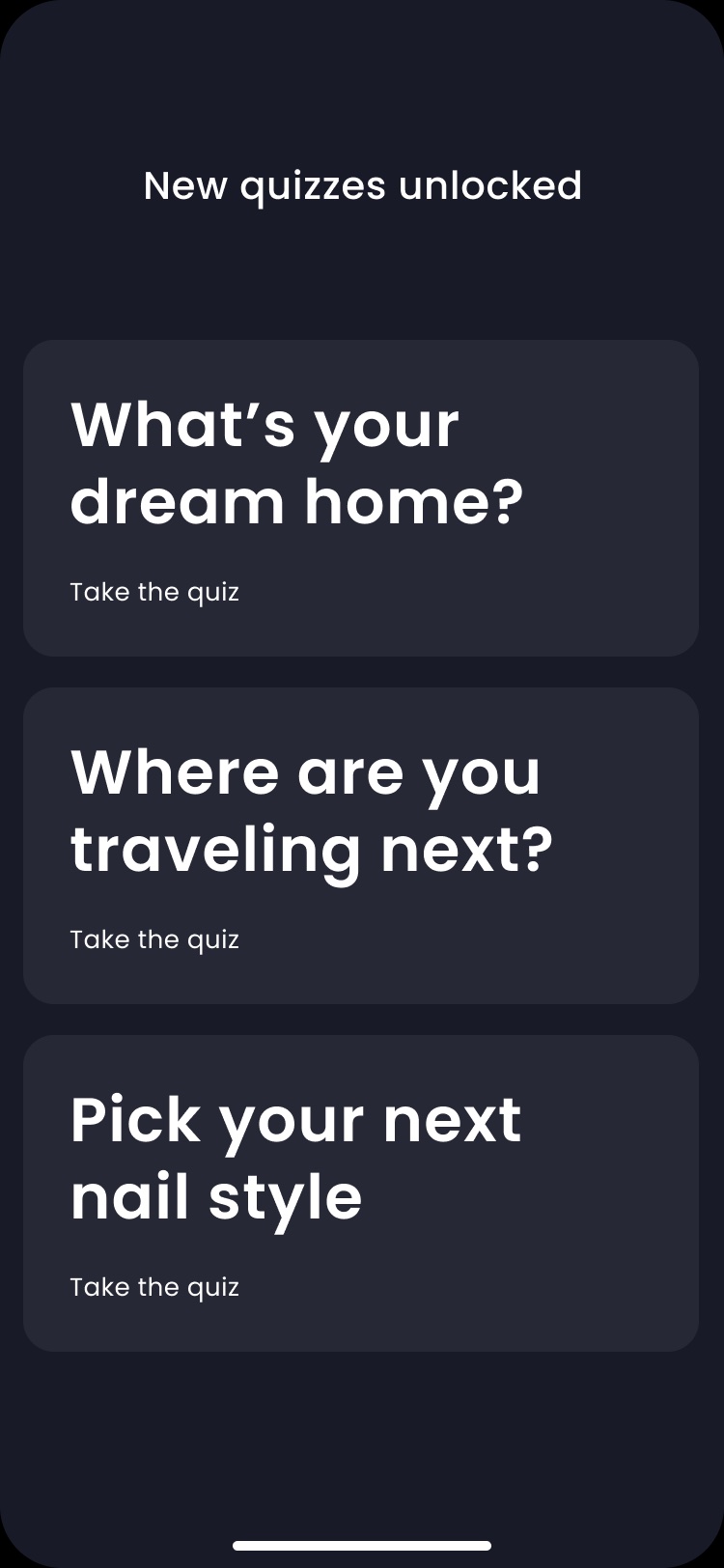
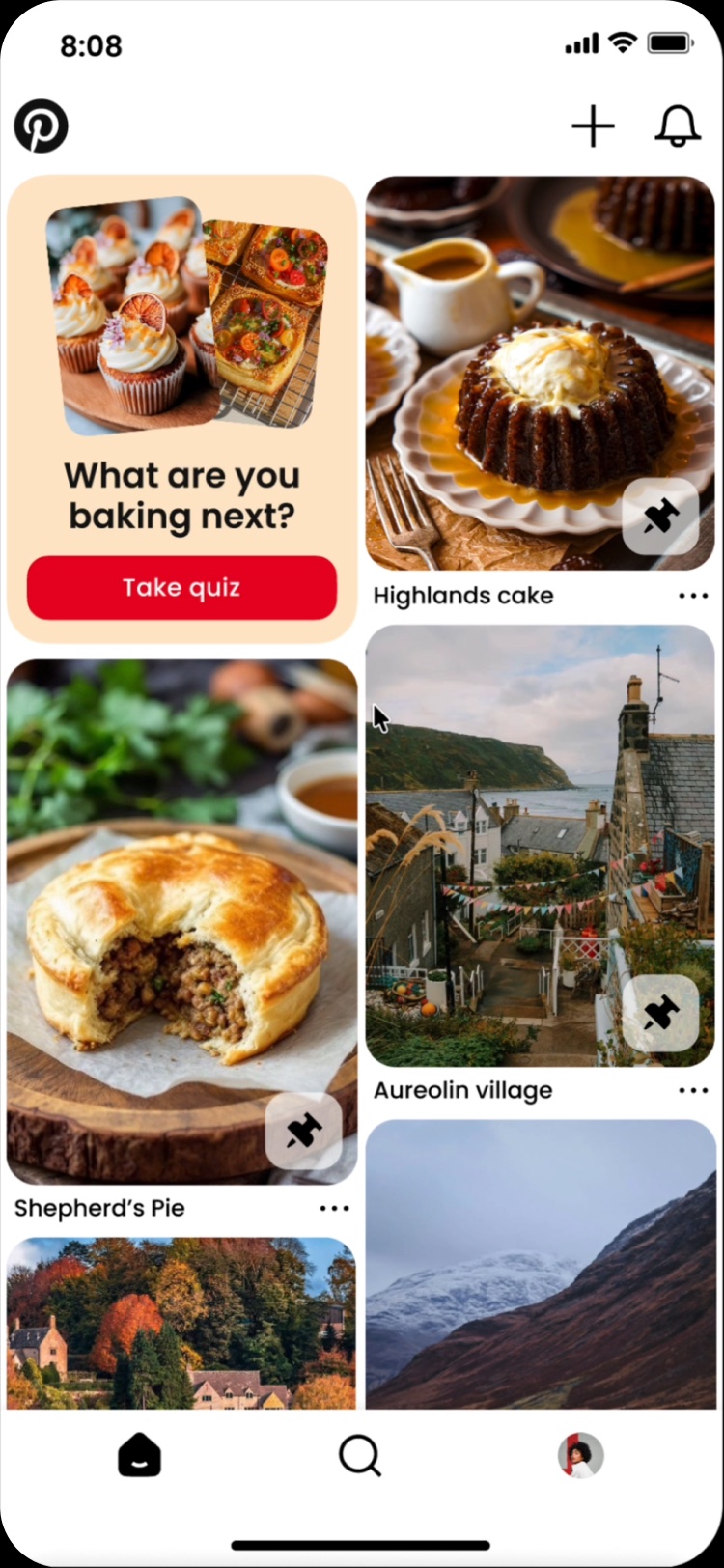
A weekly notification invites people to take a quiz on a topic correlated with high-retention use cases.
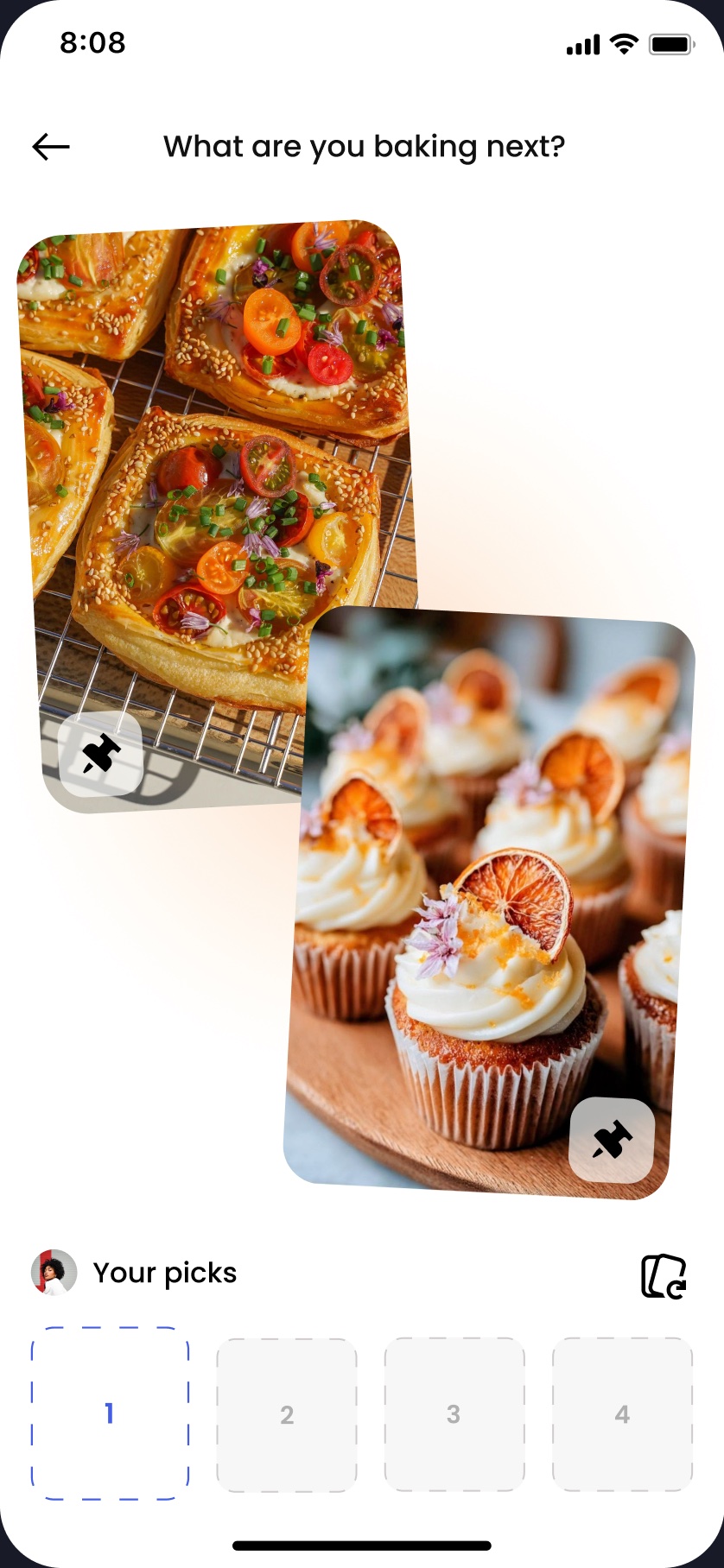
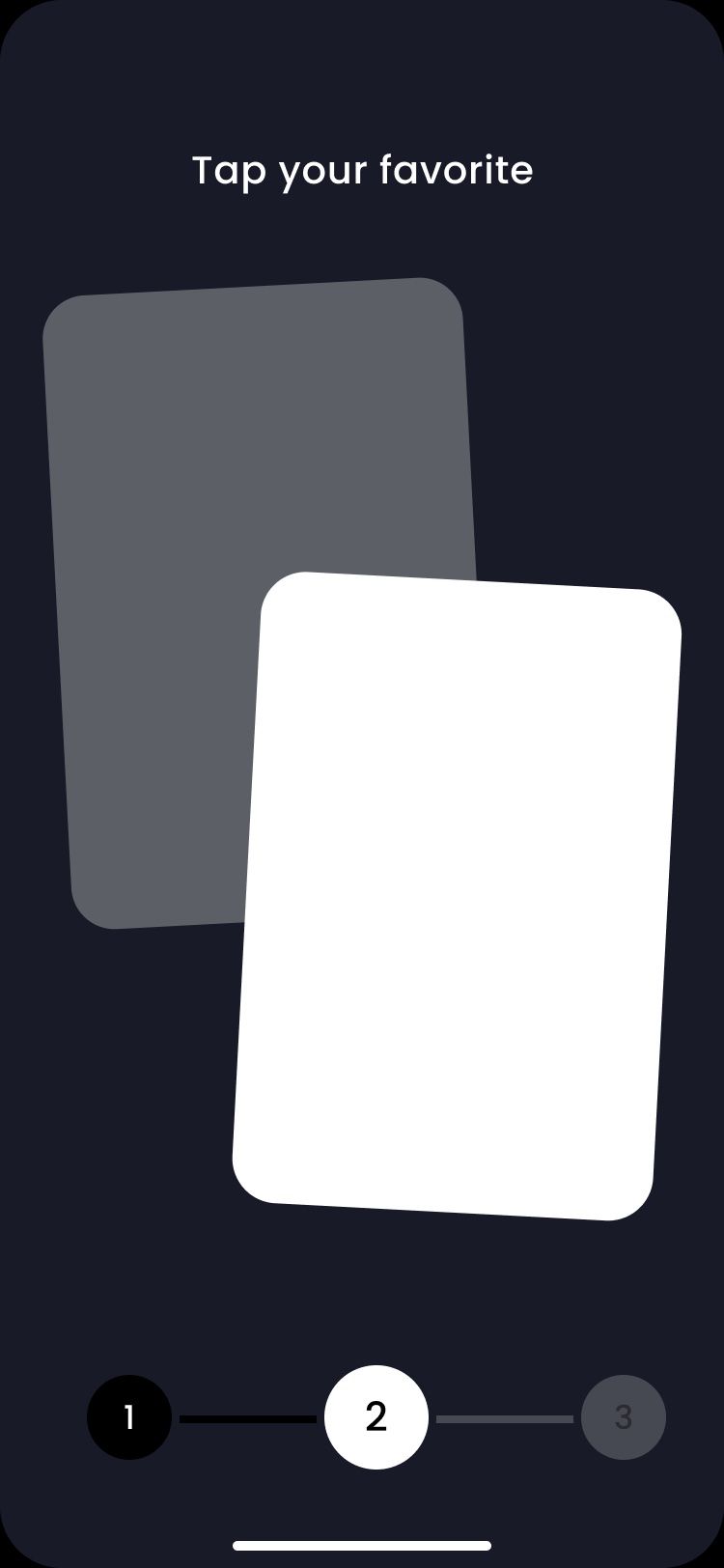
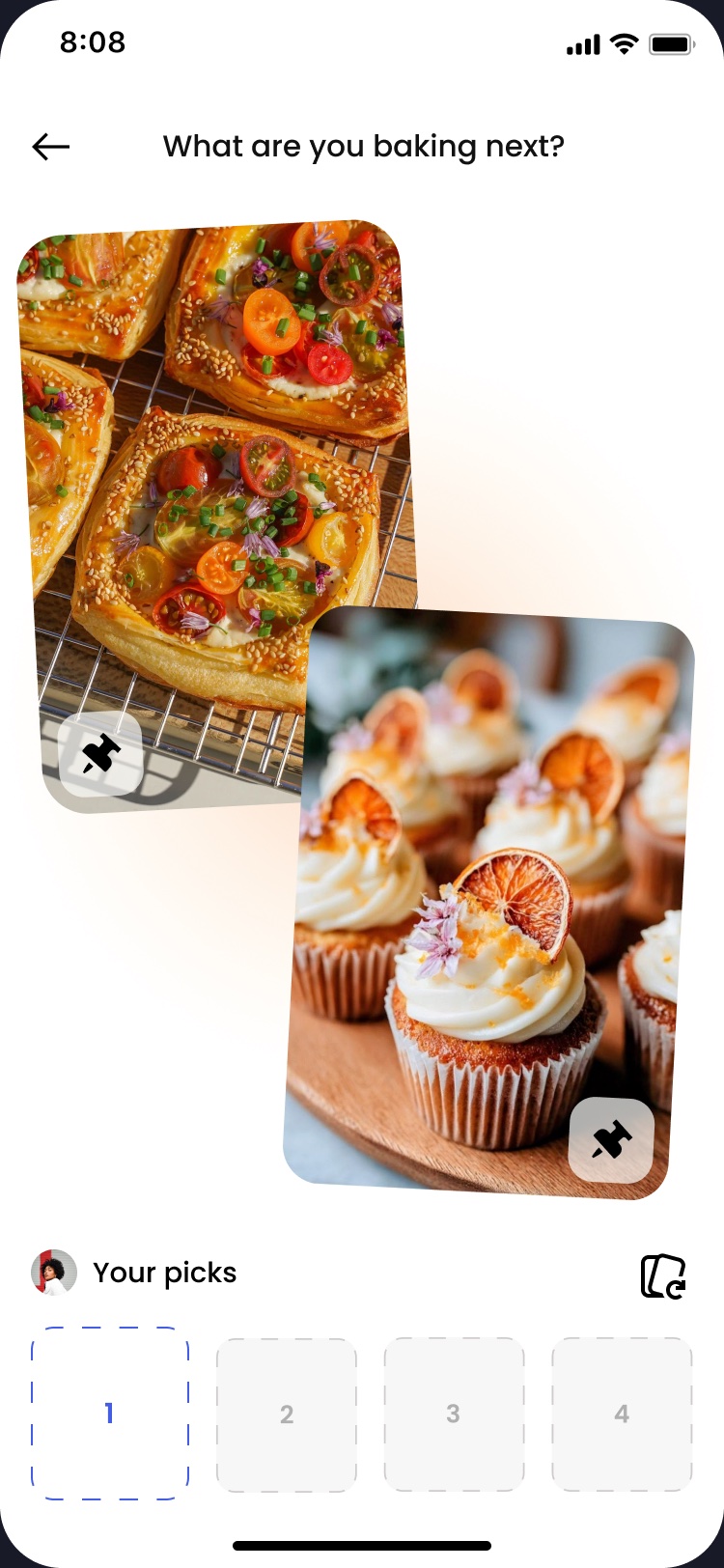
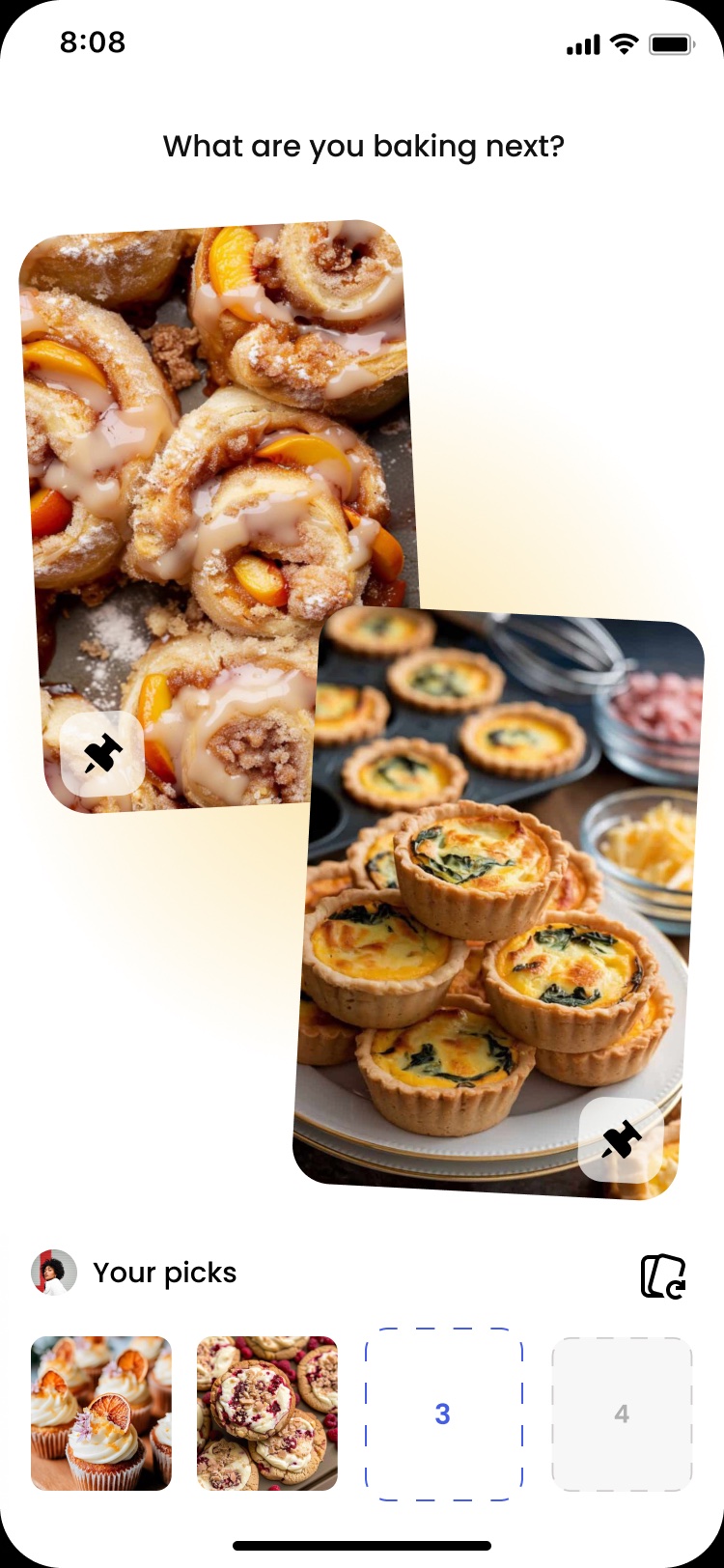
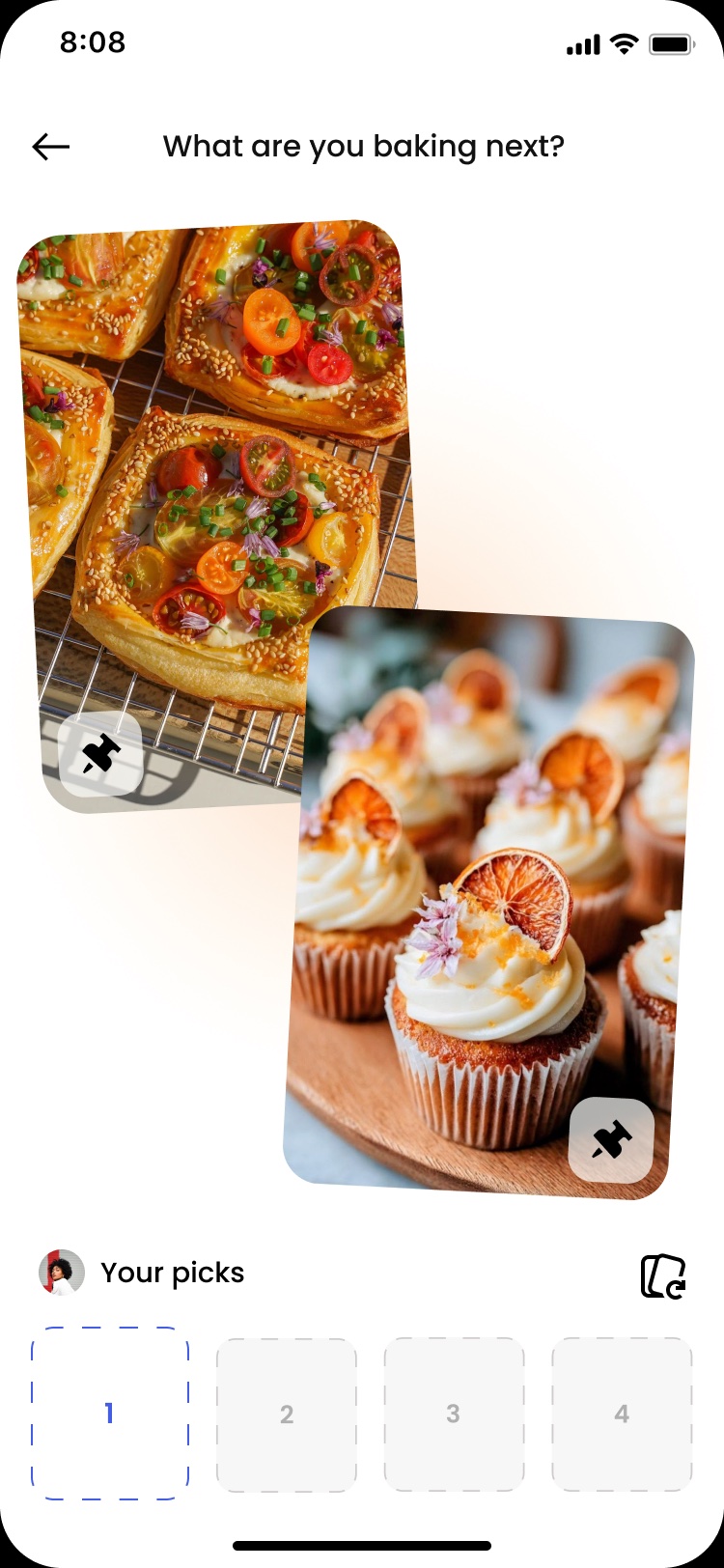
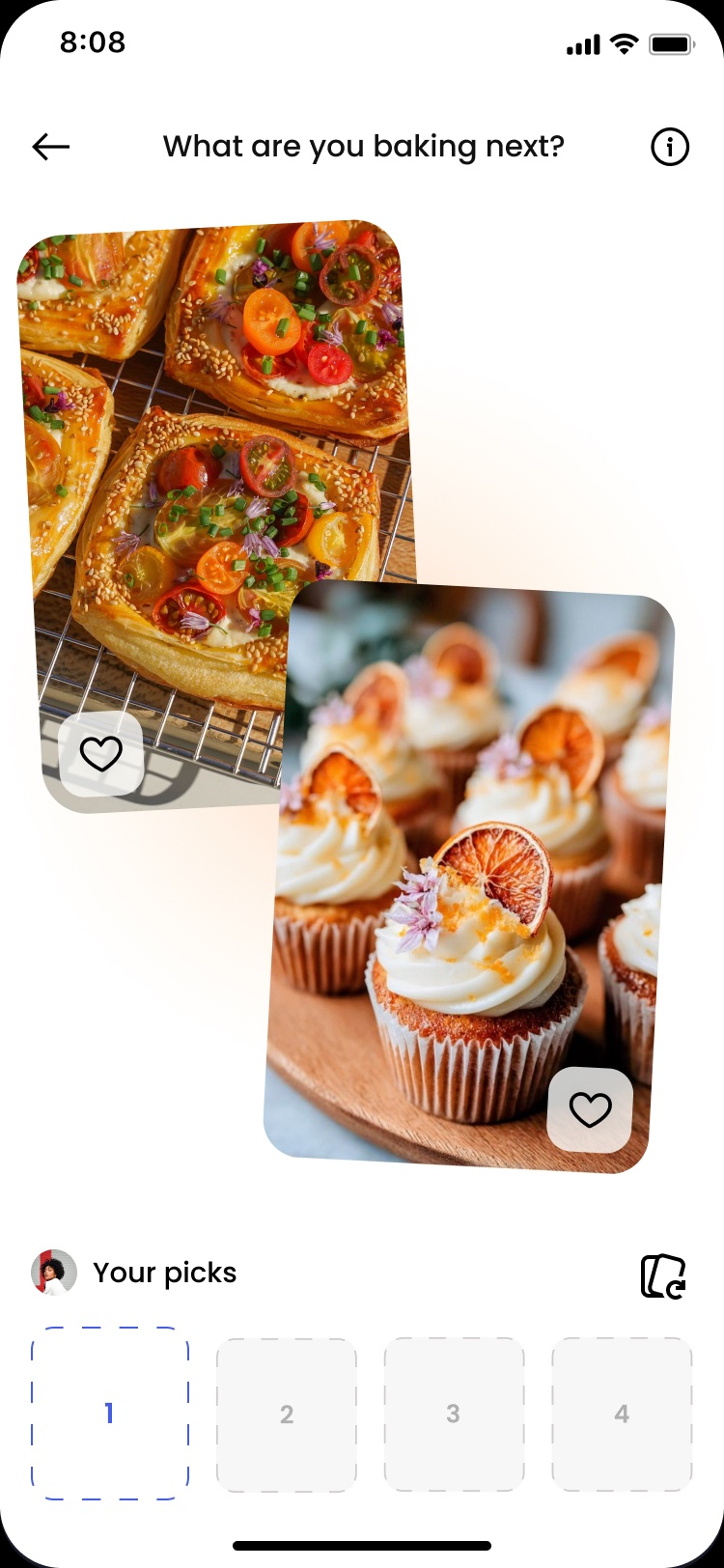
People pick their favorite of two contrasting Pins, four times, to complete the quiz.
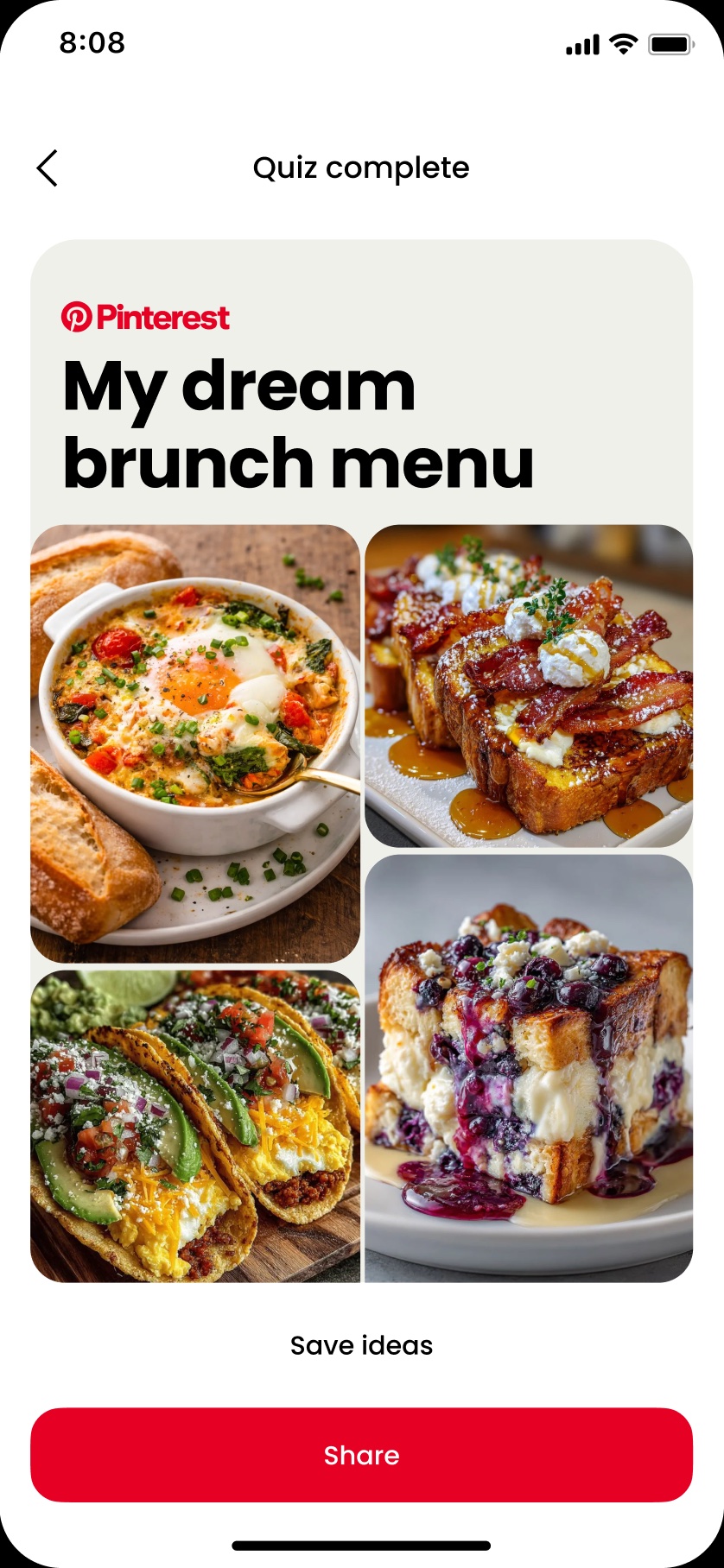
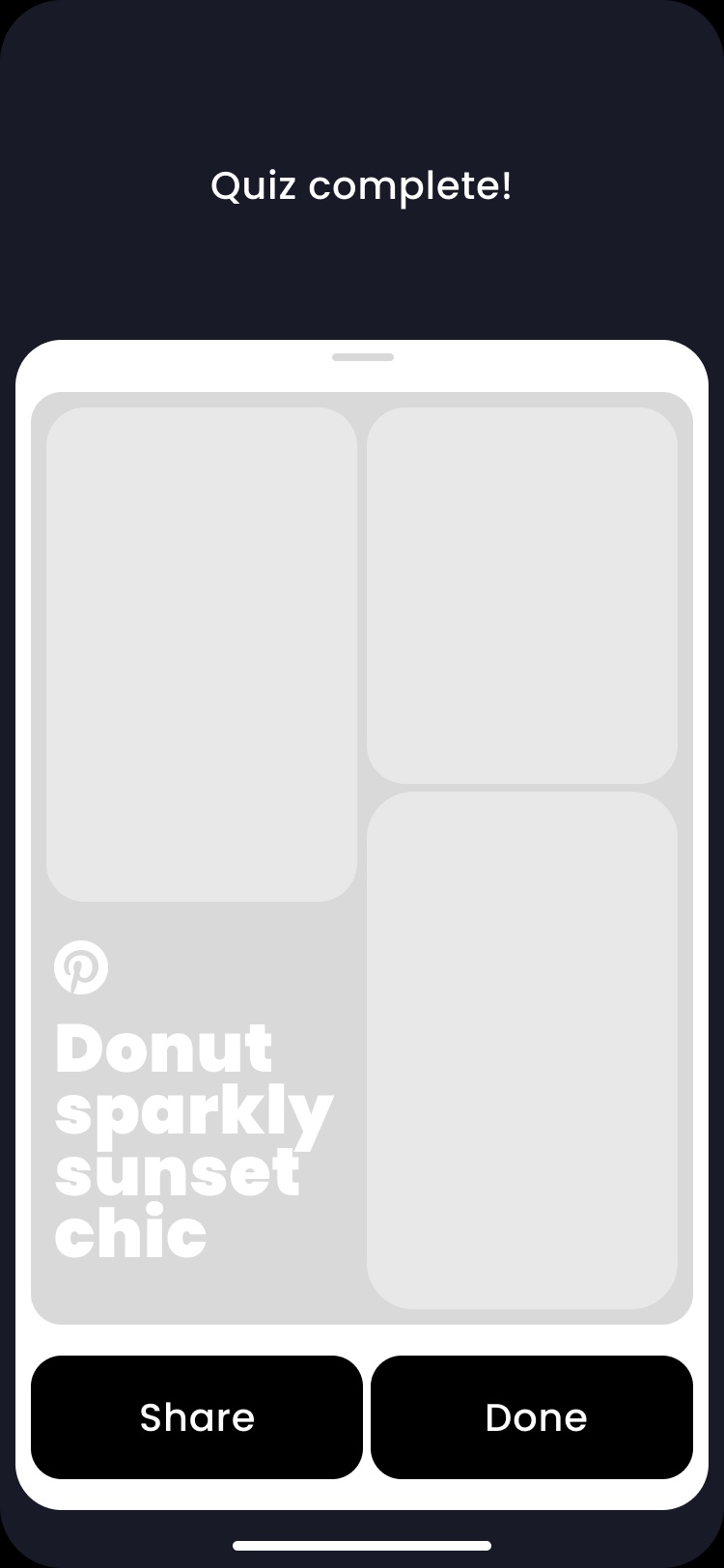
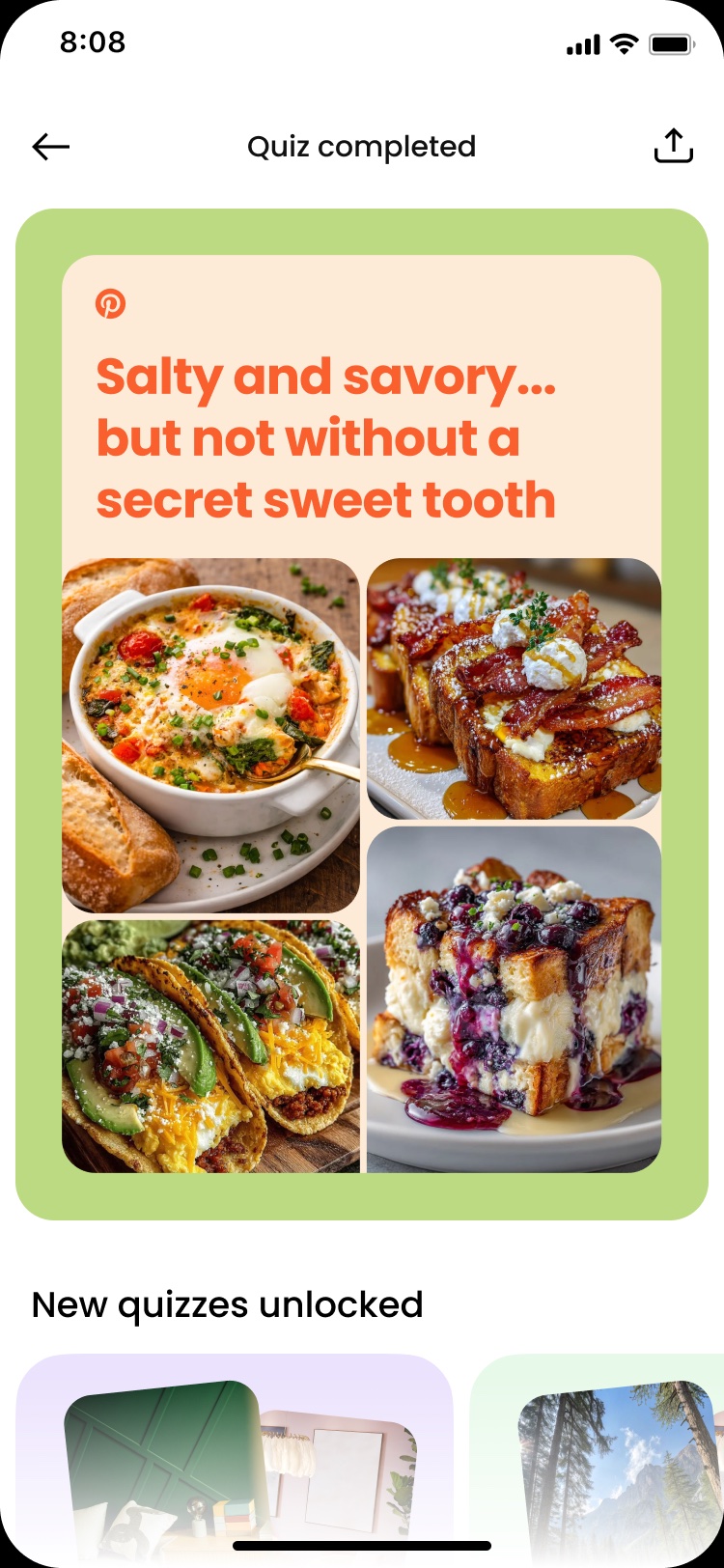
Answers become a personalized image of their taste that is easy to share.
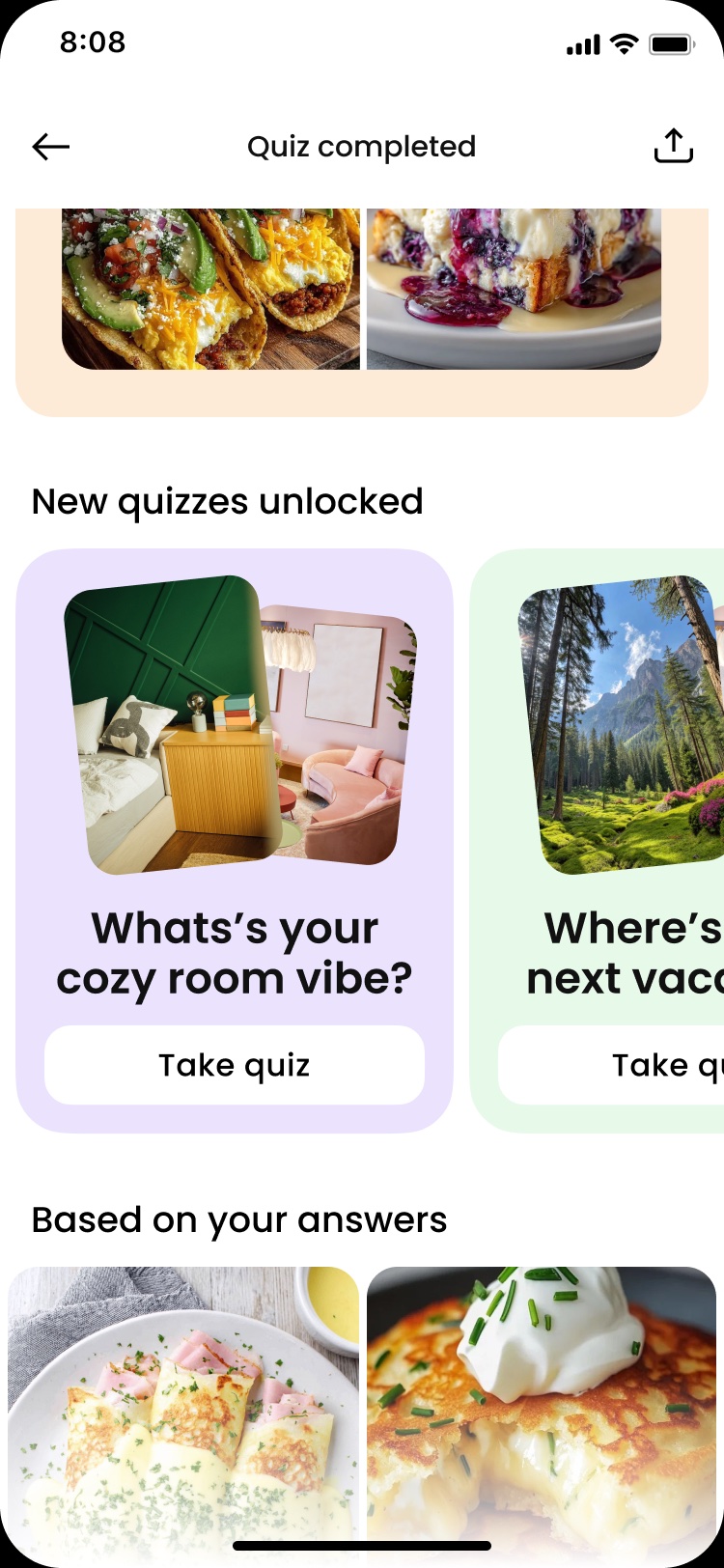
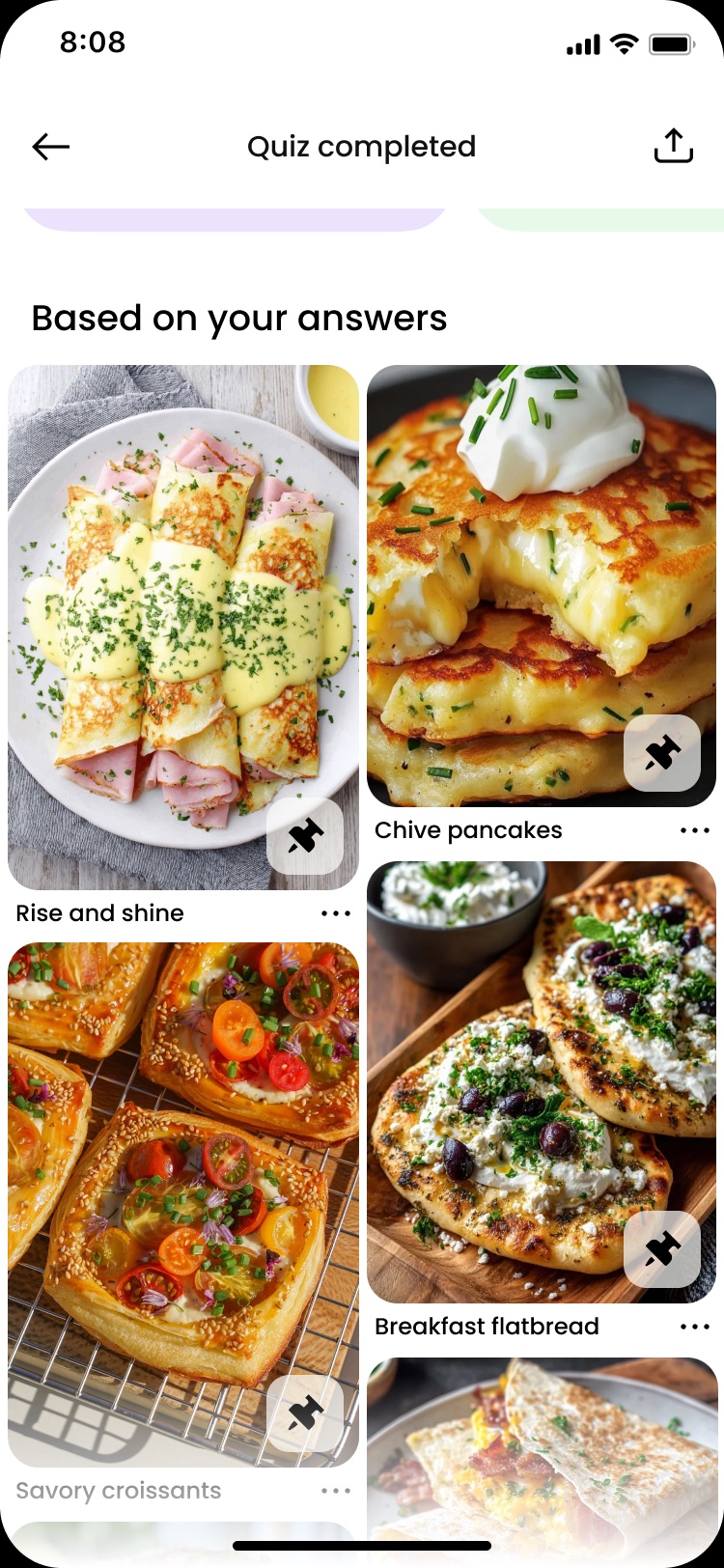
Finishing unlocks new quizzes and better ideas, so the next visit is already set up.
01
Business problem
That cut each user’s lifetime value, and the potential for ad impressions, in half. People came to Pinterest, discovered content and engaged with it, then left with nothing pulling them back.
Broken engagement loop
User problems
8 user interviews revealed that people came to Pinterest with a specific goal in mind, and saw little reason to stay once it was met.
“I’ve already planned my wedding... what do I need from Pinterest now?”
Research participant
01
Users have an event or use case in mind that has an expiration date
02
Users aren’t aware of the variety of use cases Pinterest serves
03
If they do come back to Pinterest, their content feels stale
04
Pinterest use is open-ended. Users tend to not know if it’s being used correctly
Hypothesis
Goal
02
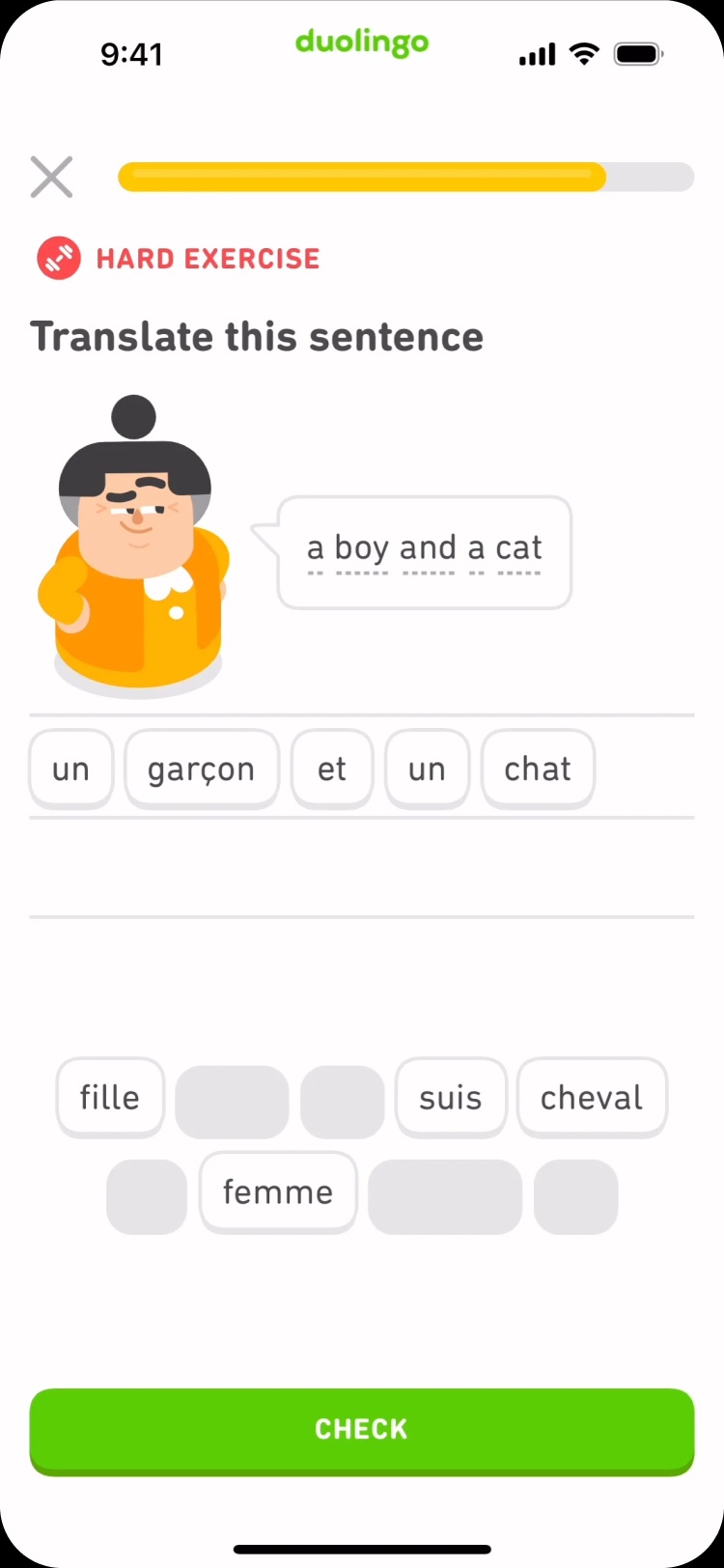
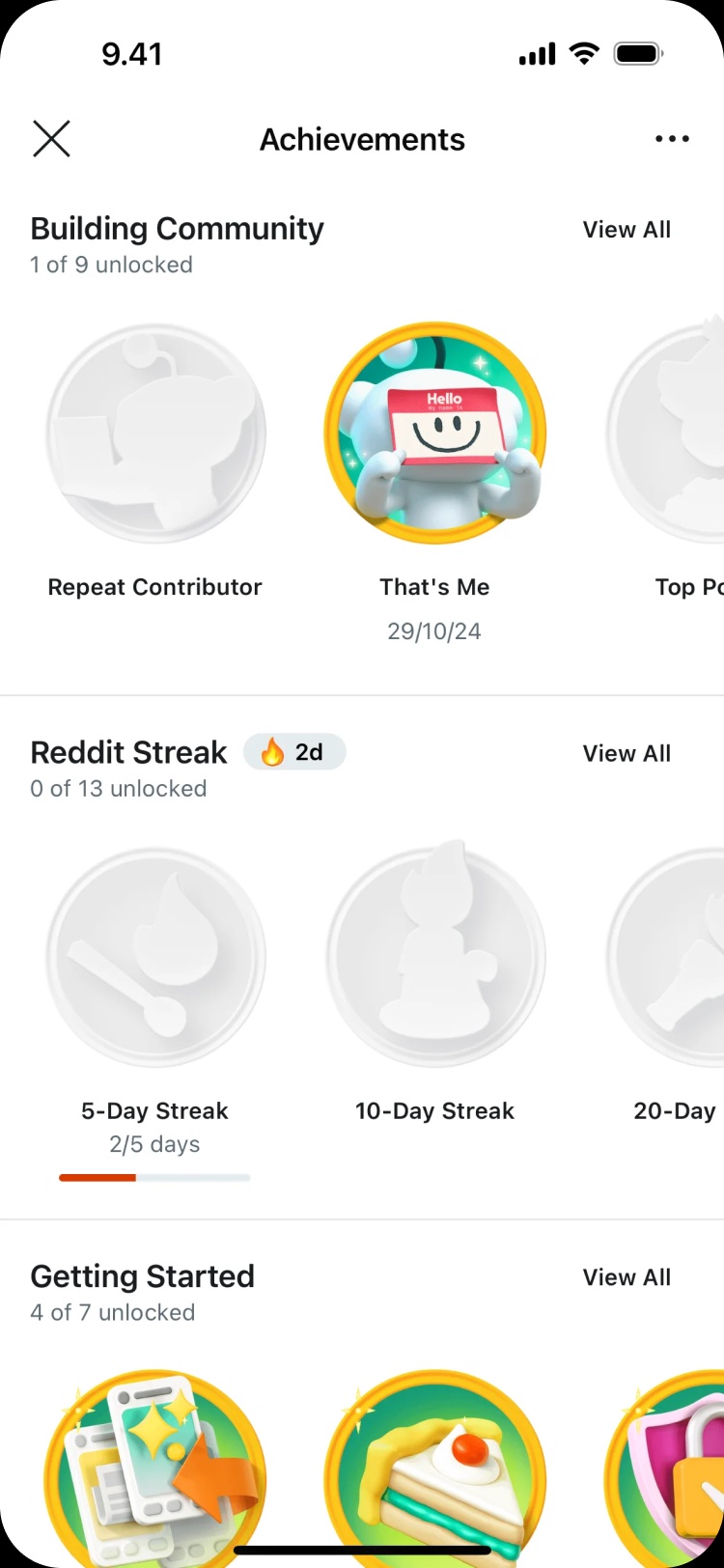
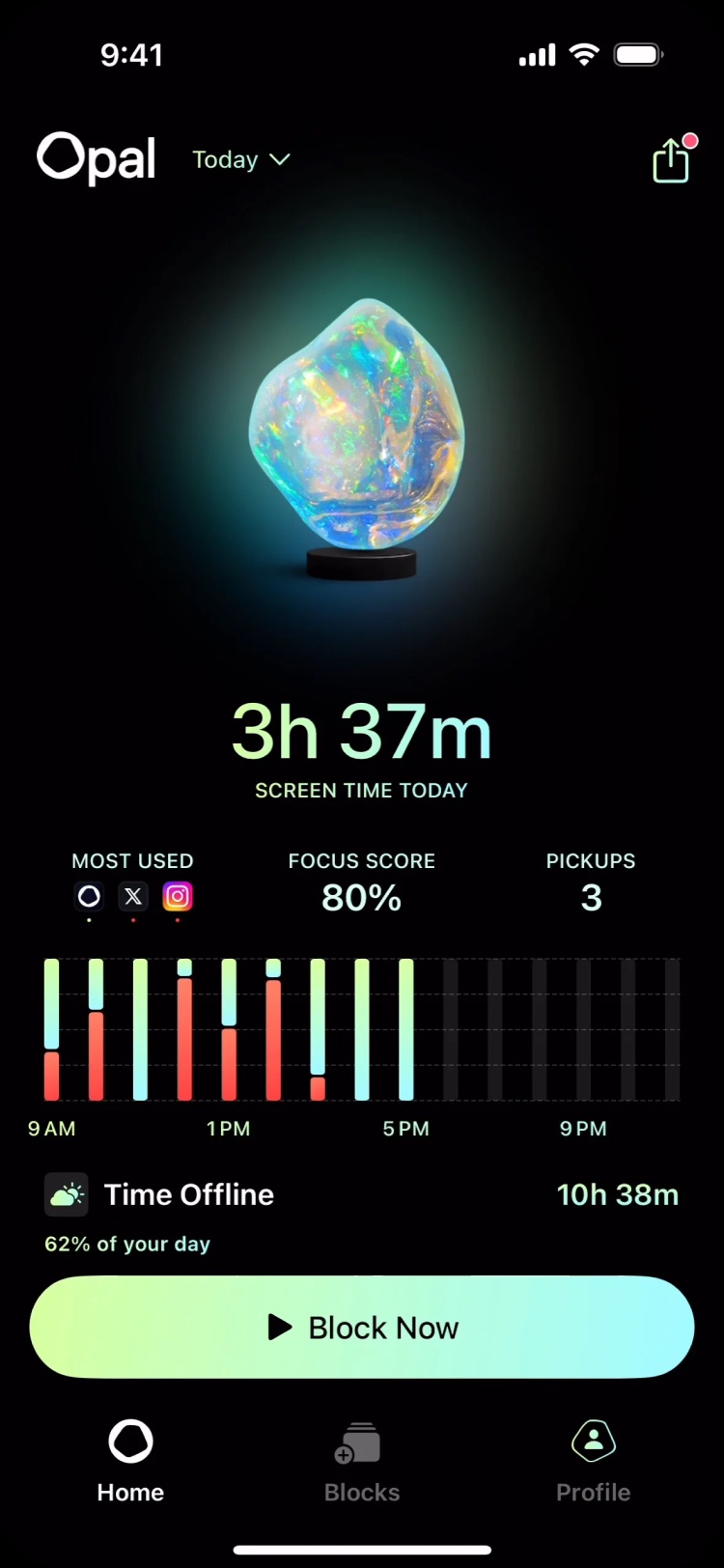
I audited apps people return to every day. Each one pairs a small, repeatable challenge with a visible reward.
Understanding habit psychology
Habit-forming products move people through a trigger, an action and a reward, then ask for a small investment that sets up the next visit. Every app I audited followed this loop.
I led 4 designers, 4 engineers and 2 PMs in a 2-week sprint to apply the hook to Pinterest, around three Gen Z jobs to be done: explore, reflect and create.
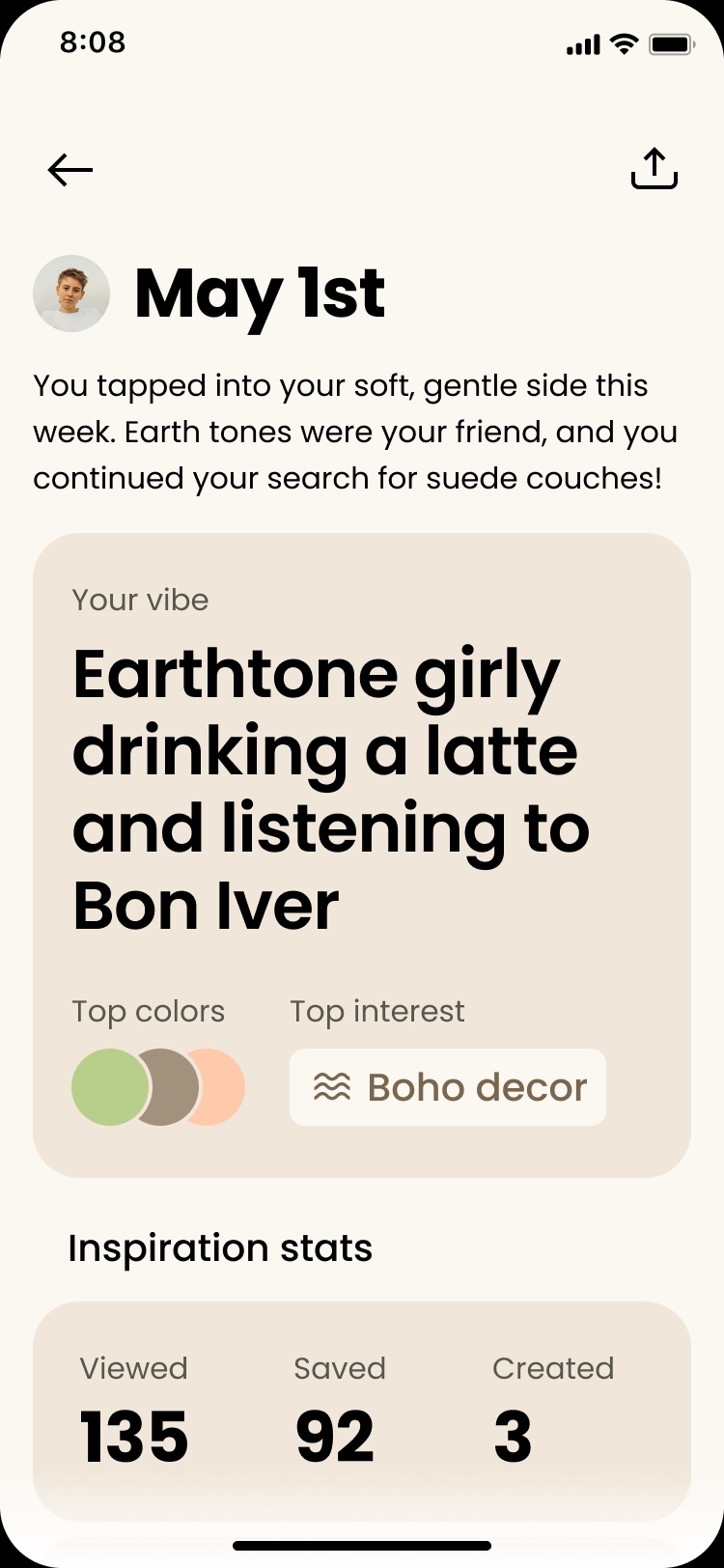
A weekly recap of your vibe, top colors and interests reflects your taste back to you.
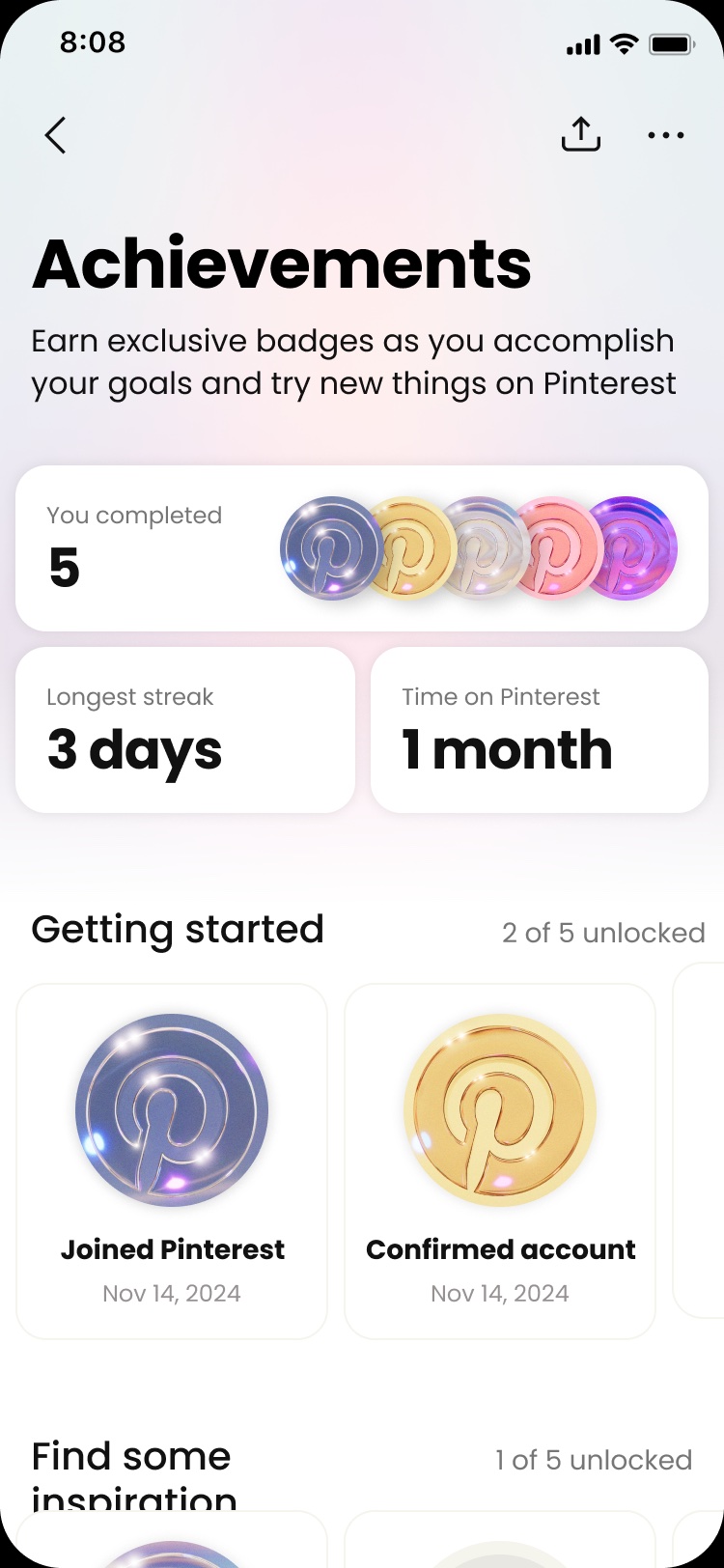
Badges and streaks reward people for exploring Pinterest consistently.
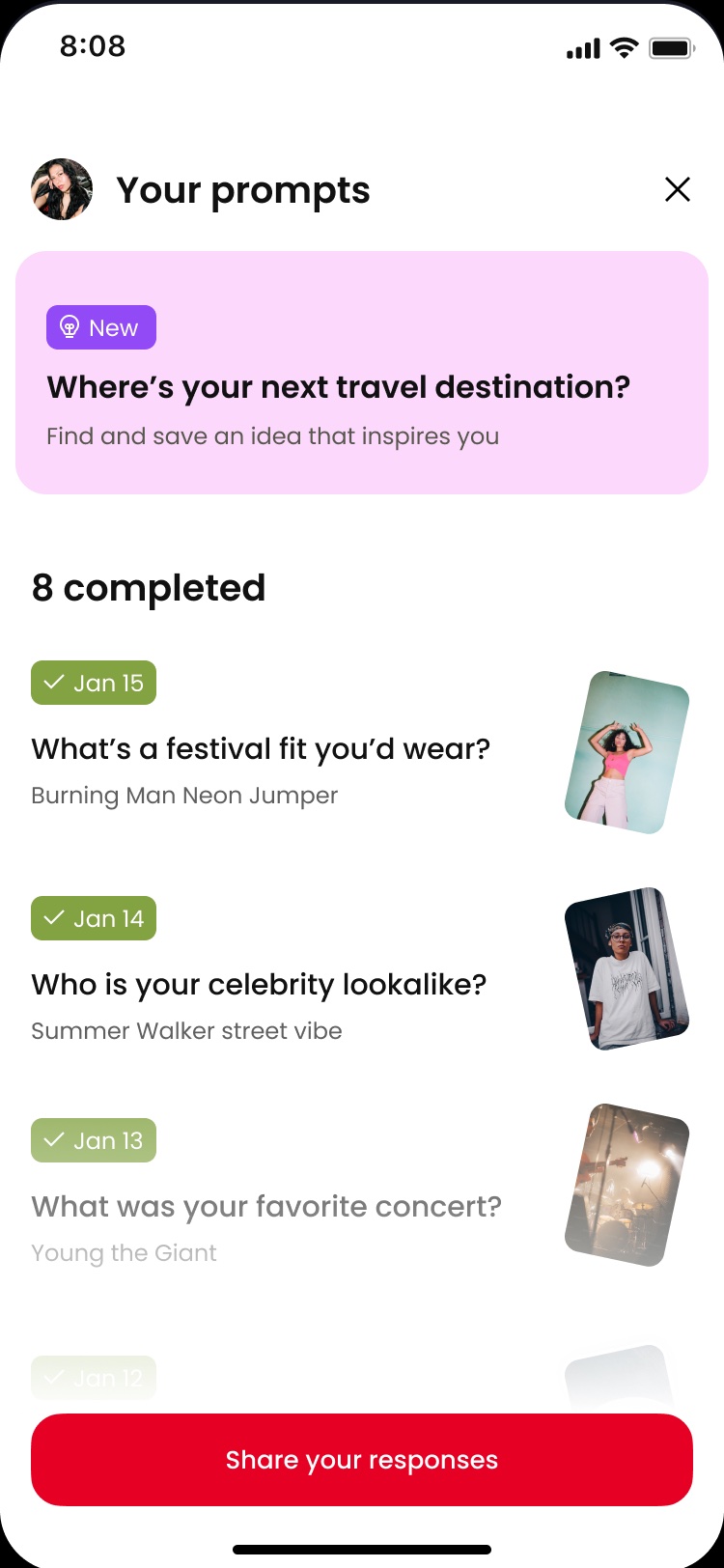
Weekly prompts ask people to find ideas that match a theme by saving Pins.
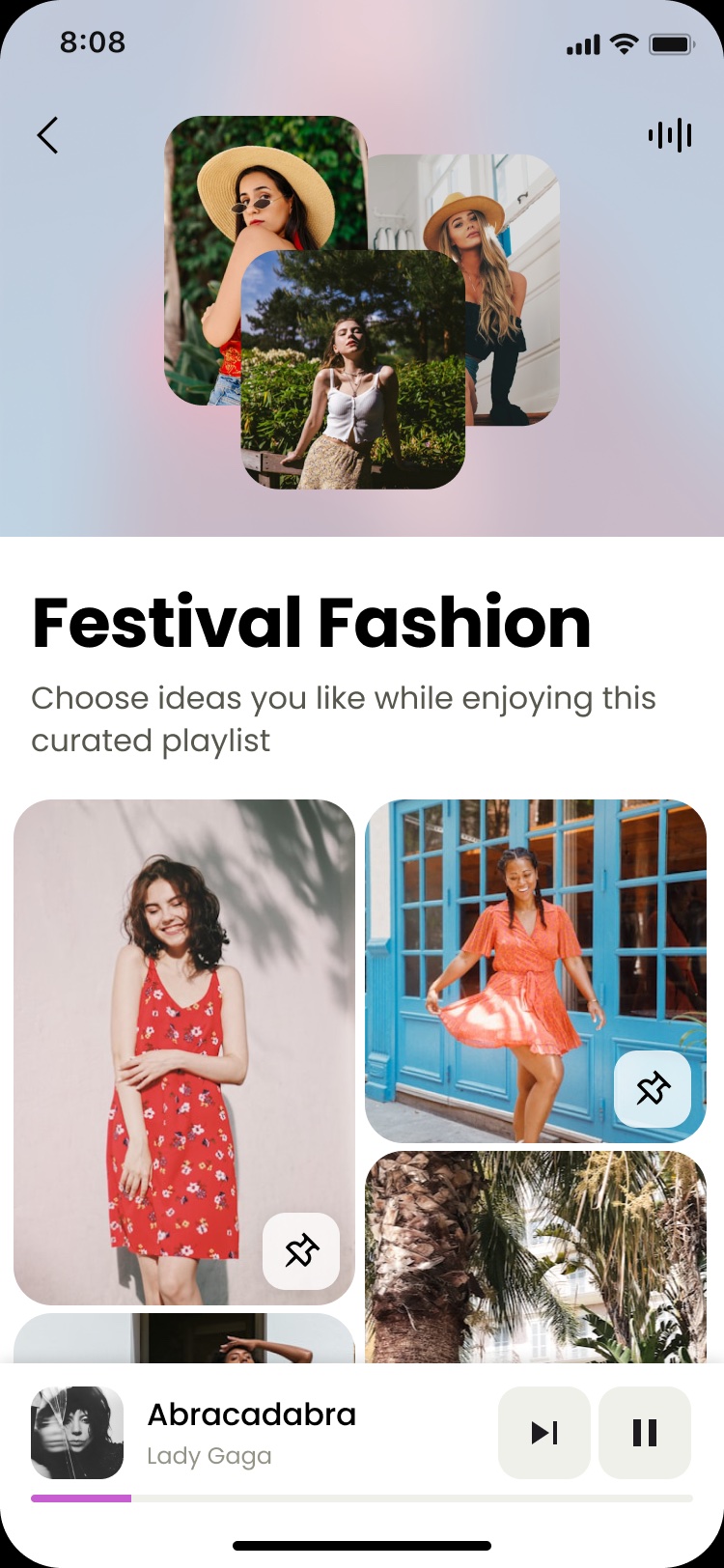
Ideas paired with a soundtrack turn browsing into a mood.
Concept validation
In concept testing, quizzes stood out for being interactive and for rewarding people with something personal. Participants pushed back on competition or anything that took features away, which ruled out streaks and leaderboards.
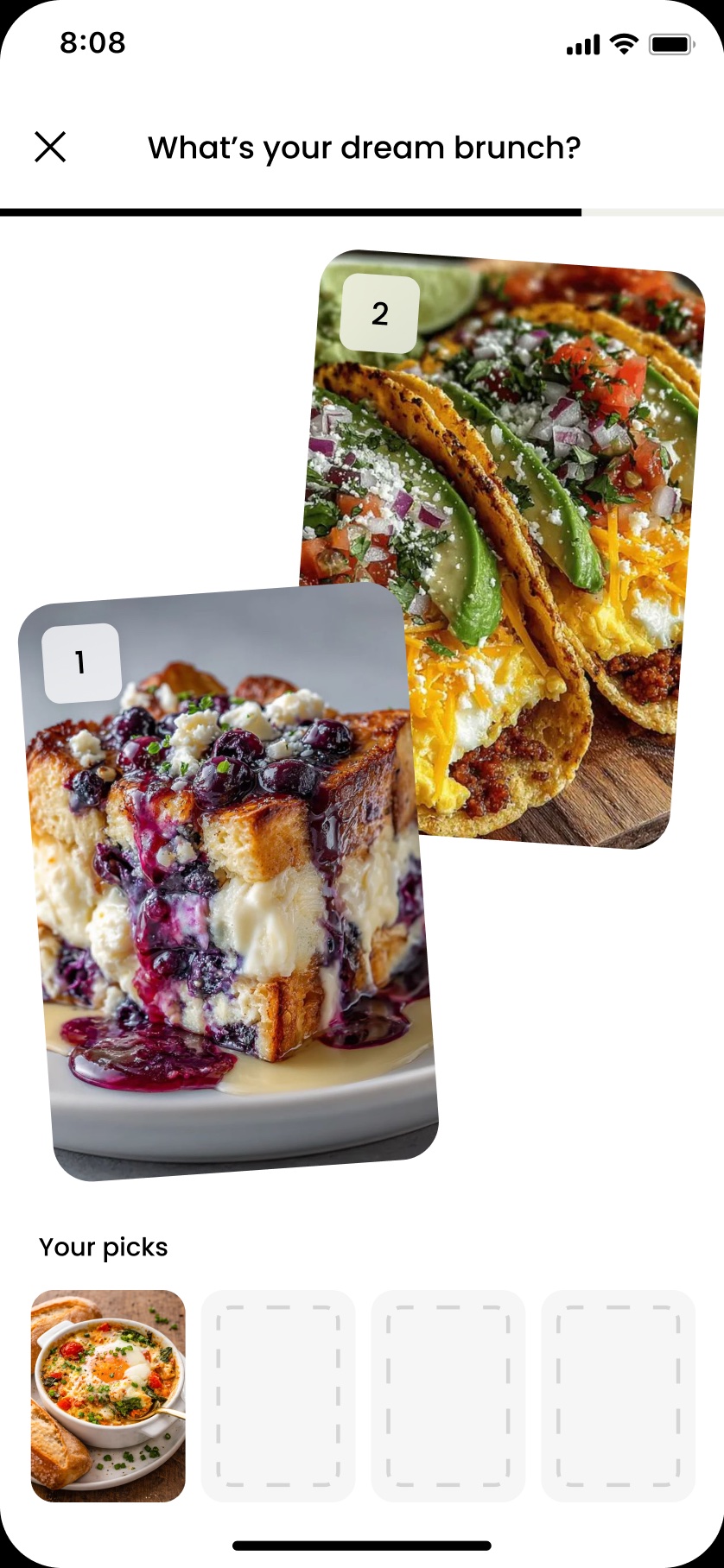
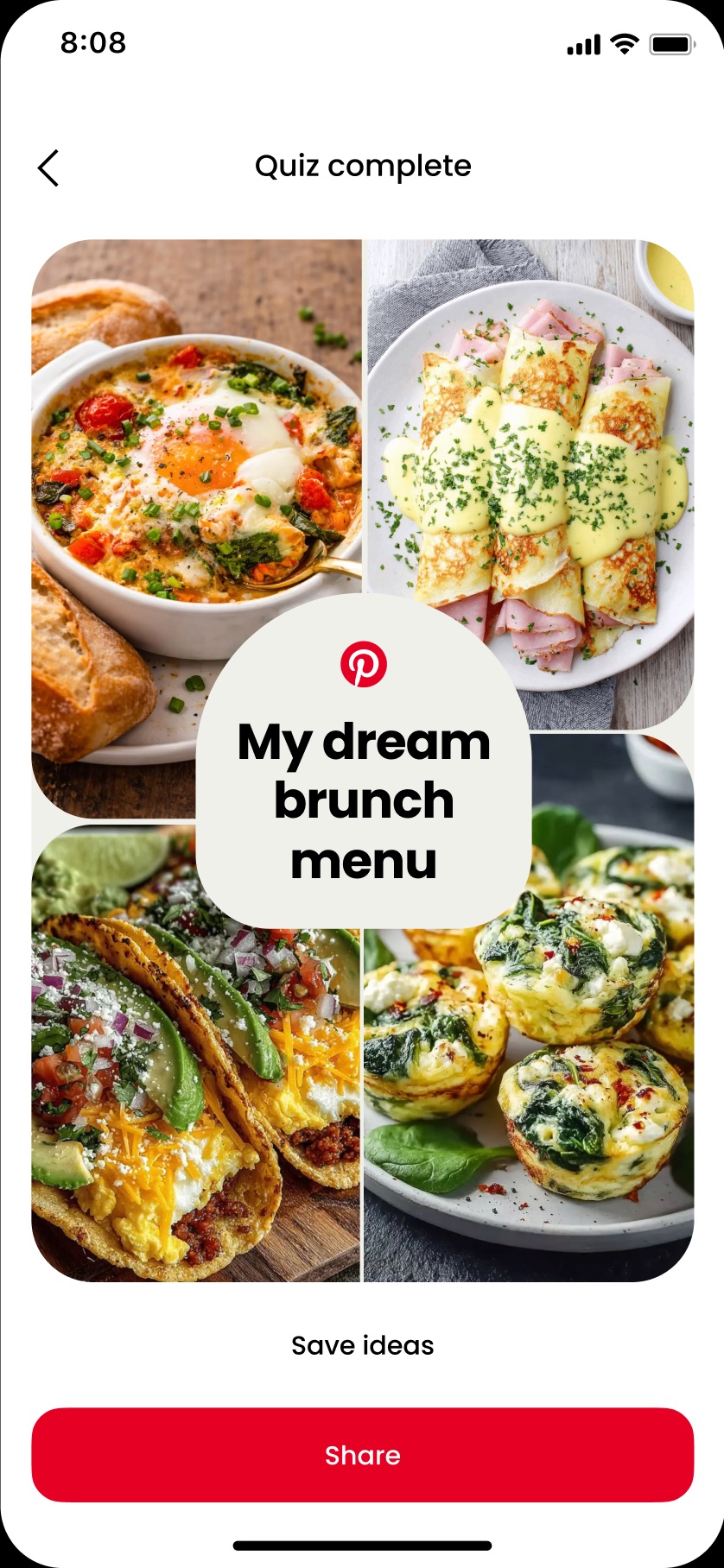
I wireframed how a quiz could complete the whole loop, so each step would lead naturally into the next week’s visit.
03
A new quiz each week exposes people to the variety of interests across Pinterest, giving them a reason to return and better recommendations every time they play.
Quiz content
Each quiz moved down the taxonomy, from an epic like Food & Drink to a topic (Breakfast) and an interest (Pastries), then paired two contrasting detailed interests, like croissants and cupcakes, as the choices.
Pivot
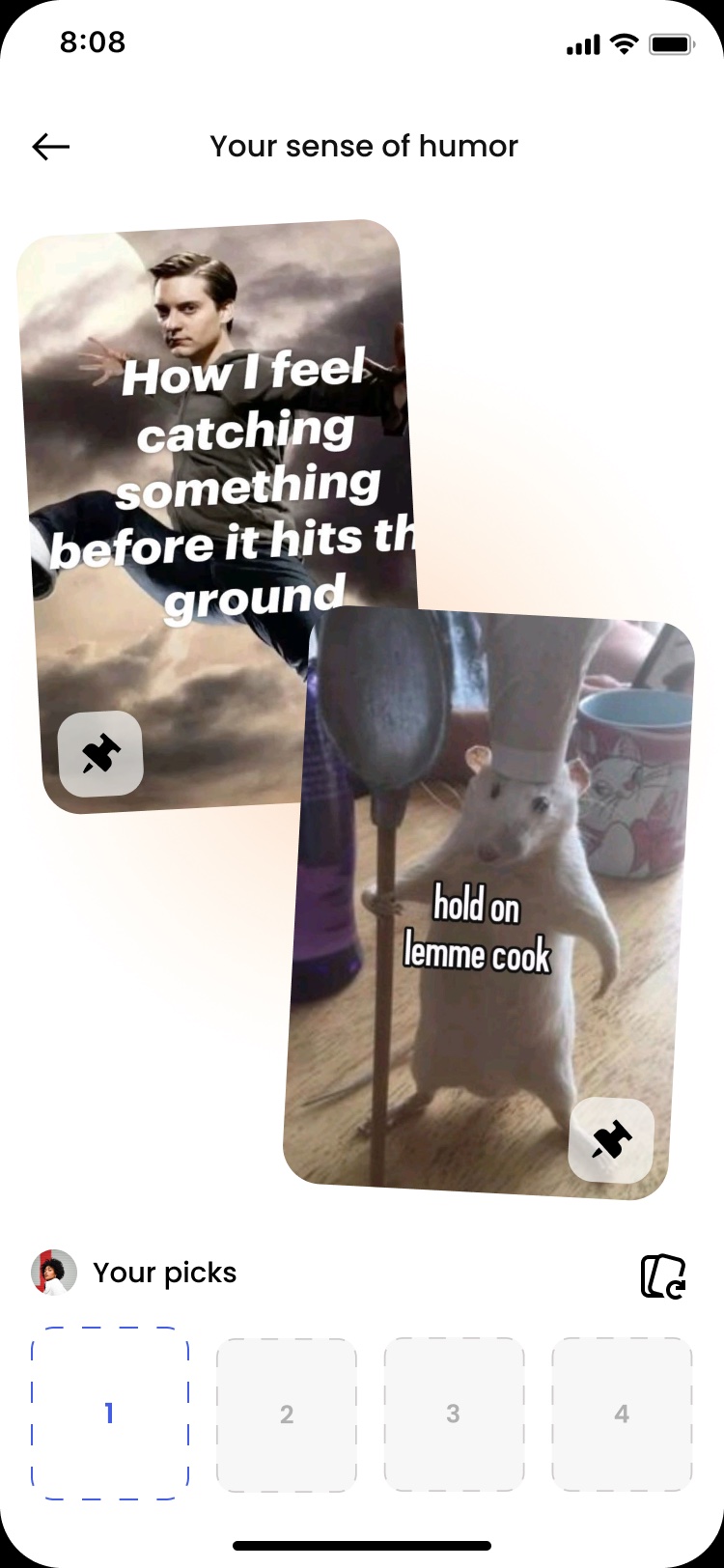
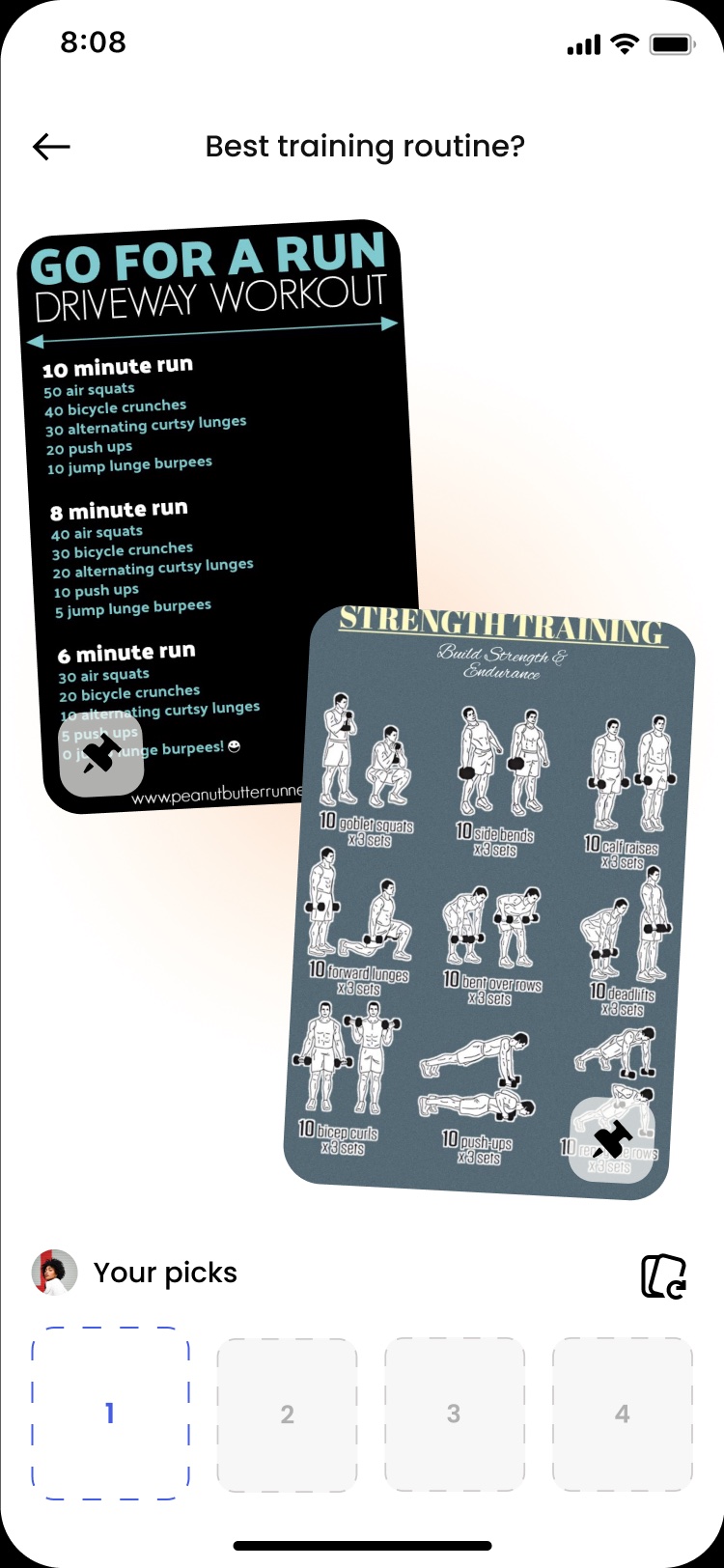
Early quizzes surfaced low-quality content like memes and workout infographics. I narrowed topics to the categories with the most engaged weekly users, Food & Drink (32%), Home decor (24%) and Travel (17%), and offered nine quizzes across them for variety.
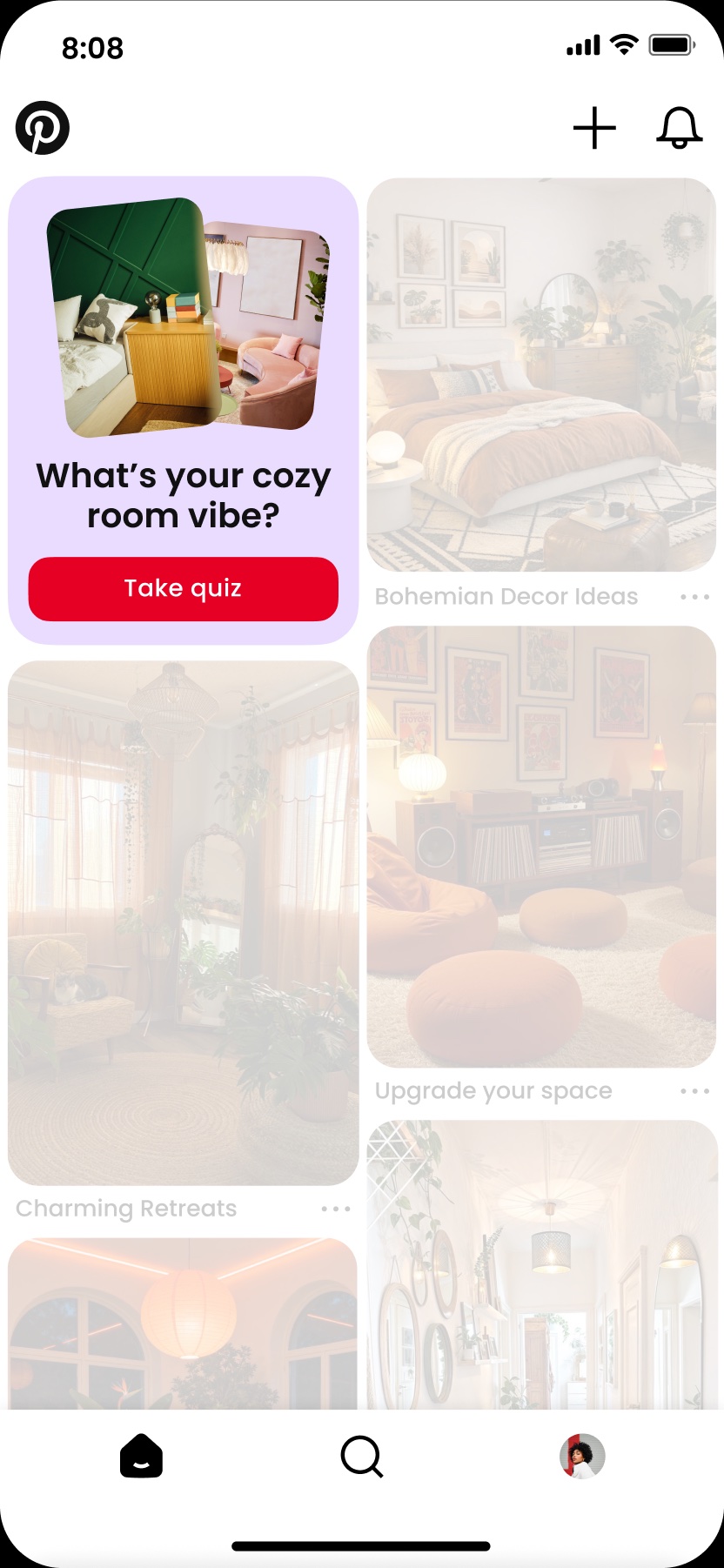
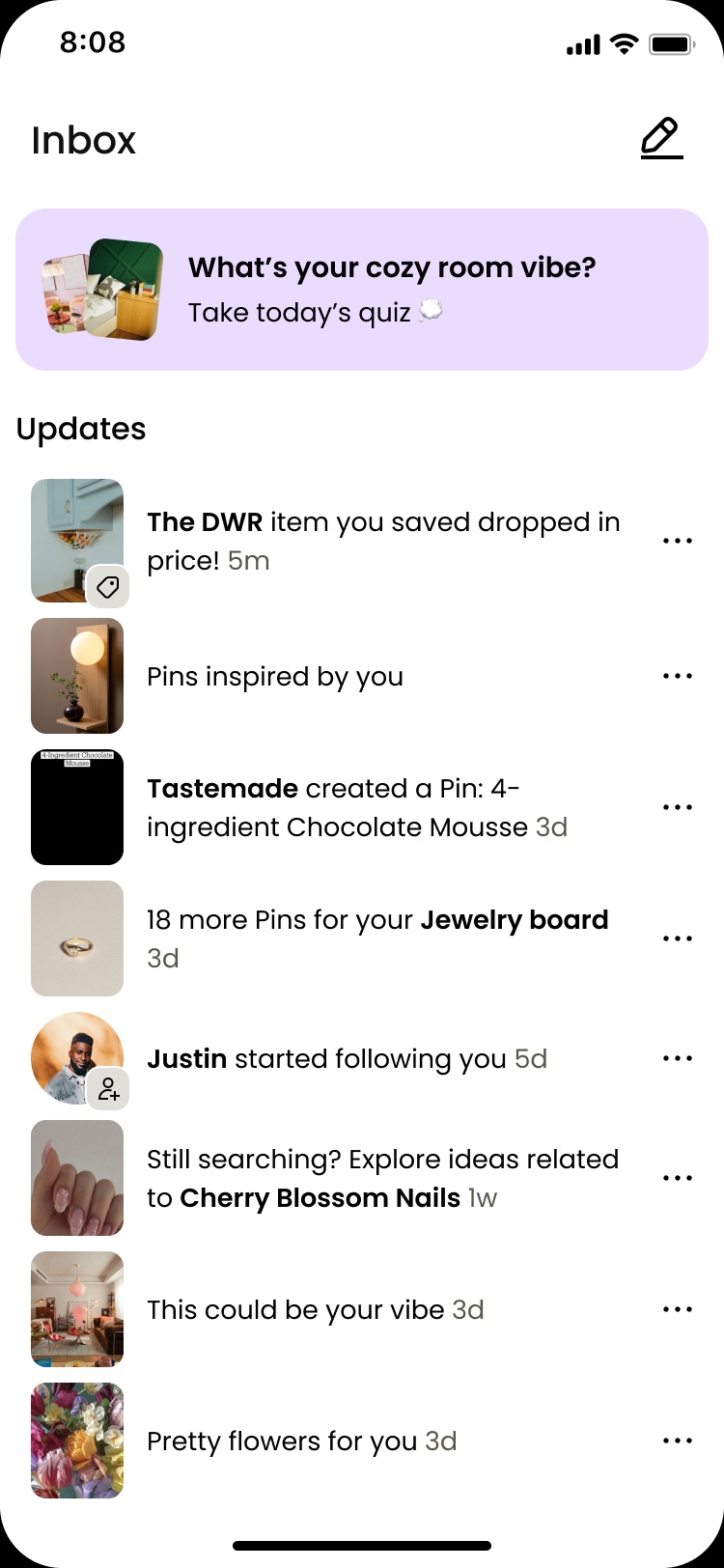
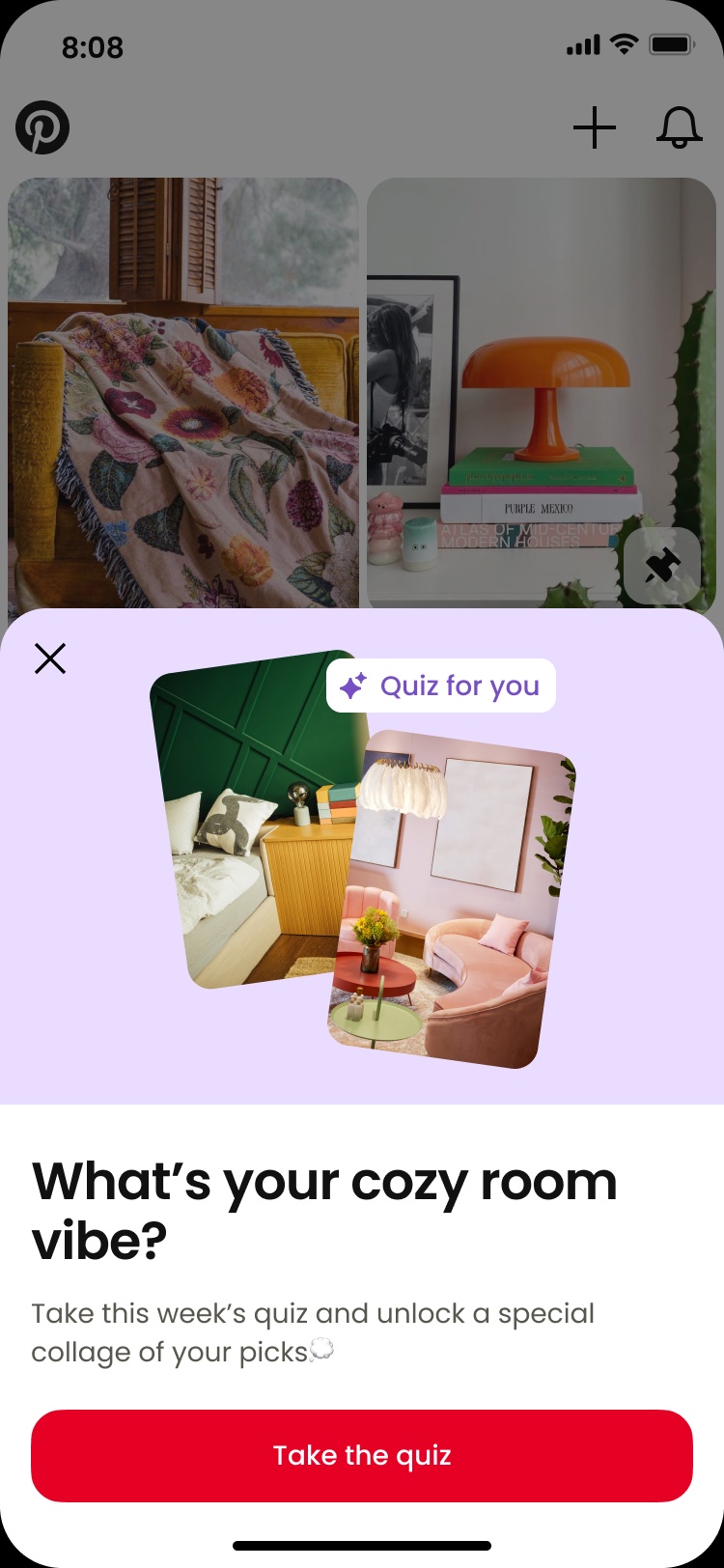
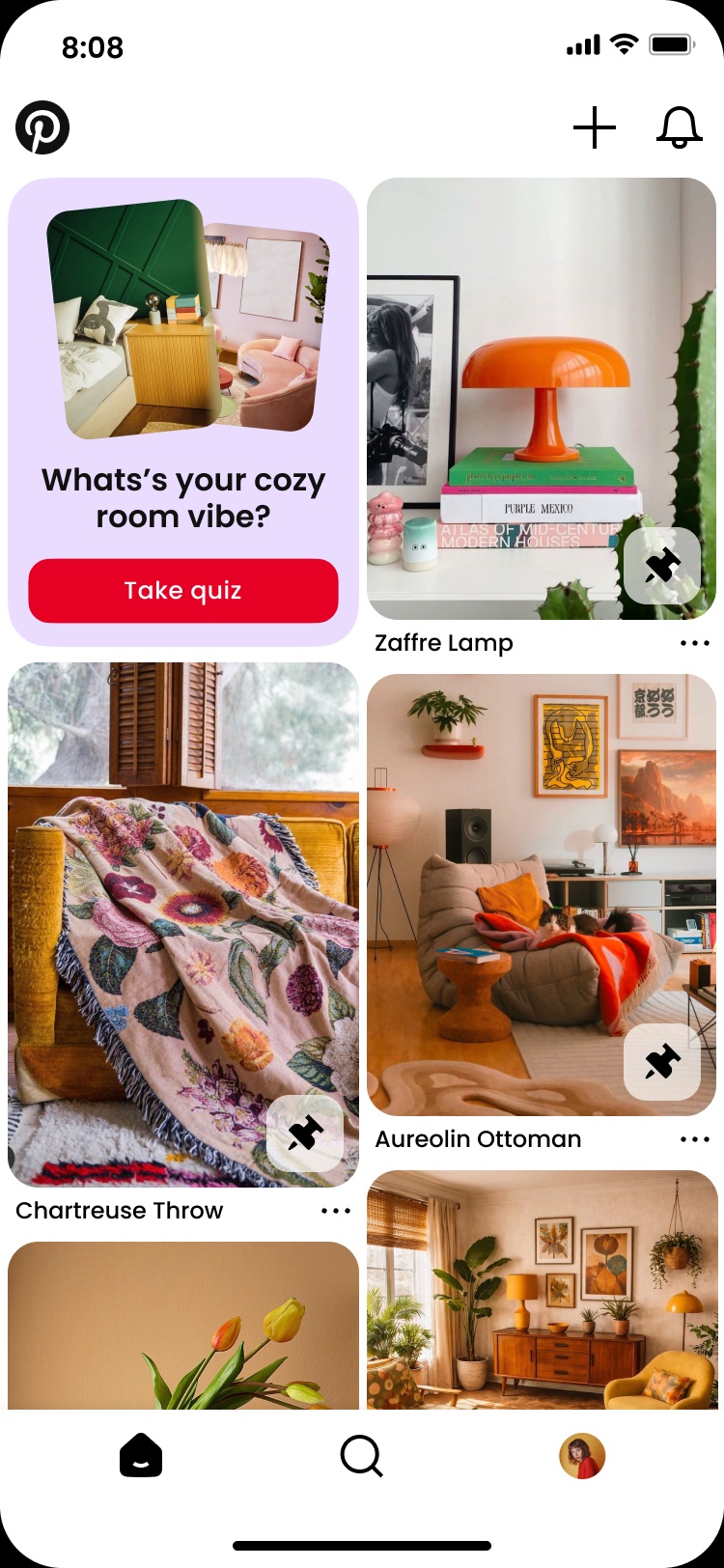
Trigger explorations
I explored four entry points, from a push notification to a card in the home feed, to balance reach with interruption.
Action explorations
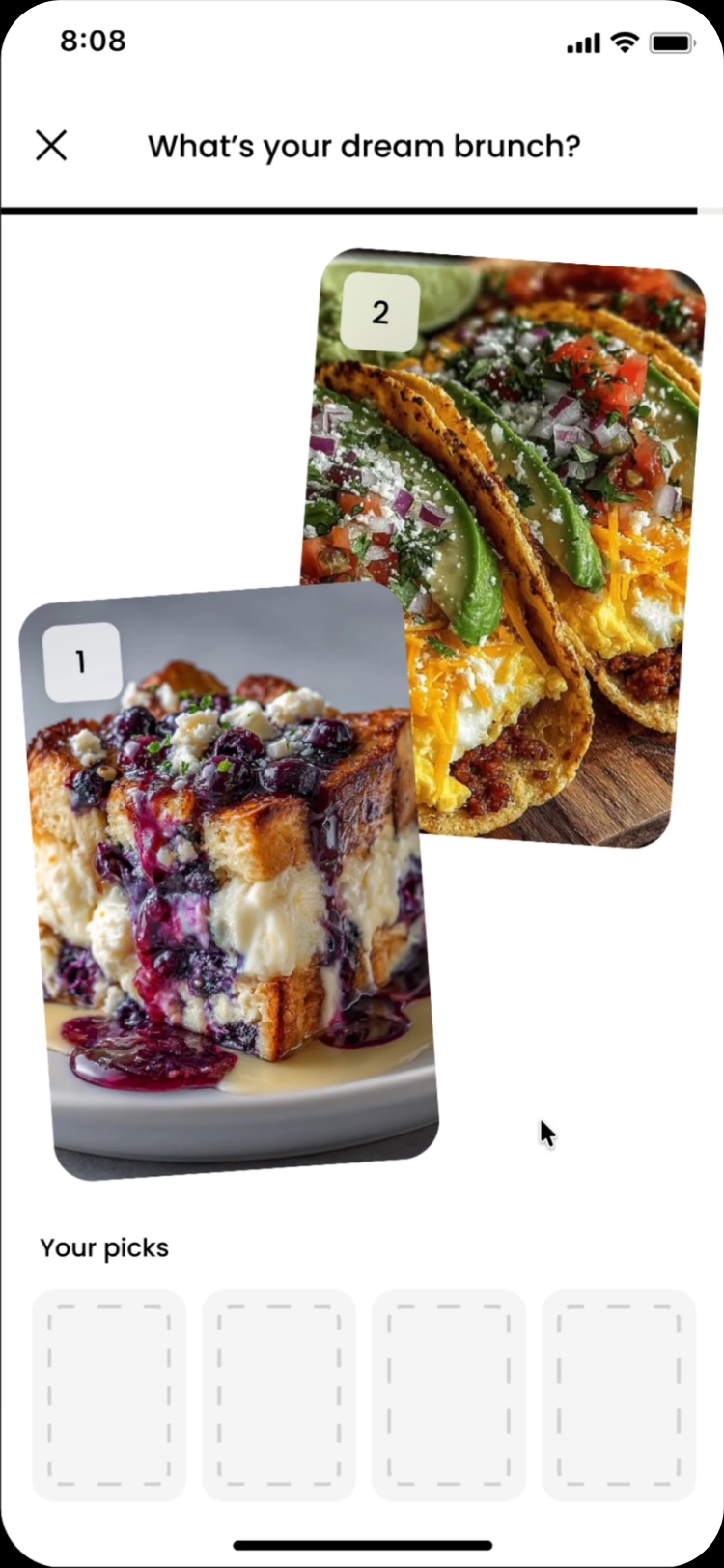
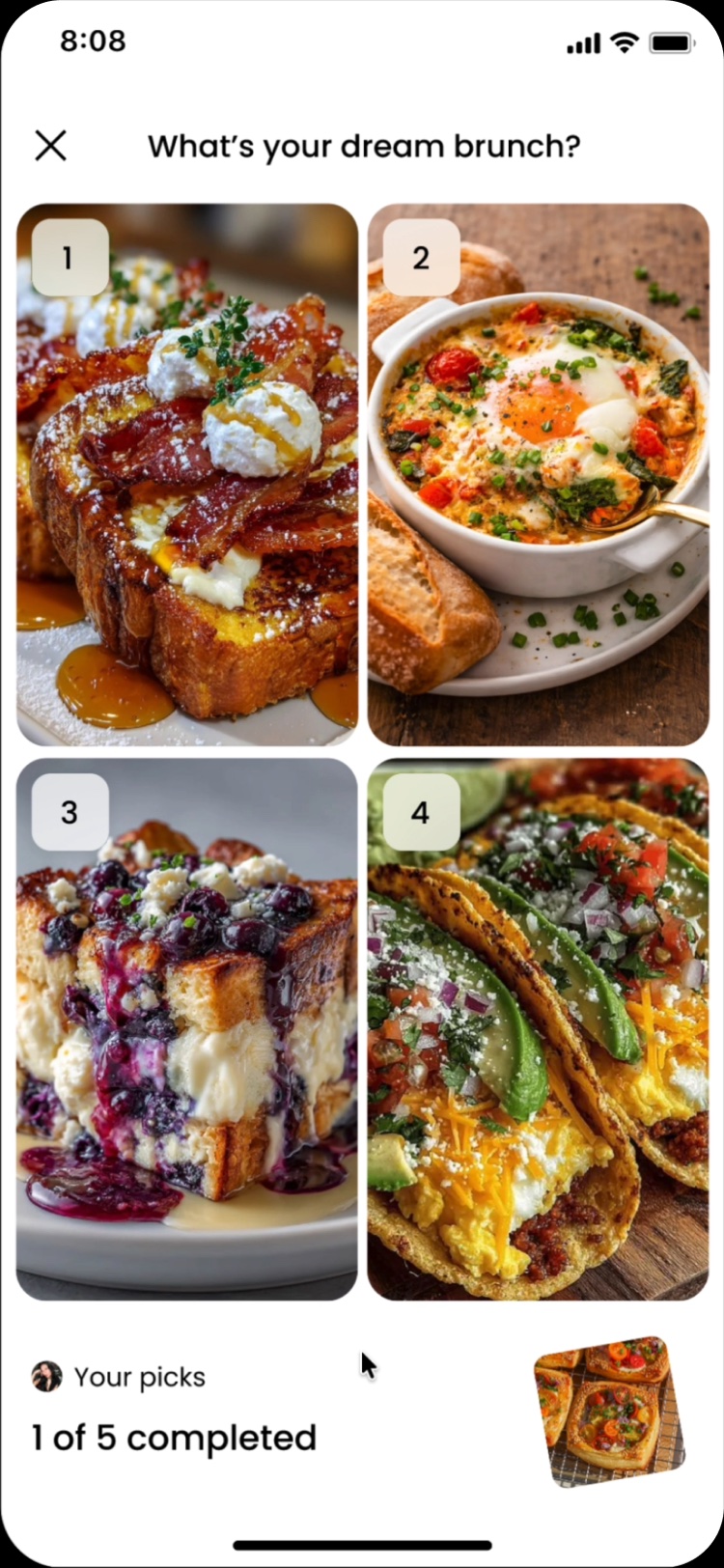
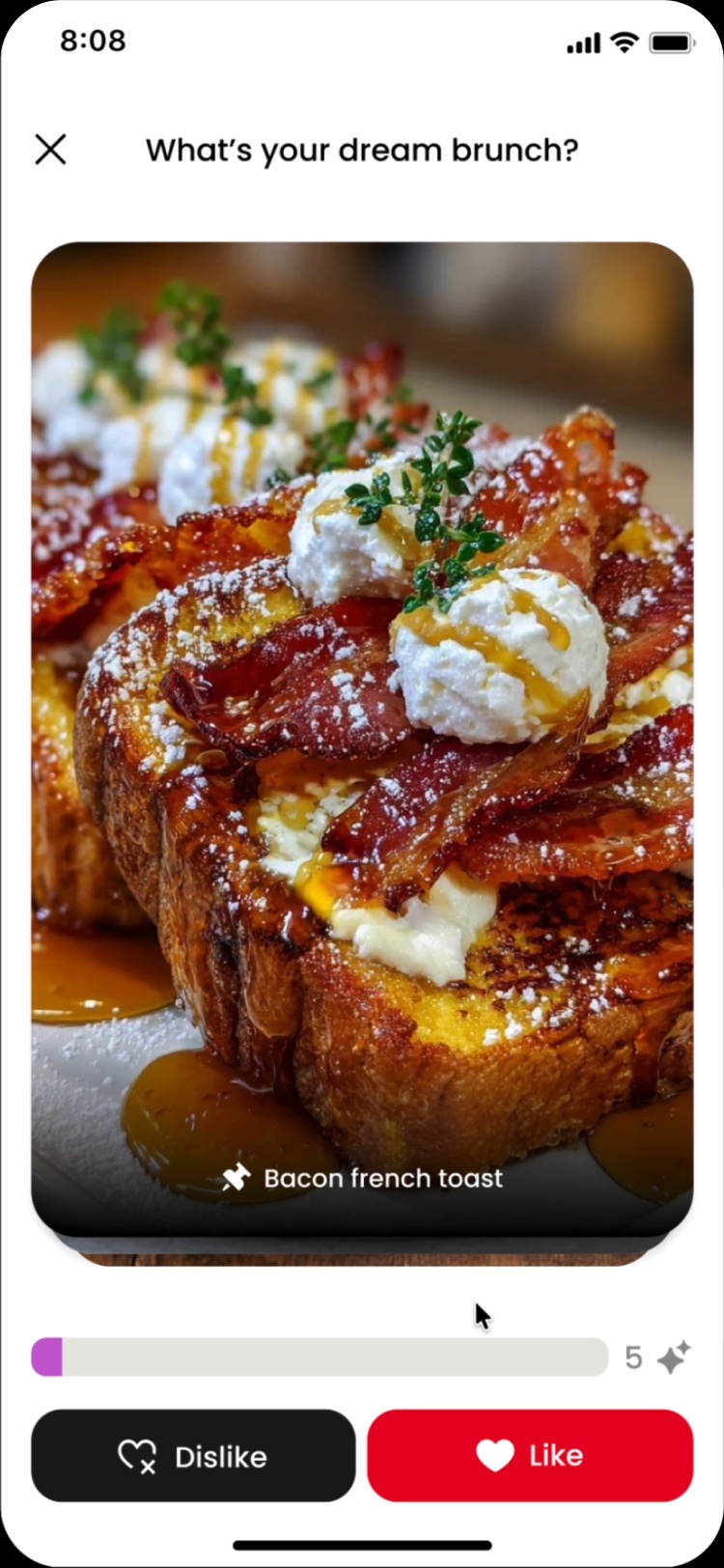
I prototyped three interaction models to learn which felt fastest and most fun.
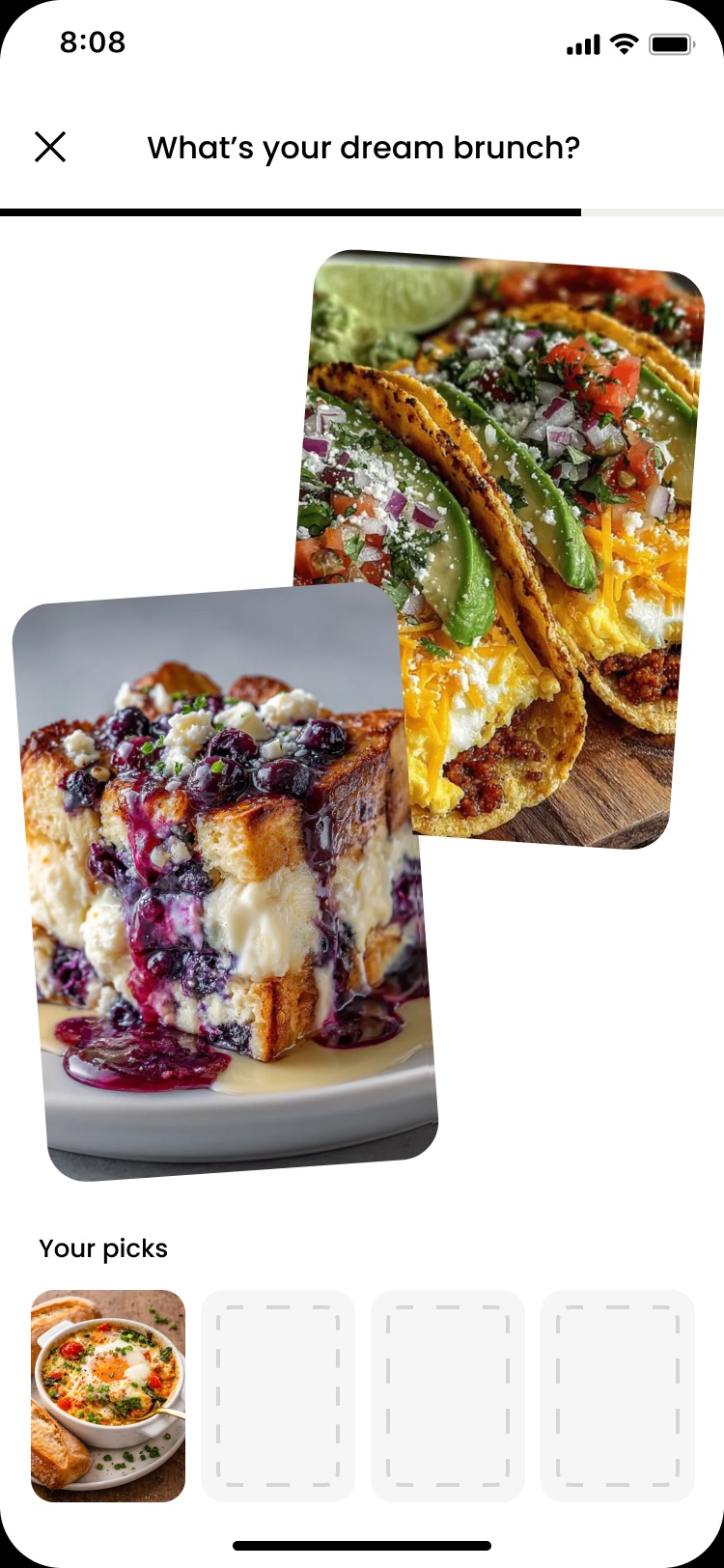
Two contrasting Pins side by side; tap the one you prefer.
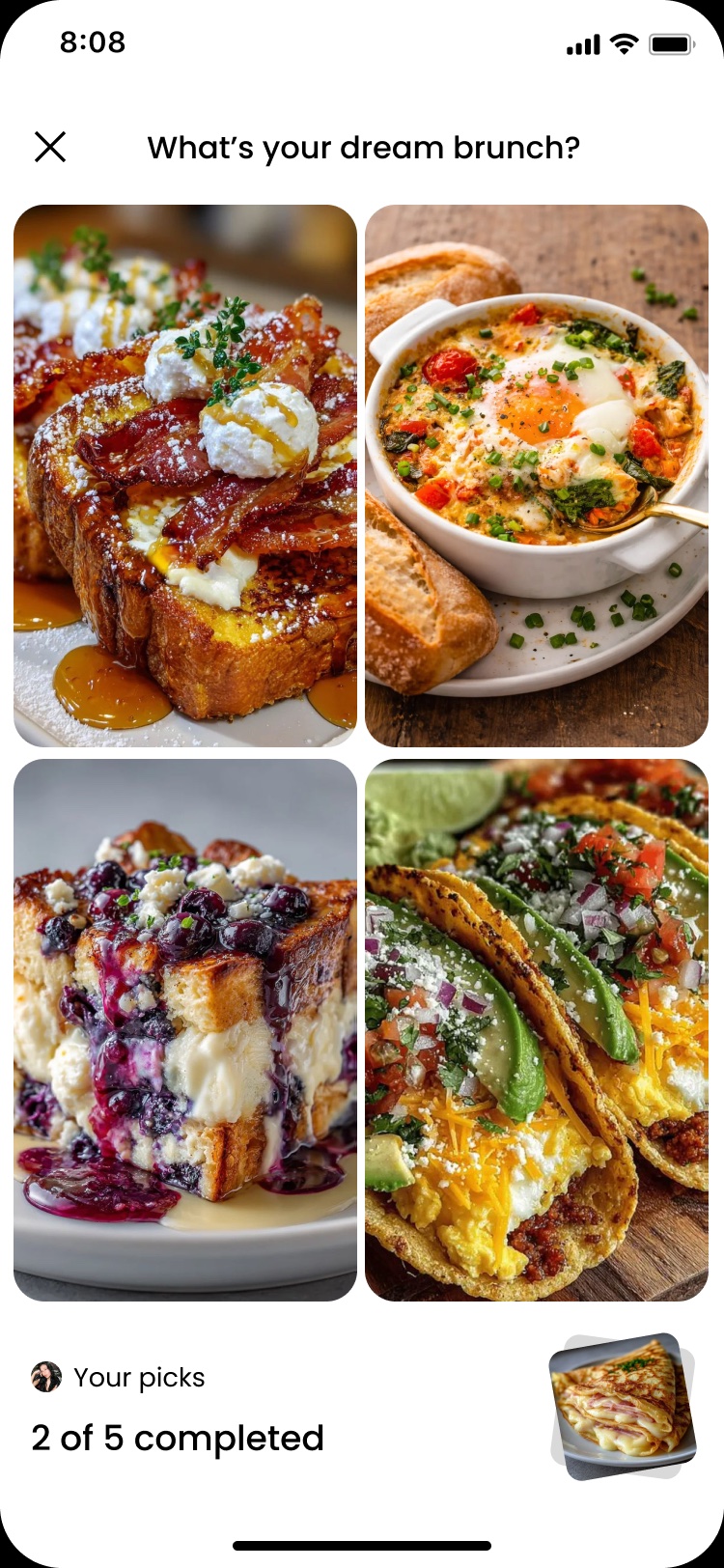
A grid of four ideas in each round offers more choice per tap.
One idea at a time, liked or skipped with a swipe.
Reward explorations
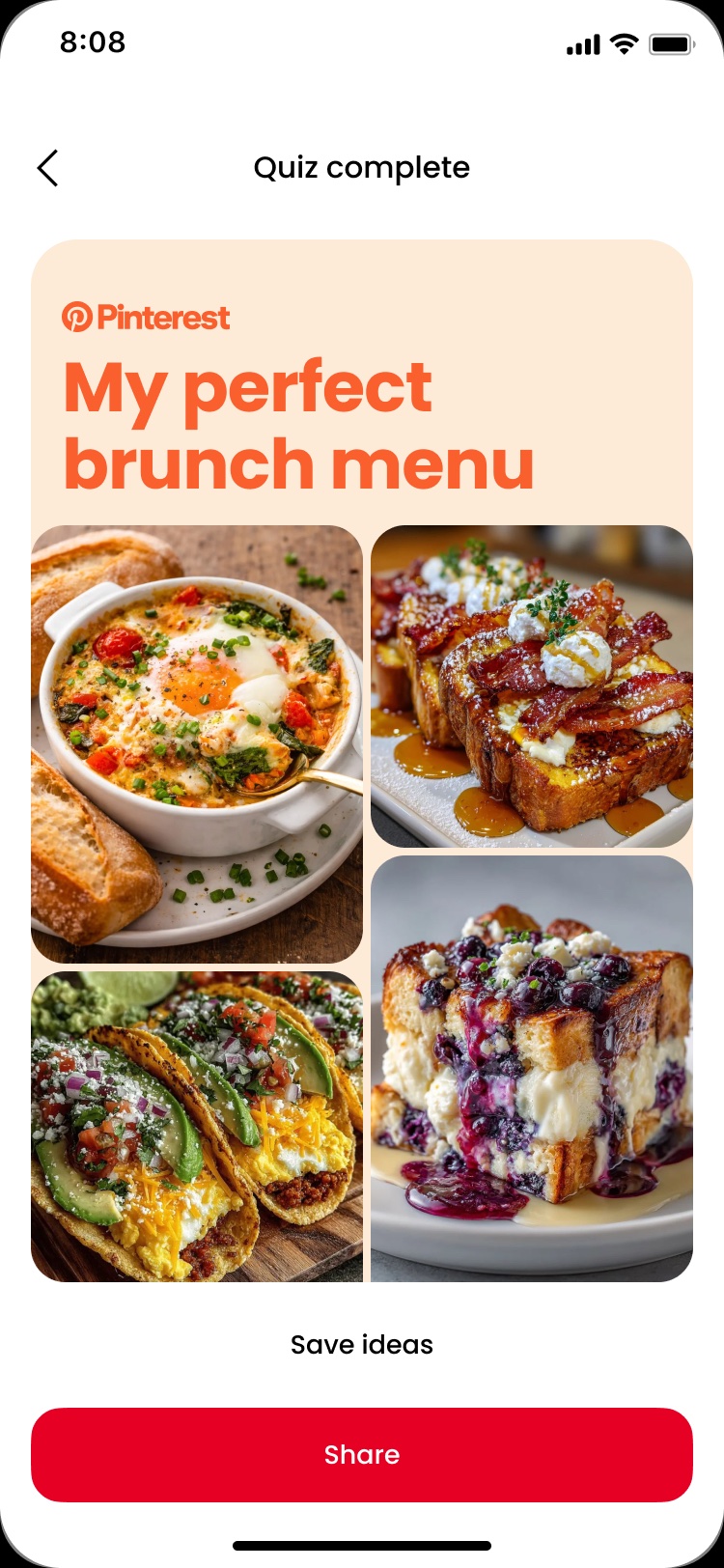
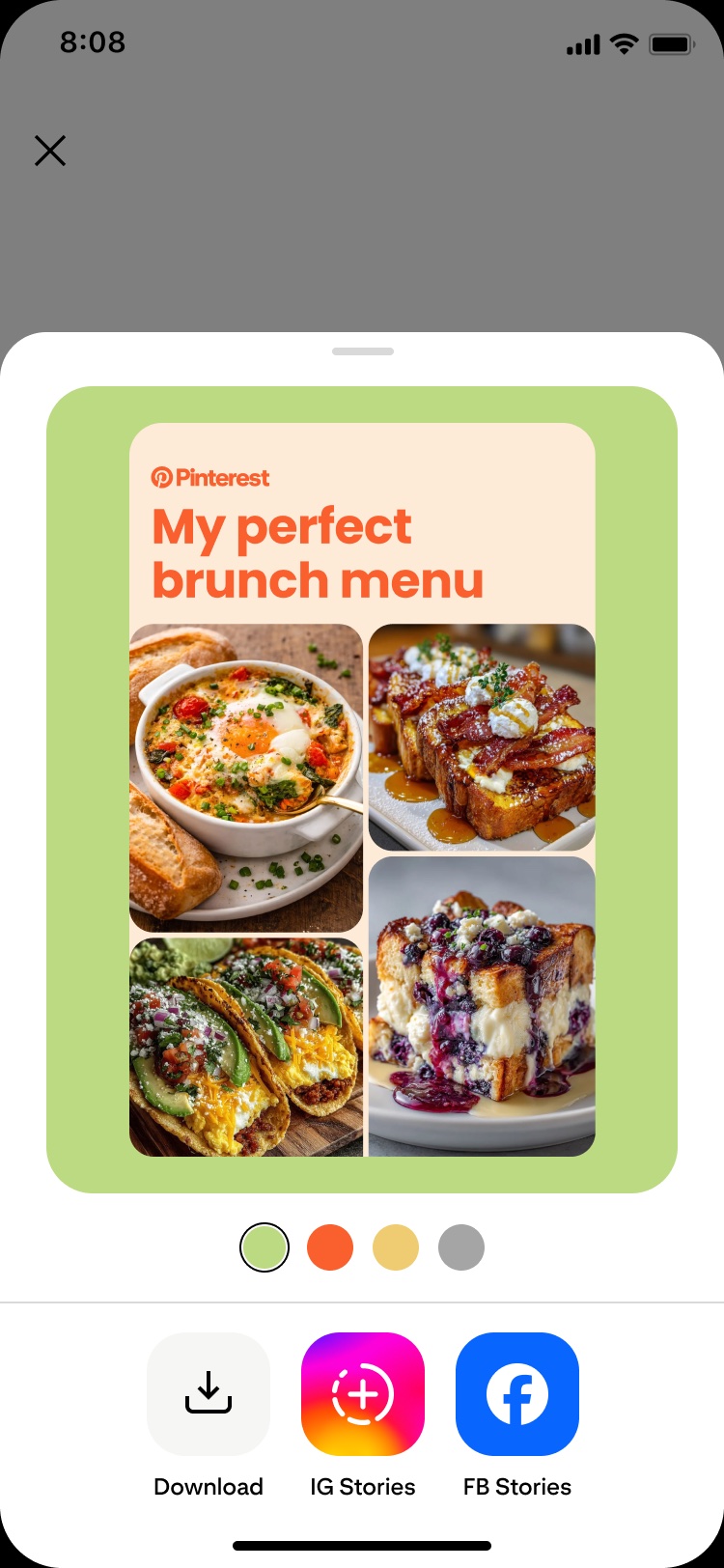
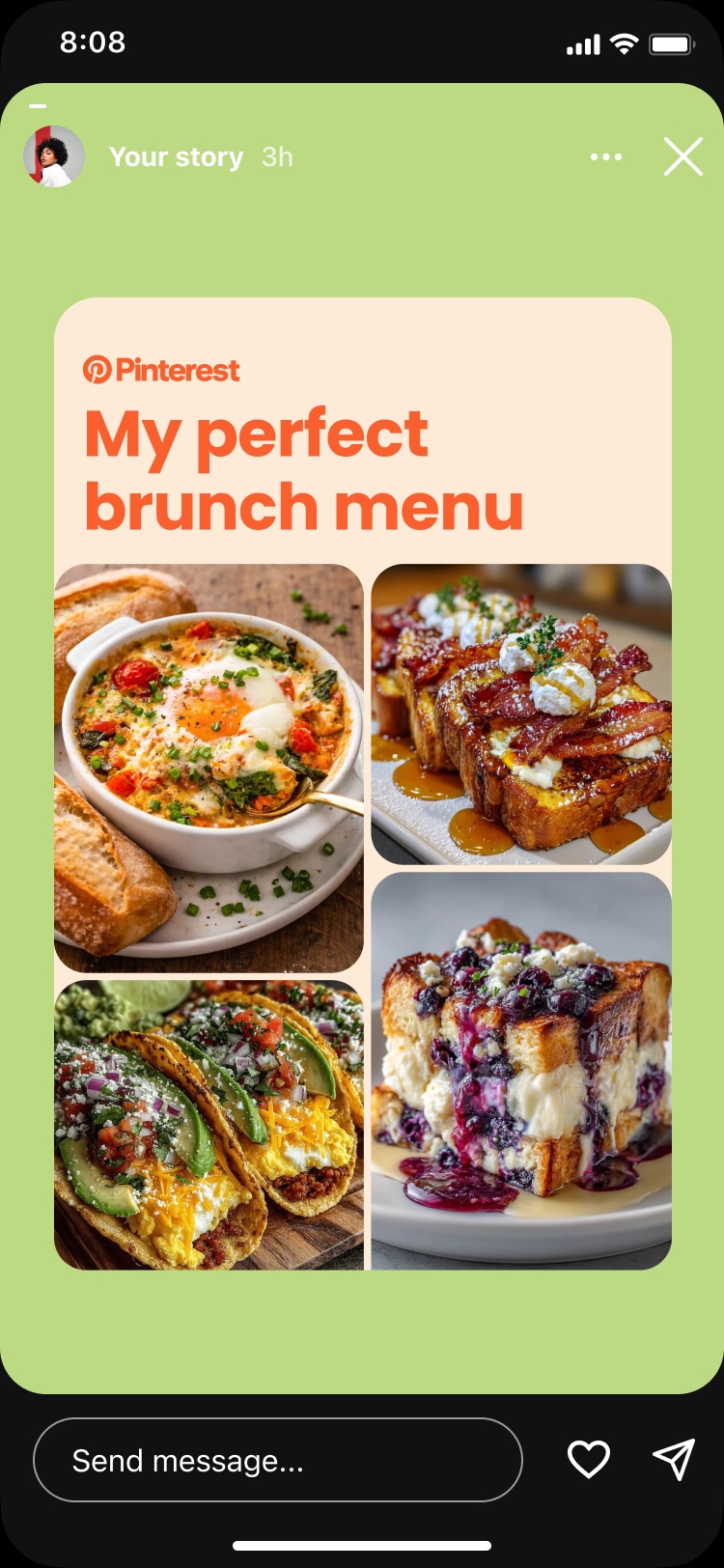
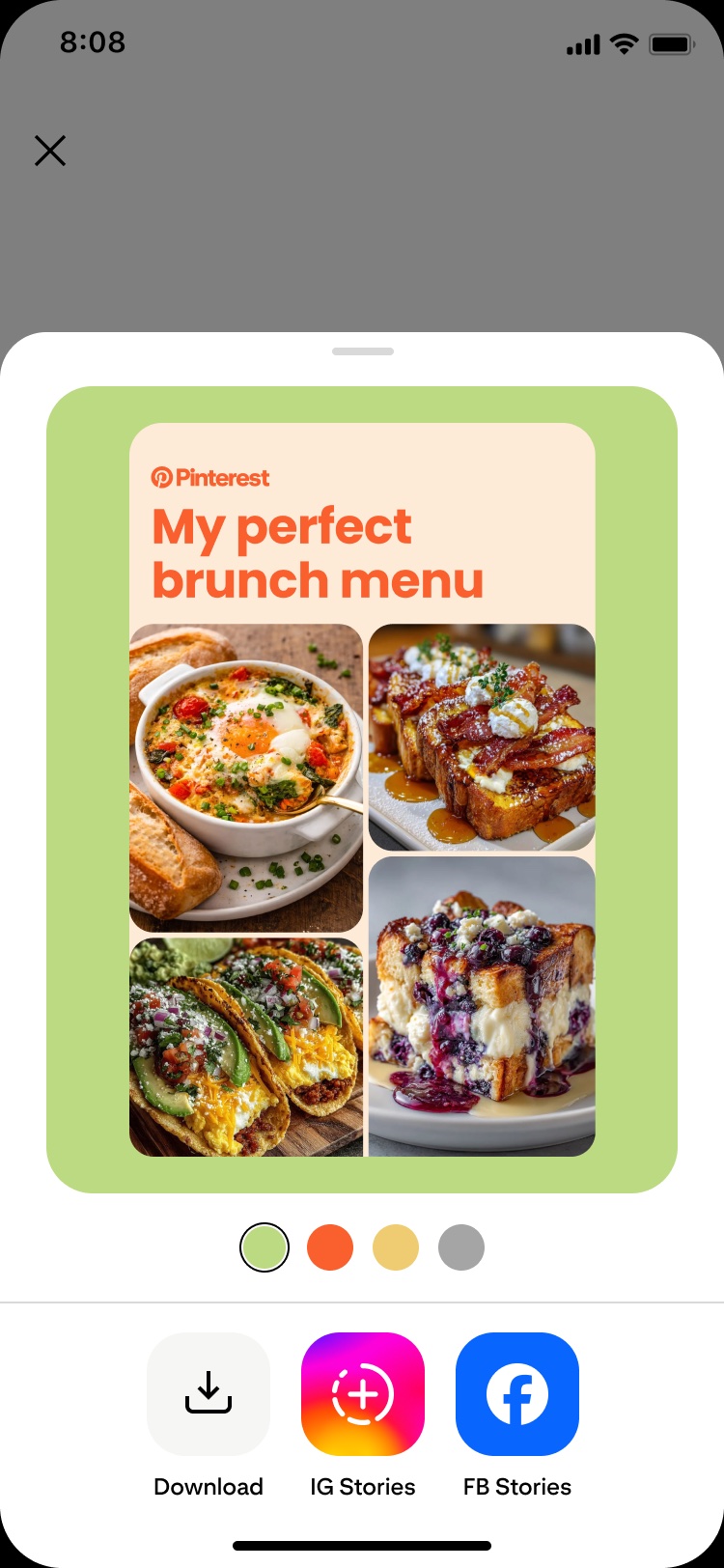
I designed the reward as a personalized collage of each person’s picks, with a direct path to post it to Instagram Stories so every result could bring new people to Pinterest.
Investment explorations
After each quiz, people unlock an expressive summary of their taste, new quizzes and ideas based on their answers, so every play improves what they see next.
Usability study
Participants found quizzes intuitive, and their feedback pointed to three refinements on the quiz screen.
“Pinterest is usually pretty stagnant... it’s just like a wall of rectangles always. This felt alive...”
Research participant
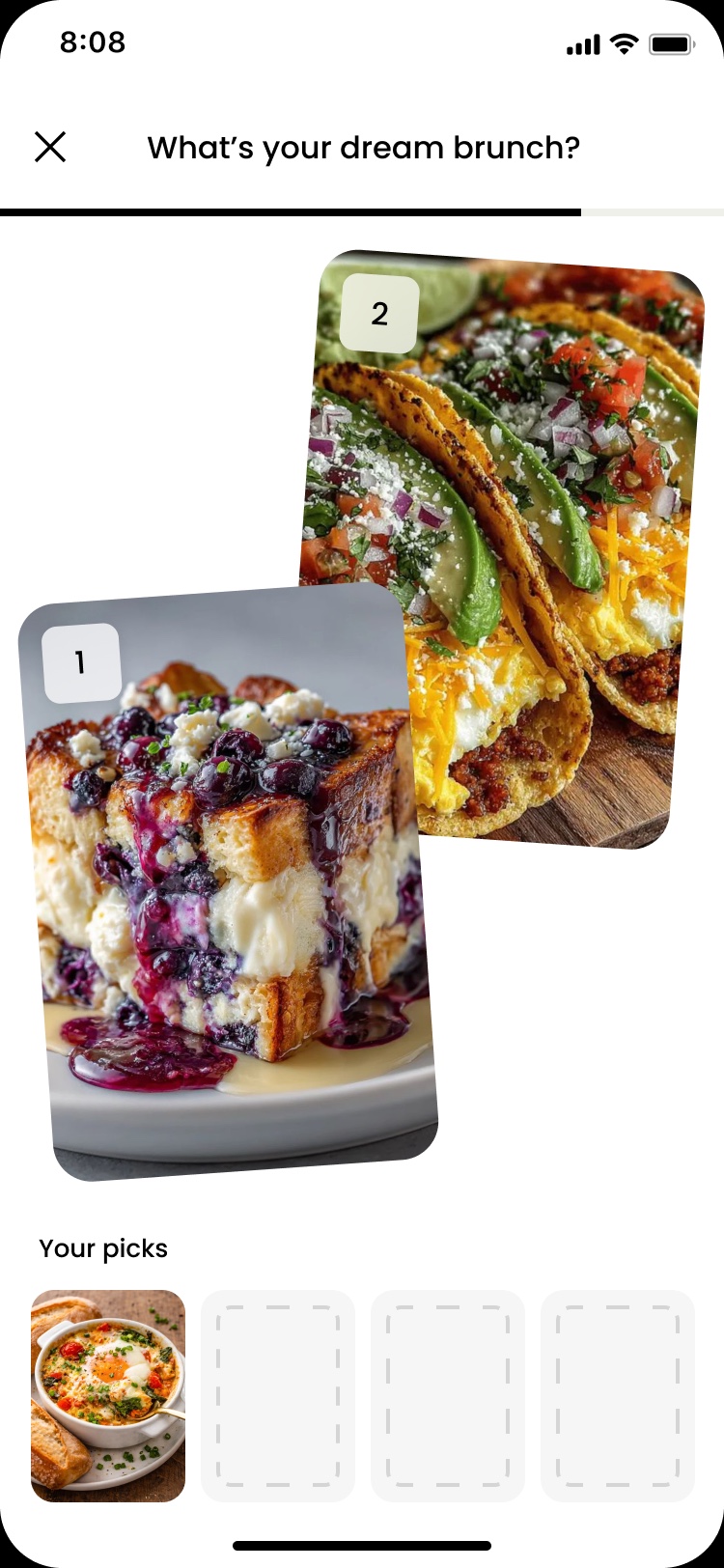
A four-image grid felt like the rest of Pinterest. As one participant put it, “There’s always four rectangles on my screen when I use Pinterest. It feels weird to do that here.”
04
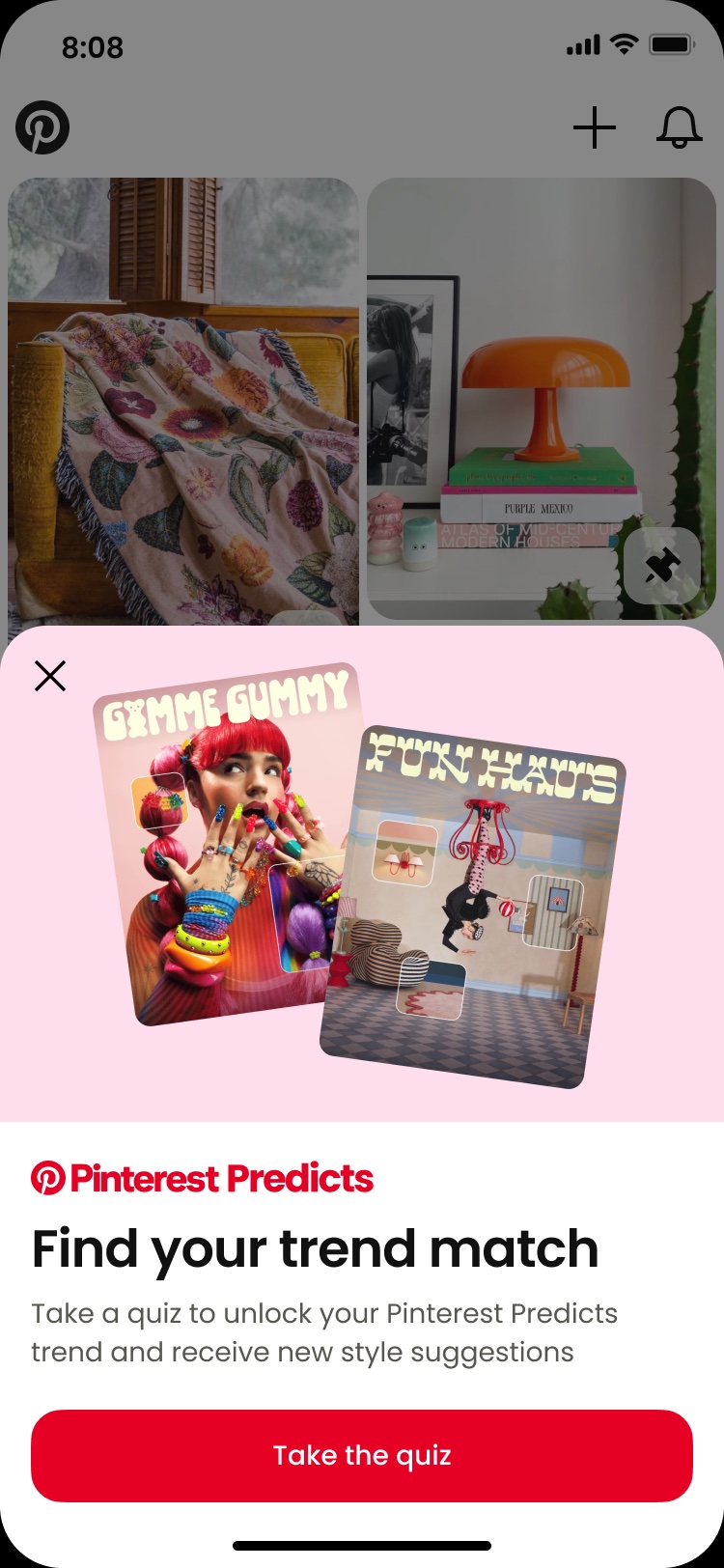
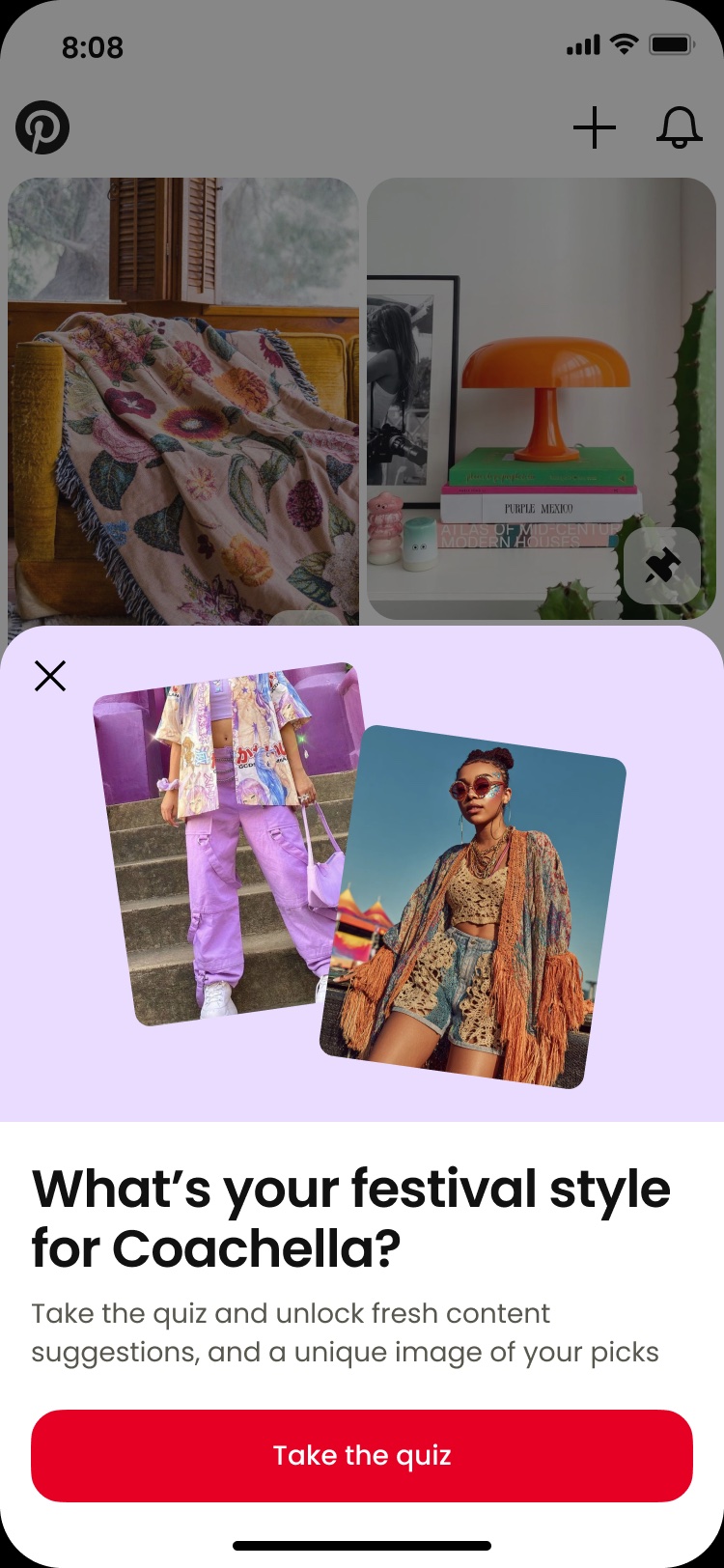
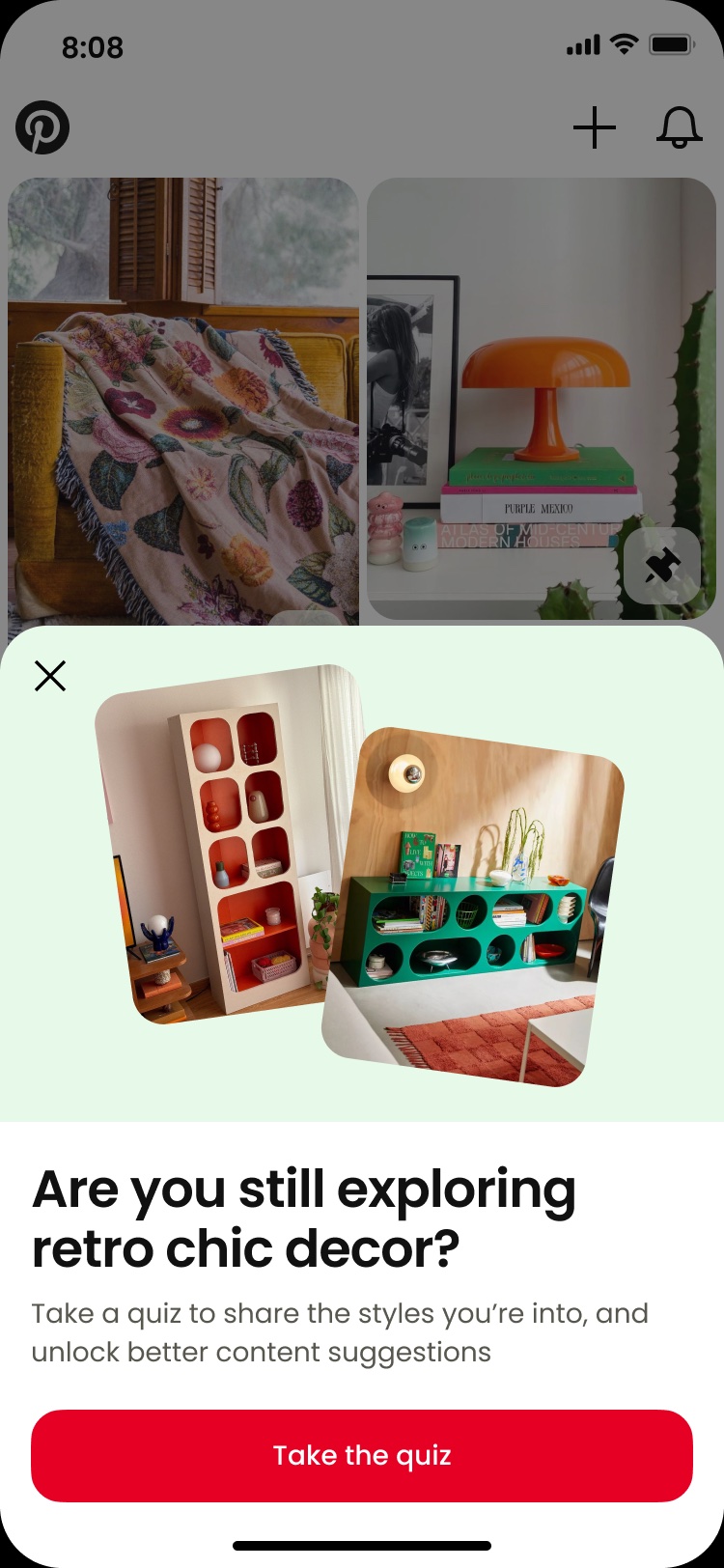
The same pattern scales to high-impact moments: Pinterest Predicts trend reports, brand partnerships like Coachella, and refining suggestions for interests people already have.
05
Experiment strategy
I built the core experience as an MVP, then ran multi-variant tests on isolated variables and iterated on the data.
Yet only 4% of people who saw the notification entered the quiz, and 12% completed it. That set the goal for the next round of tests: drive quiz entry and completion.
01
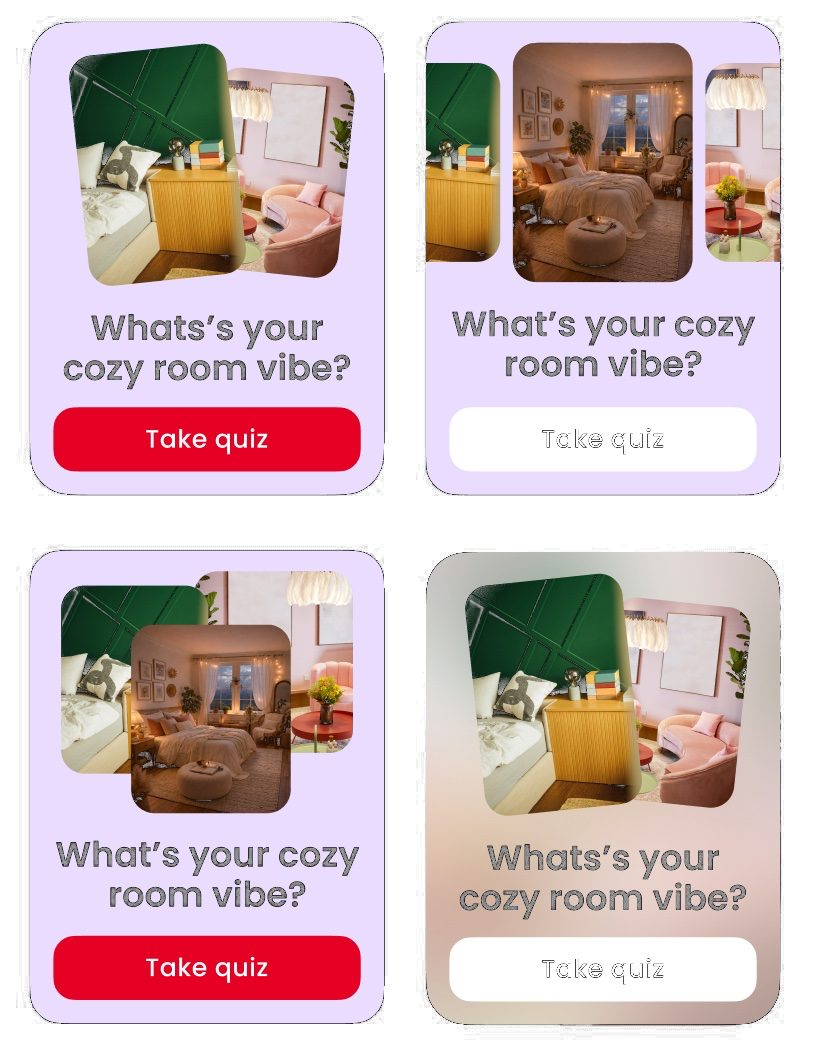
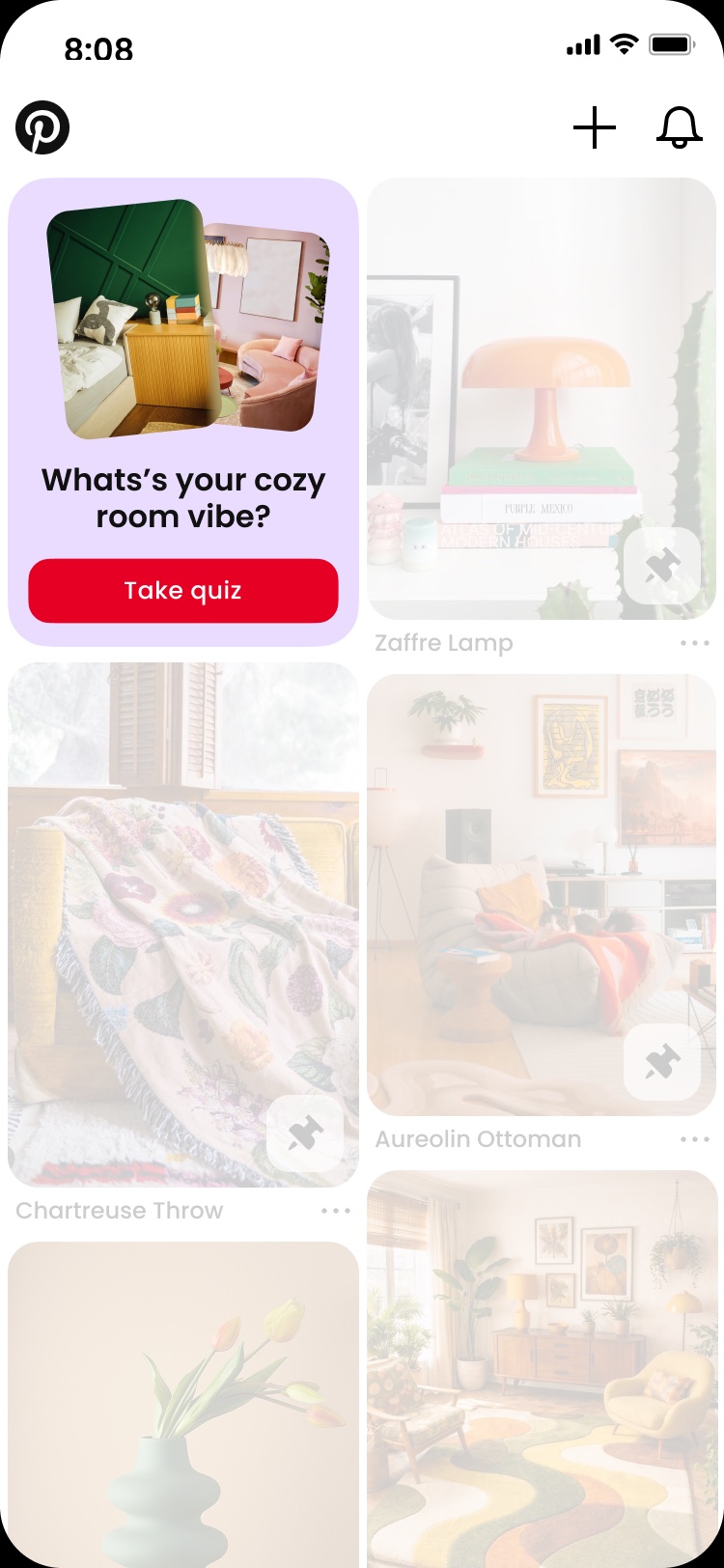
+12% clickthrough
A quiz card in the home feed gave people a second way in beyond the notification.
02
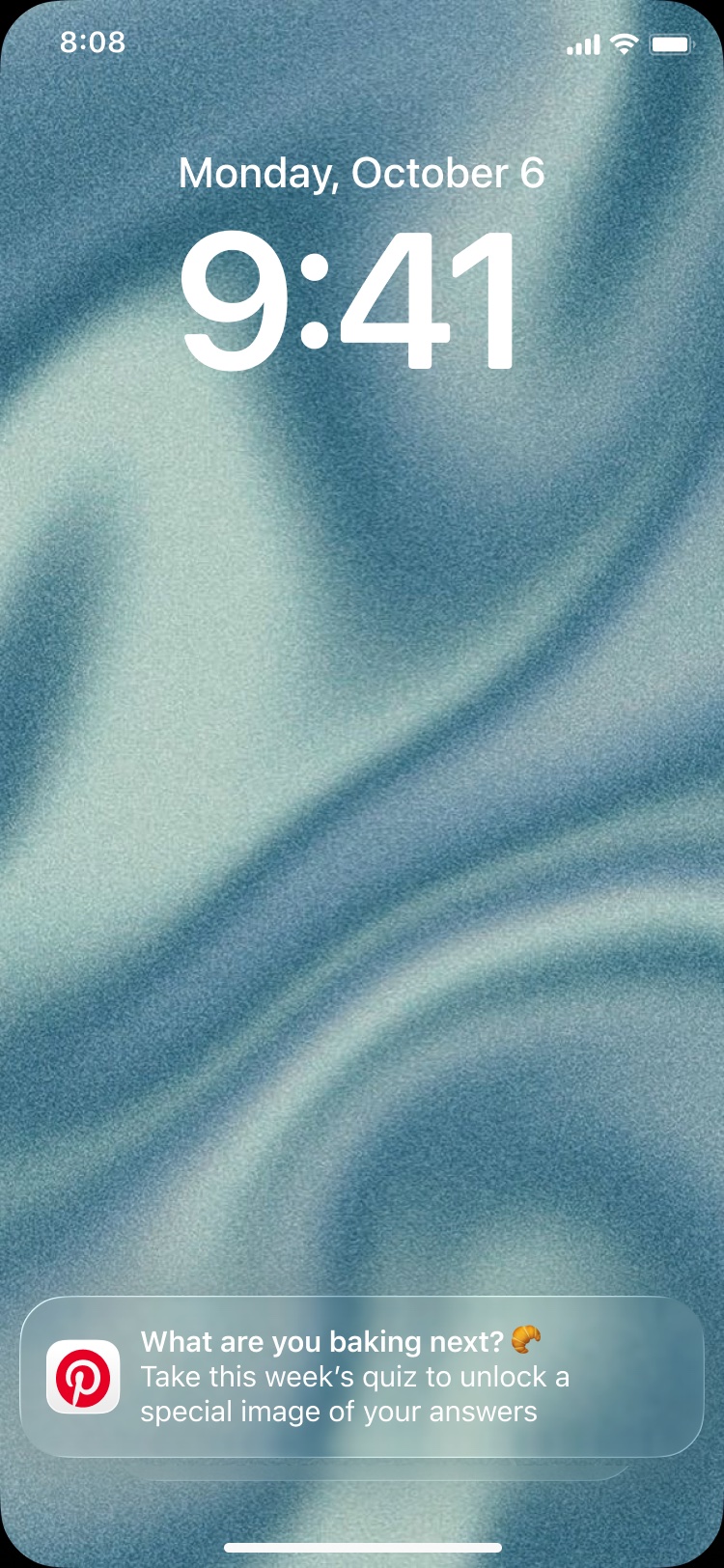
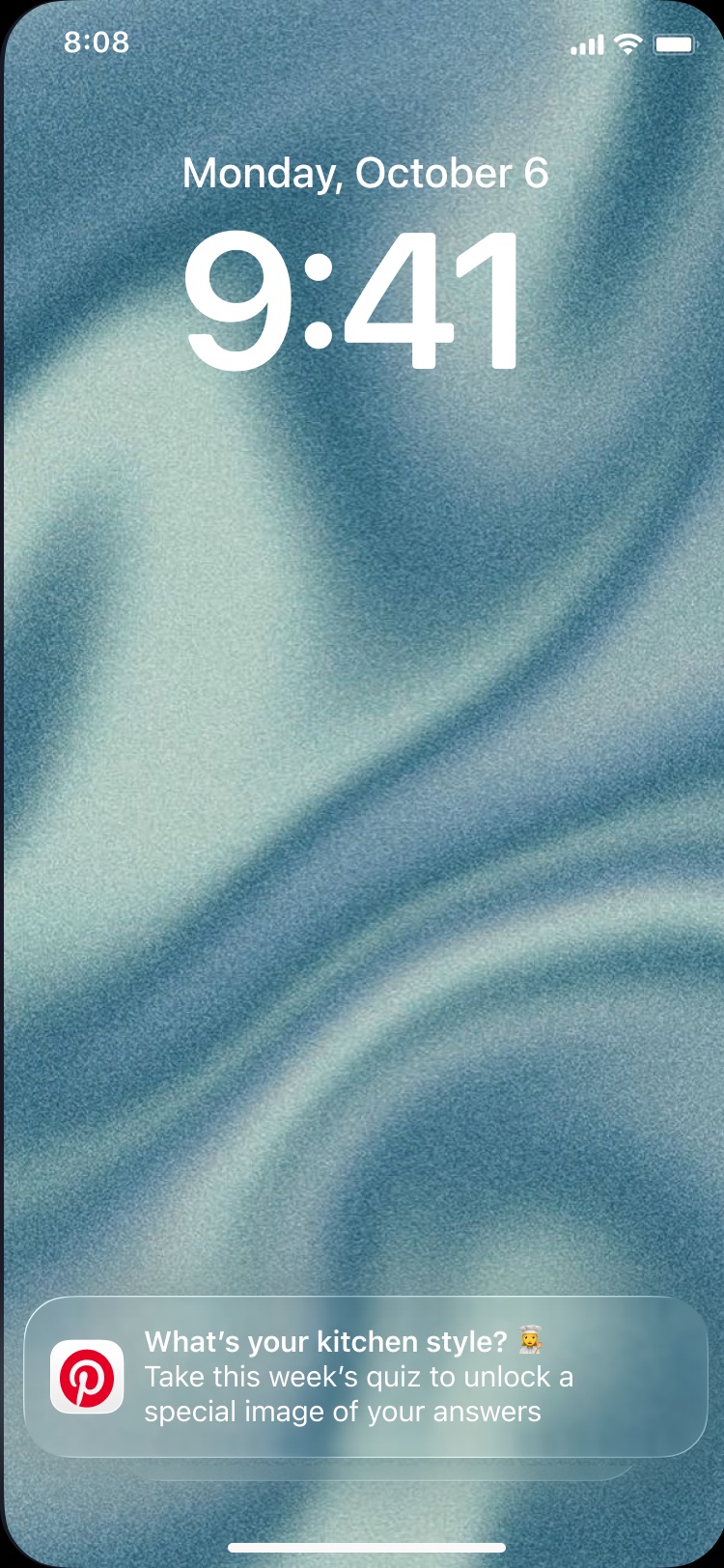
+7% clickthrough
Sending the next quiz three days later, instead of a week, kept momentum while interest was high.
03
+21% completion
A short introduction to how quizzes work helped first-timers finish instead of dropping off.
04
+4% completion
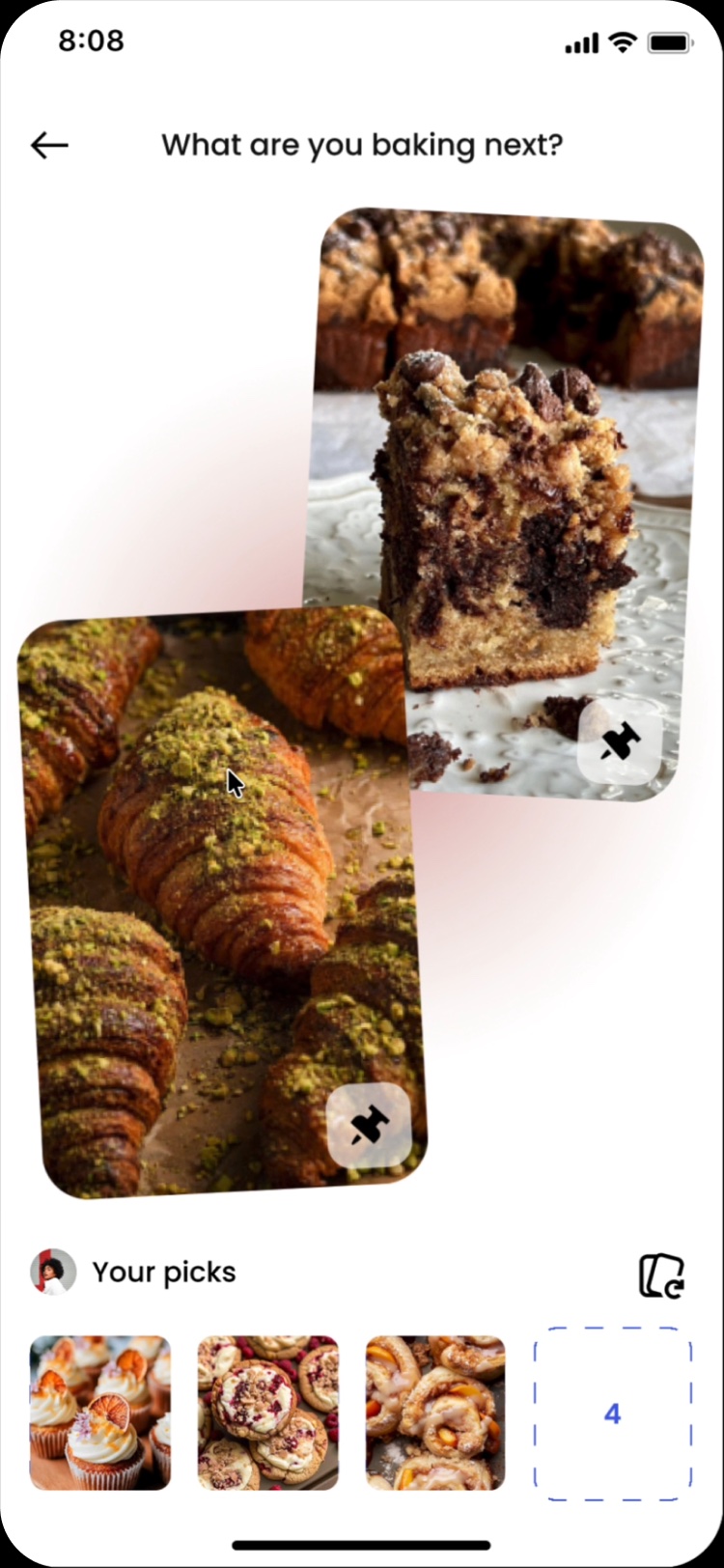
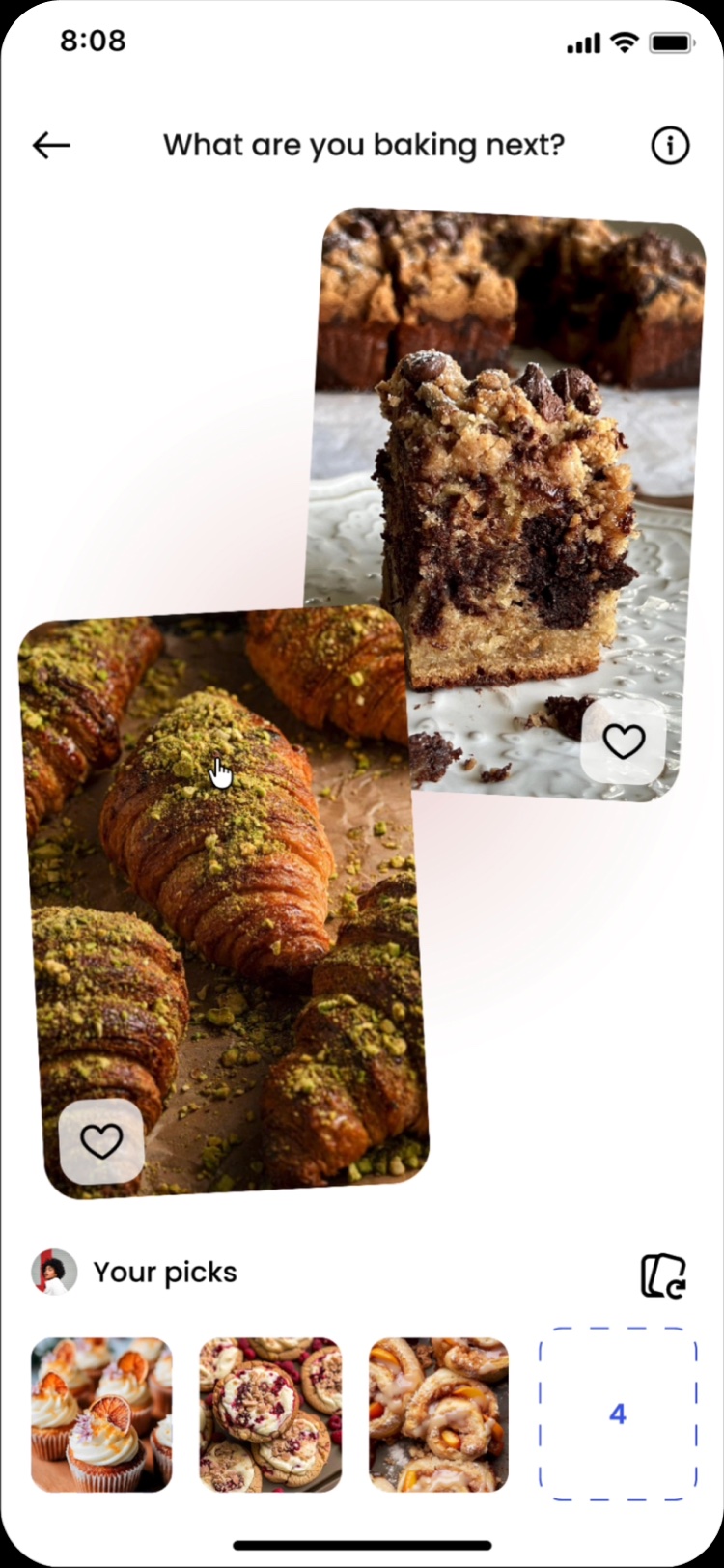
A heart instead of the save pin made it clear that tapping meant choosing a favorite.
05
+11% retention week over week
Celebrating a finished quiz before showing the shareable image made the reward feel earned.
Viral components
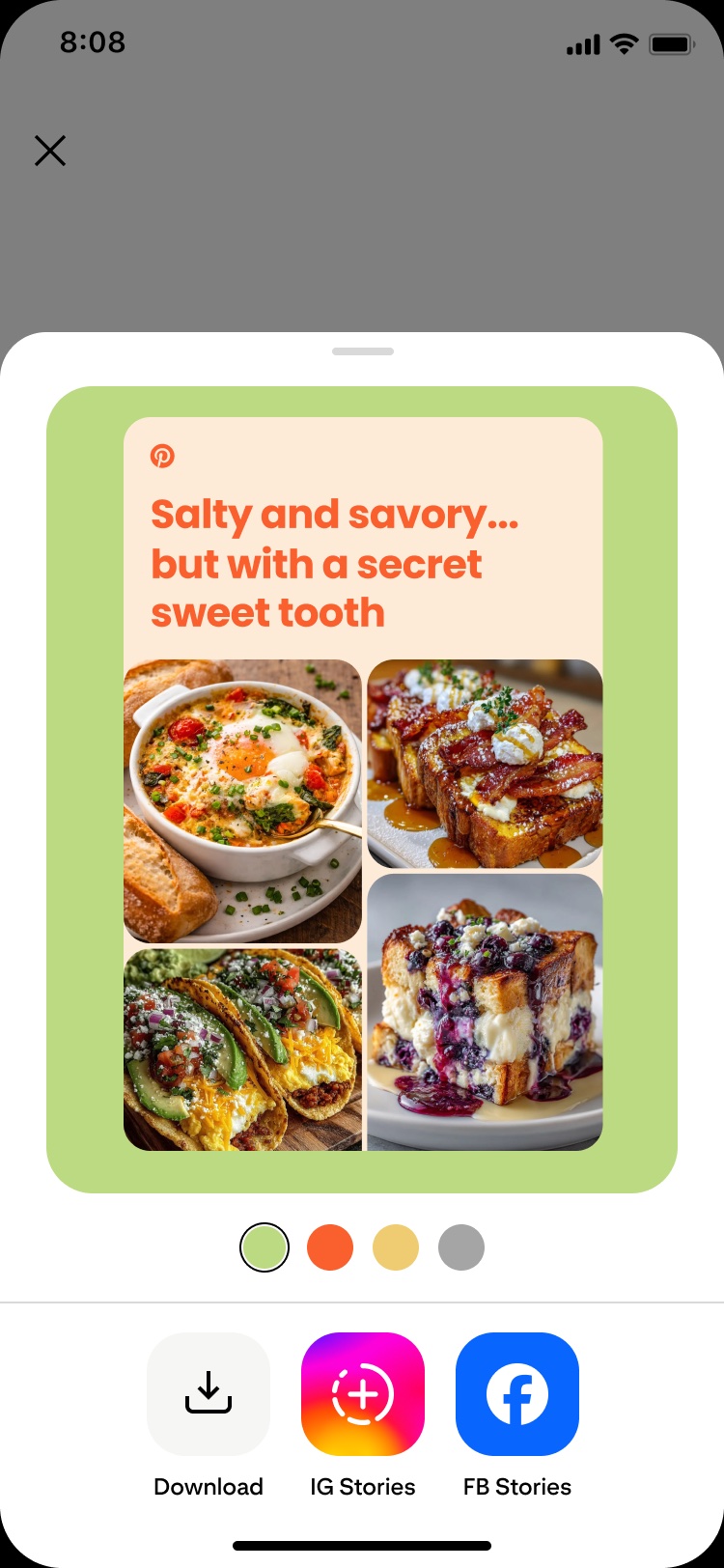
Replacing a static title with an AI-written description of each person’s taste made results feel personal enough to post. Building on this with LLMs is a 2026 investment area.
06
I led the design of weekly interactive quizzes: people pick favorites between Pins on topics they already love, and unlock a personalized, shareable result and fresher recommendations. The pilot directly informed Pinterest’s 2026 retention strategy.
+4.5% weekly active users (vs. 2% goal)
+250% shares to Instagram Stories
Introducing new interaction models can be risky, but delight can win big. Making sure the quiz aligned with user feedback and felt uniquely Pinterest was paramount to its success.